Tag: Academic Staff Union of Universities (ASUU)

  • FG Releases ₦50bn ASUU Needs Assessment Fund

    FG Releases ₦50bn ASUU Needs Assessment Fund

    The Federal Government has released ₦50 billion from the ₦200 billion Needs Assessment Fund (NAF) agreed with the Academic Staff Union of Universities (ASUU), marking the first tranche of funding under the recently renegotiated agreement.

    Minister of Education, Tunji Alausa, said an additional ₦50 billion would be released shortly, raising total disbursement to ₦100 billion. He added that the Ministry of Education would meet with heads of universities, polytechnics and colleges of education to determine priority areas for deploying the funds.

    The NAF is part of the 2009 agreement between ASUU and the Federal Government, which remained unresolved for over a decade. The pact, originally scheduled for renegotiation in 2013, was concluded on December 23, 2025, and formally unveiled on January 14, with implementation commencing immediately.

    “This is not about showmanship or grandstanding. The implementation circular was issued before the end of December,” Alausa said, noting that federal universities have not experienced industrial action in the last two academic sessions.

    The minister also disclosed that a dedicated labour and union activities unit has been established within the ministry to ensure effective implementation of agreements reached with staff unions.

    On outstanding salaries from the 2022 ASUU strike, Alausa said President Bola Tinubu approved payment of half of the eight-month arrears, a commitment he said has already been fulfilled.

    Meanwhile, former Deputy Vice-Chancellor (Academic) of the University of Ibadan, Prof. Ezekiel Ayoola, urged the government to extend recently approved academic allowances to emeritus professors. Speaking in Ibadan, he described the exclusion of retired senior academics as a gap that could undermine research continuity and mentorship.

    Ayoola said emeritus professors—many of whom served 15 to 20 years at professorial level and remain active in research and supervision—often receive no salaries or structured financial support. “They continue to contribute to scholarship and mentorship, yet are appointed without pay. Extending the allowances would help sustain academic excellence,” he said.

  • Presidency: ASUU Strikes Reduced Under Tinubu

    Presidency: ASUU Strikes Reduced Under Tinubu

    A Special Assistant to President Bola Tinubu on Social Media, Dada Olusegun, has said industrial action by the Academic Staff Union of Universities (ASUU) has significantly reduced under the current administration, noting that the union has embarked on only one strike since 2023.

    Olusegun attributed the development to targeted government interventions in the education sector. He made the claim in a statement posted on his verified X handle on Tuesday.

    According to him, the lone action was a nine-day warning strike, which he said marked a clear shift from what he described as years of frequent and prolonged strikes under previous administrations.

    “ASUU has only gone on strike once since the inception of the Renewed Hope administration—a warning strike that lasted nine days. This represents a different trajectory from the previous annual strikes and did not happen by chance,” Olusegun said.

    However, checks by newsmen indicate that while no prolonged nationwide strike has occurred since President Tinubu assumed office in May 2023, the union has issued multiple ultimatums and carried out brief warning actions over unresolved issues, including funding and unpaid allowances.

    The presidential aide further claimed that the Federal Government had made progress in addressing longstanding disputes with ASUU, citing the renegotiation of the 2009 agreement as a major breakthrough.

    “With the recent announcement by the Federal Government following the renegotiation of the 2009 agreements, we may have placed a final nail in the coffin of ASUU strikes,” he said.

    Olusegun said the interventions form part of broader education reforms under the Renewed Hope agenda, alongside initiatives such as the Nigerian Education Loan Fund (NELFUND).

    He listed key measures to include the removal of federal tertiary institutions from the Integrated Payroll and Personnel Information System (IPPIS), the creation of a unified negotiation committee for tertiary unions, and budgetary provisions of ₦150 billion for university revitalisation in the 2025 budget.

    Other steps, he added, include the release of ₦50 billion for earned academic allowances and the signing of a landmark agreement and salary review on January 14, 2026.

  • FG, ASUU Sign New Pact on University Reforms

    FG, ASUU Sign New Pact on University Reforms

    The Federal Government and the Academic Staff Union of Universities (ASUU) on Wednesday unveiled a renegotiated 2025 agreement aimed at resolving long-standing disputes that have triggered repeated strikes and disruptions in Nigeria’s university system.

    The deal concludes a renegotiation process that began in 2017 to review the 2009 FG–ASUU agreement, which was due for revision in 2012 but stalled under several past administrations. The breakthrough followed the inauguration of a new renegotiation committee chaired by Yayale Ahmed in October 2024.

    Key provisions of the agreement include a 40 per cent increase in the remuneration of academic staff in federal universities, effective January 1, 2026. The new pay structure combines the Consolidated University Academic Staff Salary with a Consolidated Academic Tools Allowance to support research, publications, conferences, internet access and other scholarly activities.

    The agreement also restructures nine earned academic allowances, linking payments strictly to duties performed, including postgraduate supervision, fieldwork, clinical services, examinations and leadership roles. In addition, a new Professorial Cadre Allowance was approved, with professors to receive N1.74 million annually and readers N840,000.

    Speaking at the unveiling in Abuja, Minister of Education, Dr Tunji Alausa, described the deal as a turning point for the sector, saying it reflected the Tinubu administration’s commitment to stable academic calendars and improved welfare for lecturers. He said the agreement marked “renewed trust, restored confidence, and a decisive shift” in managing university labour relations.

    Alausa credited President Bola Tinubu with personally driving the process, noting that the administration chose dialogue over prolonged conflict. He assured that the agreement would be faithfully implemented under the Renewed Hope Agenda.

    ASUU President, Prof. Chris Piwuna, welcomed the agreement but warned that deep-rooted challenges still threaten the sustainability of the university system. He cited weak university autonomy, poor accountability, inadequate research funding and government interference in governance as unresolved issues.

    Piwuna said governing councils are frequently undermined, while vice-chancellor appointments are often politicised, eroding meritocracy and triggering internal crises. He also raised concerns over declining academic standards, especially in newly converted universities, and warned against improper promotion practices.

    The union further cautioned that broader economic pressures—rising costs, insecurity, declining real wages and limited access to higher education—could undermine the gains of the agreement if left unaddressed.

    While expressing cautious optimism, ASUU said it hoped the full implementation of the 2025 agreement would not require further strike action, urging the government to match commitments with concrete action.

  • ASUU Warns FG To Honour Agreements Or Face Fresh Strike

    ASUU Warns FG To Honour Agreements Or Face Fresh Strike

    The Academic Staff Union of Universities (ASUU) has warned the Federal Government to fully implement agreements reached with university lecturers or risk another nationwide strike.

    The warning followed the union’s National Executive Council (NEC) meeting held at Taraba State University, Jalingo, where members reviewed recent engagements with the government’s negotiating team.

    In a statement signed by ASUU President, Christopher Piwuna, the NEC criticised what it described as the government’s inconsistent approach to negotiations, cautioning that continued delay could have “serious consequences” for the education sector.

    The union recalled that it had suspended a warning strike on October 21, 2025, despite describing government offers as “grossly inadequate.” The suspension, ASUU said, was to allow further dialogue and in appreciation of support from students, parents, the media, the Nigeria Labour Congress (NLC), and other stakeholders.

    ASUU said it granted the government a one-month window to conclude renegotiations in good faith, but two weeks later, its review of progress showed minimal improvement.

    According to the statement, the proposed salary adjustments presented by the government were “inadequate” to address the long-standing issue of brain drain and declining morale among academics.

    While acknowledging progress in some non-monetary aspects of the agreement, the union stressed that salary and working conditions remain unresolved and require urgent government attention.

    “We therefore hope that our expectations, and indeed the expectations of Nigerians for a quick and holistic resolution, are not dashed,” the statement added.

    ASUU reiterated its commitment to dialogue but warned that failure to meet its demands could force it to resume industrial action in the coming weeks.

  • NLC Gives Four-Week Ultimatum to End ASUU Strike

    NLC Gives Four-Week Ultimatum to End ASUU Strike

    The Academic Staff Union of Universities (ASUU) and the Nigeria Labour Congress (NLC) have united to push for a lasting resolution to the persistent disruptions in Nigeria’s academic calendar.

    On Monday, the NLC issued a four-week ultimatum to the federal government to conclude negotiations with all academic and non-academic unions in tertiary institutions nationwide.

    The NLC convened a meeting at its national headquarters in Abuja with leaders of ASUU, Senior Staff Association of Nigerian Universities (SSANU), Colleges of Education Academic Staff Union (COEASU), Academic Staff Union of Polytechnics (ASUP), and other tertiary education unions to address the ongoing strike and related concerns.

    The Nigerian higher education system has been plagued by recurring strikes, with the latest closure of universities prompted by ASUU’s industrial action. ASUU National President, Professor Chris Piwuna, announced the strike at the University of Abuja following the expiry of a 14-day ultimatum issued to the government on September 28. The union cited unresolved issues, including staff welfare, infrastructure, salary arrears, and full implementation of the 2009 ASUU-FGN agreement.

    Despite recent negotiations, the government’s efforts—including the release of N50 billion for earned academic allowances and a N150 billion allocation in the 2025 budget for a needs assessment—were deemed insufficient by ASUU. The union demands full implementation of the 2009 agreement, payment of withheld salaries, sustainable university funding, protection against victimisation, and settlement of outstanding promotions and deductions.

    The NLC expressed full solidarity with ASUU and other tertiary education unions, urging robust participation and adherence to the principle of “No Pay, No Work” to enforce compliance with collective agreements.

    Addressing journalists after the meeting, NLC National President Joe Ajaero said:

    “We have decided to give the federal government four weeks to conclude all negotiations in this sector. If after four weeks the negotiation is not concluded, the NEC will take nationwide action involving all unions to address the root of the problem.”

    He criticized the government’s no-work-no-pay policy against striking members, stating that most industrial actions in Nigeria result from failure to honor agreements.

    Professor Piwuna of ASUU backed the NLC’s stance, emphasizing that the union would no longer negotiate with government representatives lacking proper mandates.

    “We will fully back the NLC to ensure the government does not take our unions for granted and gives education the attention it rightly deserves,” he said.

    The ASUU strike entered its eighth day on Tuesday, following a two-week warning strike last week, which prompted strong resistance from the government.

  • ASUU Warning Strike: UniJos Academic Activities Suspended

    ASUU Warning Strike: UniJos Academic Activities Suspended


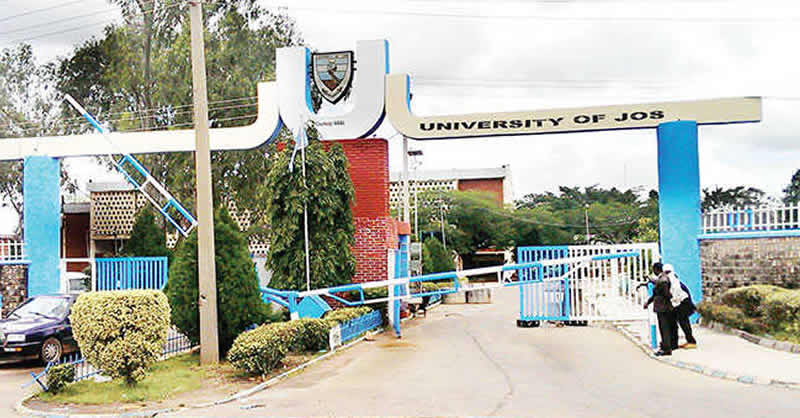
    Academic activities at the University of Jos (UniJos) have been disrupted after the institution’s branch of the Academic Staff Union of Universities (ASUU) joined the ongoing two-week warning strike called by the union’s national leadership.

    While undergraduate students are currently on break, the strike has left many postgraduate students stranded, with lectures, classes, and project supervisions suspended. On Monday, the university campus appeared largely deserted, with only a few individuals around and the main gate partially closed.

    A postgraduate student in the Department of Mass Communication, who identified himself as Micah, expressed frustration over the disruption. “It’s disappointing to be forced into another compulsory break. How long will this continue?” he said, noting that some lecturers were seen “picking up their belongings” from offices before leaving.

    Efforts to reach UniJos ASUU Chairman, Professor Jurbe Molwus, were unsuccessful, as calls to his phone went unanswered.

    However, a union member speaking on condition of anonymity confirmed that the UniJos chapter had fully complied with the national directive. “CONUA doesn’t exist in UniJos. ASUU is on a warning strike, and we have joined. We had a meeting this morning and were briefed accordingly,” the source said.

    The ongoing strike, which began last week, has already affected several universities nationwide, disrupting lectures, examinations, and other academic activities.

    Students and staff alike are awaiting further updates on the duration and possible resolution of the strike, which continues to affect learning schedules across the country.