Tag: Africa

  • Madagascar Coup Deepens Africa’s Leadership Crisis

    Madagascar Coup Deepens Africa’s Leadership Crisis

    While much of the world is embracing innovation, science, and technology to tackle the challenges of the 21st century, Africa continues to be trapped in the quagmire of poor leadership, political instability, and recurring coups. The latest upheaval in Madagascar underscores the continent’s deep-seated governance failures.

    In a dramatic turn of events, the Malagasy military seized power after President Andry Rajoelina fled the country and went into hiding. Colonel Michael Randrianirina, commander of an elite army unit, was swiftly sworn in as the new head of state. Ironically, Randrianirina had been imprisoned in November 2023 for allegedly plotting a mutiny and coup attempt, spending three months in detention before his release.

    Rajoelina’s political journey has been equally turbulent. He first assumed leadership in 2009 after a military-backed coup, stepped down in 2013, and returned to office following the 2018 elections. Mounting discontent over corruption, nepotism, high living costs, and crumbling infrastructure led to weeks of nationwide protests and his eventual impeachment by parliament, paving the way for the military’s intervention.

    The new junta leader has promised an 18- to 24-month transition period before holding elections. However, given Africa’s history of prolonged military rule under similar promises, skepticism abounds. Randrianirina must resist the temptation to entrench himself in power and instead focus on restoring civilian governance swiftly and transparently.

    Madagascar’s latest coup marks the third in its post-independence history. The first occurred in 1972 when protests forced founding president Philibert Tsiranana to hand over to a military council. Another coup in 1975 brought Didier Ratsiraka to power. In 2009, Rajoelina himself rode to power through military support after the ouster of Marc Ravalomanana.

    The island nation of 30 million people—rich in biodiversity and known globally for its vanilla exports—remains one of the world’s poorest, with over 75 percent of its citizens living below the poverty line.

    The resurgence of coups across Africa is a troubling pattern. From Mali (2020) to Guinea and Sudan (2021), Burkina Faso (2022), Niger (2023), Gabon (2023), and now Madagascar, the continent is witnessing an alarming rollback of democratic gains. Many of these coups have enjoyed popular support, reflecting deep public frustration with corrupt, self-serving civilian leaders who have failed to deliver development or uphold accountability.

    Even where the military has not seized power by force, “constitutional coups” remain rampant. Leaders like Paul Biya of Cameroon, in power for 43 years; Teodoro Obiang of Equatorial Guinea, ruling for 45 years; Uganda’s Yoweri Museveni, in office since 1986; and Denis Sassou Nguesso of Congo, leading for 36 years, have manipulated constitutions and elections to perpetuate their rule.

    Africa’s enduring instability is a symptom of failed governance and eroded public trust. The path forward lies not in military interventions but in strong institutions, accountability, youth inclusion, and respect for democratic norms. Until African leaders embrace good governance and prioritize citizens’ welfare, coups—military or constitutional—will remain an ever-present shadow over the continent’s political landscape.
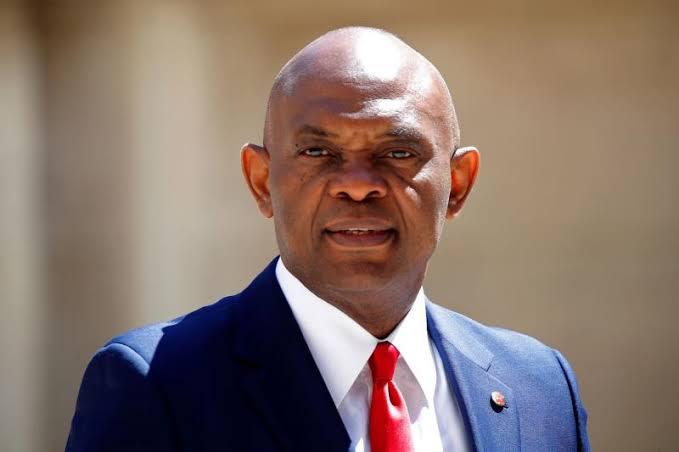
  • Tony Elumelu calls for investment, not aid, in Africa

    Tony Elumelu calls for investment, not aid, in Africa

    Tony Elumelu

    Renowned entrepreneur and philanthropist Tony Elumelu has called for a fundamental rethink of the world’s engagement with Africa, urging global leaders to shift from charity-driven models to ones rooted in investment, entrepreneurship, and equal partnership.

    Speaking at a high-level Africa–Europe summit on economic cooperation and sustainable development on Monday, Elumelu said Africa’s future depends on strategic collaboration rather than aid.

    “Africa needs partners, not charity. Our future will not be built by aid, but by investment, partnership, and entrepreneurship,” he said.

    He emphasized that Africa is at a defining moment—rich in opportunities but still constrained by deep structural challenges. For decades, he noted, much of the global engagement with the continent has focused on aid and humanitarian assistance rather than sustainable economic growth.

    Elumelu highlighted Africa’s youthful population, vast natural resources, and growing innovation ecosystem as key assets that can attract long-term, mutually beneficial investment.

  • World Bank Warns Of Global Sanitation Crisis

    World Bank Warns Of Global Sanitation Crisis

    The World Bank has warned that nearly two in five people worldwide lack access to safe sanitation, a crisis with serious consequences for public health, economic growth, and the environment.

    In a report titled “The Global Sanitation Crisis: Pathways for Urgent Action”, released on Tuesday, the Bank highlighted that Africa alone loses up to $200 billion annually due to poor sanitation. The continent’s GDP could increase by up to 5 percent with sufficient investment in water and sanitation services.

    Globally, around 3.5 billion people still lack safe sanitation facilities, contributing to preventable diseases such as cholera, diarrhoea, and typhoid, which collectively cause hundreds of thousands of deaths each year, particularly among children under five.

    In Africa, rapid urbanisation, poverty, and weak infrastructure exacerbate the problem. Informal settlements often lack proper sewage systems, forcing residents to rely on unsafe alternatives that contaminate water sources.

    The World Health Organization has emphasized that inadequate sanitation not only spreads disease but also limits economic productivity by keeping children out of school and adults away from work.

    The World Bank report warned that low- and middle-income countries face the heaviest burdens. Climate-related threats, including floods, droughts, and rising sea levels, are placing additional strain on fragile sanitation systems, further hampering economic growth.

    Investing in sanitation, the report notes, has significant economic and social benefits. Every $1 spent in Africa can yield $7 in returns, potentially boosting GDP by 5 percent and generating $200 billion in annual economic gains. Improved sanitation also protects the environment, reduces greenhouse gas emissions, and promotes cleaner drinking water.

    The report highlighted links between sanitation and education. In India, school latrines designed for girls increased enrollment and retention, while in Brazil, improved facilities contributed to higher school completion rates.

    The World Bank called for urgent, coordinated action. Governments, cities, service providers, and communities are urged to prioritise sanitation funding, design inclusive and climate-resilient infrastructure, support technological innovation, and train personnel to manage new systems effectively.

    “Achieving climate-resilient urban sanitation is possible, but action must start now,” the report concluded. “Together, governments, service providers, businesses, and communities can build sanitation systems that protect people, prosperity, and our planet.”