Tag: EFCC

  • EFCC Asked to Investigate Oyo Lawmakers Over ₦300bn Loan

    EFCC Asked to Investigate Oyo Lawmakers Over ₦300bn Loan


    A pro-democracy group in Oyo State, the Concerned Youths Movement (CYM), has called on the Economic and Financial Crimes Commission (EFCC) to launch an immediate probe into the Oyo State House of Assembly following the controversial approval of a ₦300 billion loan request by Governor Seyi Makinde.

    The group expressed outrage over the process leading to the approval, insisting it violated legislative procedures and undermined the principles of democracy. According to CYM, only 13 out of the 32 lawmakers were present when the loan request was passed, falling short of the constitutional requirement for a quorum.

    In a statement jointly signed by its Chairman, Pastor Tayo Adigun, and Secretary, Alhaji Olaide Kobomoje, CYM described the approval as illegal, null, and void, stressing that it does not represent the collective decision of the Assembly, according to Daily Post.

    “We are hereby calling the attention of the EFCC to investigate the alleged approval given to the Oyo State Governor, Engr. Seyi Makinde, to obtain ₦300 billion by only 13 members of the State House of Assembly. That is illegal. Thirteen members do not form a quorum in a 32-member House. This illegality must not be allowed to stand,” the group said.

    CYM further accused the lawmakers of acting against the will of the people, warning that such irregularities could set a dangerous precedent for governance in the state. The group urged anti-graft agencies to beam their searchlight on the circumstances surrounding the loan and ensure that accountability and due process are upheld.

    The approval of the loan, which surfaced last week, has generated widespread debate across the state. While supporters of the move argue that the funds would boost infrastructural development, critics maintain that the hasty approval raises concerns about transparency, accountability, and the state’s rising debt profile.

    As of press time, neither the Oyo State Government nor the leadership of the State House of Assembly has issued an official response to CYM’s allegations and call for EFCC intervention.
  • Lagos banker jailed for N31m property fraud, forgery

    Lagos banker jailed for N31m property fraud, forgery

    Lagos banker jailed for N31m property fraud, forgery

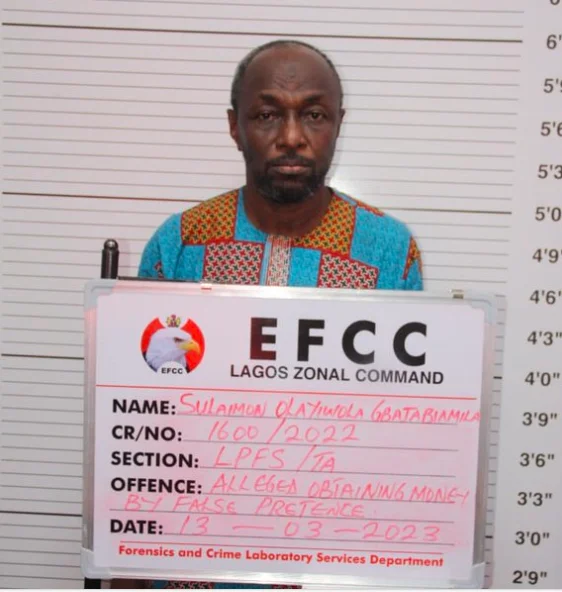
    The Lagos State High Court in Ikeja has convicted and sentenced mortgage banker Sulaiman Olayiwola Gbajabiamila for defrauding a client of N31 million in a property deal and forging a Sterling Bank manager’s cheque.

    Justice I. O. Ijelu delivered the judgment on Monday, August 25, 2025, following Gbajabiamila’s trial on a seven-count charge of stealing, obtaining by false pretences, forgery, use of false documents, and retention of proceeds of crime. The charges were filed by the Economic and Financial Crimes Commission (EFCC) in September 2023.

    According to the EFCC, the case began when Gbajabiamila, introduced through an estate agent, collected N31 million from a petitioner, Lateef Adeyemo, for a two-bedroom apartment in Iponri, Lagos. The property was never delivered, and investigations revealed the funds were diverted for personal use.

    One of the charges alleged that Gbajabiamila, in 2021, dishonestly converted Adeyemo’s N31 million to his own use. Another accused him of forging a Sterling Bank manager’s cheque worth N10 million in favour of STB Building Society Limited.

    During the trial, Gbajabiamila pleaded not guilty. Prosecution counsel Abdulhamid L. Tukur presented two witnesses and tendered documents admitted as evidence, while defence counsel T. E. Gbado urged the court to show leniency, describing the defendant as a first-time offender who was remorseful.

    In sentencing, Justice Ijelu handed Gbajabiamila five years’ imprisonment on the count of stealing, with an option of a N1 million fine; seven years for obtaining by false pretences; two years each for three counts of forgery, with an option of N1 million fine on each; two years for using false documents, with an option of a N200,000 fine; and four years for retention of proceeds of crime, with an option of a N500,000 fine.

  • Oppositions slam EFCC over Tambuwal’s detention, agency denies bias

    Oppositions slam EFCC over Tambuwal’s detention, agency denies bias

    Aminu Waziri Tambuwal

    The detention of former Sokoto State governor and opposition coalition figure Senator Aminu Waziri Tambuwal by the Economic and Financial Crimes Commission (EFCC) has sparked political backlash, with senior opposition leaders accusing the agency of selective prosecution.

    Tambuwal, held on Monday and released Tuesday, was detained shortly before the EFCC invited former Imo State governor Emeka Ihedioha for questioning. Both are key members of a recently formed opposition coalition.

    The African Democratic Congress (ADC) alleged the EFCC was engaging in a “choreographed media trial” aimed at discrediting coalition leaders. The party questioned the timing of fresh investigations into its chairman, former Senate President David Mark, and others years after leaving office, while alleging inaction on recent cases involving ruling party members.

    Former Vice President Atiku Abubakar accused the APC-led federal government of using the EFCC to “harass, intimidate, and decimate” the opposition, warning that the practice undermines institutions and fuels corruption. Former Labour Party presidential candidate Peter Obi called for a transparent, non-partisan anti-corruption drive, urging uniform application of the law regardless of political affiliation.

    EFCC Chairman Ola Olukoyede rejected the claims, describing the ADC’s criticism as “self-serving” and insisting there are “no sacred cows” in its operations.

    He said the commission had also investigated serving and former APC officials and stressed that corruption allegations, regardless of when they occurred, must be examined. Olukoyede urged Nigerians to disregard politically motivated statements, emphasising that the agency’s only mandate is to ensure accountability and probity in public office.

  • EFCC Convicts Seven for Cyber Offences

    EFCC Convicts Seven for Cyber Offences

    Seven individuals, including a 32-year-old electrical engineer, Daniel Ejiofor Nzubechi, have been convicted and sentenced for cybercrime-related offences by various courts in Ilorin, Kwara State.

    The Economic and Financial Crimes Commission (EFCC), Ilorin Zonal Directorate, arraigned the defendants on separate charges of cybercrime, impersonation, and possession of criminal proceeds. The convicts include Nzubechi, Akaba Enesi Yunusa, Adewale Joy Adebowale, Ojo John Oluwatobi, Oseni Ismail Opeyemi, Yunus Jamiu, and Abayomi Abdulganiyu Kolade.

    Nzubechi was convicted by Justice Abimbola Awogboro of the Federal High Court, Ilorin, for impersonating a fictitious American named David Garrett to defraud a victim of $200 via gift cards. He was sentenced to six months in prison without an option of fine. His Samsung A05 and the $200 were forfeited to the federal government.

    In the same court, Yunusa was sentenced to 150 hours of community service and ordered to forfeit his Infinix Hot 11 phone. Adebowale, a car dealer from Akure, was sentenced to nine months’ imprisonment with no option of fine. The court also ordered the forfeiture of his iPhone 13 Pro Max, Tecno Spark 10, and ₦500,000 to the government.

    Justice Haleema Saleeman of the Kwara State High Court sentenced Oluwatobi to six months in prison or a fine of ₦250,000. His iPhone 14 Pro Max and $370 were also forfeited. Opeyemi received a three-month sentence or a ₦100,000 fine, along with the forfeiture of $300.

    Another defendant, Jamiu, was cautioned and had his Tecno Pop 8 forfeited. Justice Suleiman Akanbi sentenced Kolade to a two-year suspended sentence or a fine of ₦400,000 and ordered him to clean the court premises for three months. His Infinix Smart 8 phone was also forfeited.

    EFCC prosecutors, including Innocent Imbachie, Aliyu Adebayo, Mustapha Kaigama, and Omolade Ajibola, presented confessional statements, digital devices, and financial records, which were all accepted as evidence.

  • EFCC Nabs BUK Undergraduates for Scams

    EFCC Nabs BUK Undergraduates for Scams

    The Economic and Financial Crimes Commission (EFCC) has arrested 24 undergraduate students of Bayero University, Kano (BUK), for alleged involvement in cybercrime.

    The suspects were apprehended during a sting operation conducted opposite the university’s new site in Kano, following actionable intelligence on their suspected internet fraud activities.

    According to a statement posted by the EFCC via its official X (formerly Twitter) account on Wednesday, the operation was the result of sustained surveillance and investigations into the group’s alleged online criminal activities.

    “All suspects apprehended are confirmed to be undergraduate students of Bayero University Kano (BUK),” the statement read. “Items recovered during the operation include mobile phones, laptops, internet routers, and a Honda Accord vehicle.”

    The names of the arrested individuals include Ismaíl Nura, Suuleyman Ayeh, Usman Abdulrazaq, Emmanuel Chigozie, Akabe Seth, Daniel Imoter, Abdulganiyu Jimoh, Jafar Abubakar, Usman Nuraddeen, Mohammad Adnan, Abubakar Abusufyan, Abdulmalik Ibrahim, Abubakar Sadiq, Daniel Masamu, Abdulrasheed Abdulsamad, Issac Dosunu, Nuraddeen Ogunbiyi, Onyeyemi Kaleem, Miracle Joseph, Danjuma Musa, Ibrahim Mubaraq, Yusuf Salihu, Lawal Ibrahim Edebo, Abdulmajeed Suleiman, and Dauda Abdulhamid.

    The EFCC stated that the suspects were arrested after weeks of discreet monitoring and intelligence gathering. They are believed to have been involved in various forms of internet-related fraud, including identity theft and financial scams targeting unsuspecting individuals both within and outside Nigeria.

    The anti-graft agency also noted that the investigation into the matter is ongoing, and the suspects will be formally charged in court once the process is completed.

    The EFCC reaffirmed its commitment to clamping down on cybercrime, especially among young people, and urged students across the country to resist the lure of internet fraud and other financial crimes.

  • EFCC secures conviction of 11 for internet fraud in Ilorin

    EFCC secures conviction of 11 for internet fraud in Ilorin

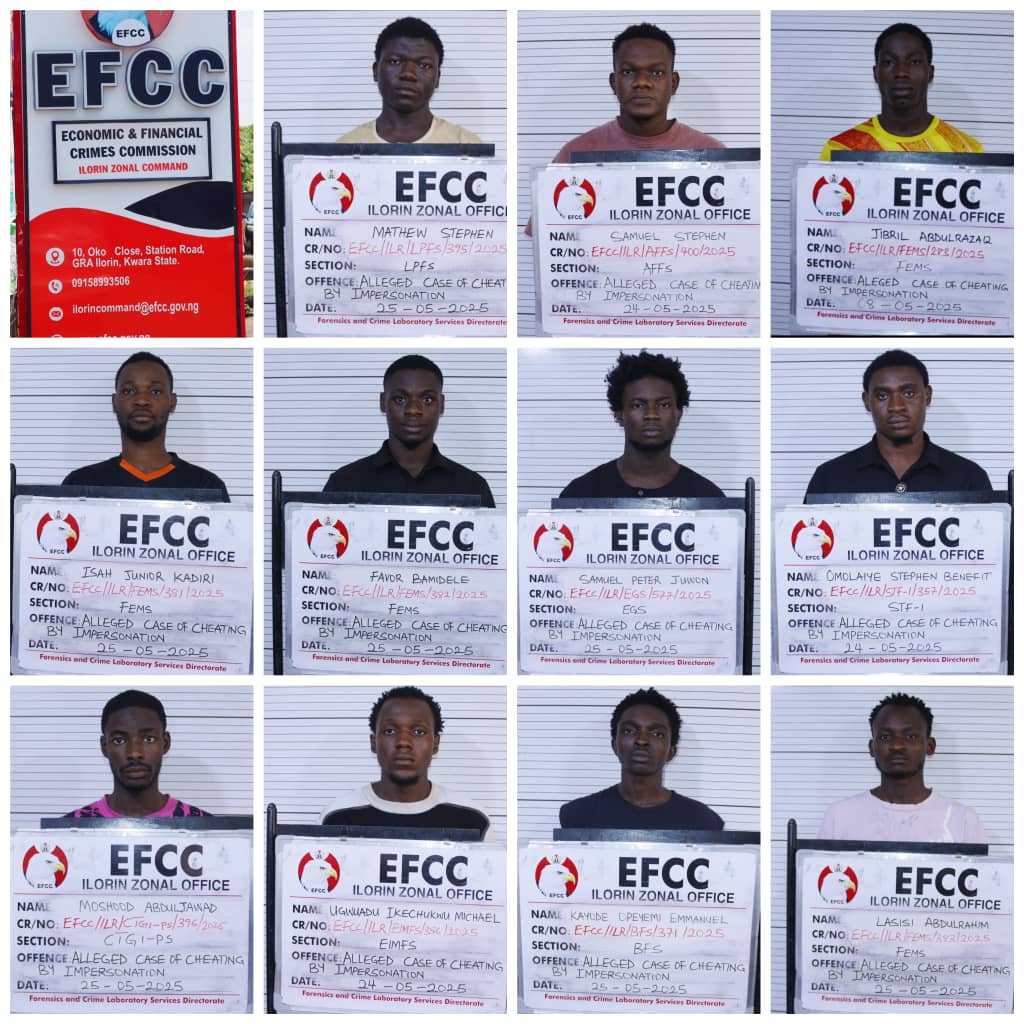
    The Ilorin Zonal Command of the Economic and Financial Crimes Commission (EFCC) has secured the conviction of eleven individuals for internet fraud-related offences. The convictions were delivered by Justices Abimbola Awogboro of the Federal High Court, Ilorin, and Mahmud Abdulgafar of the Kwara State High Court.

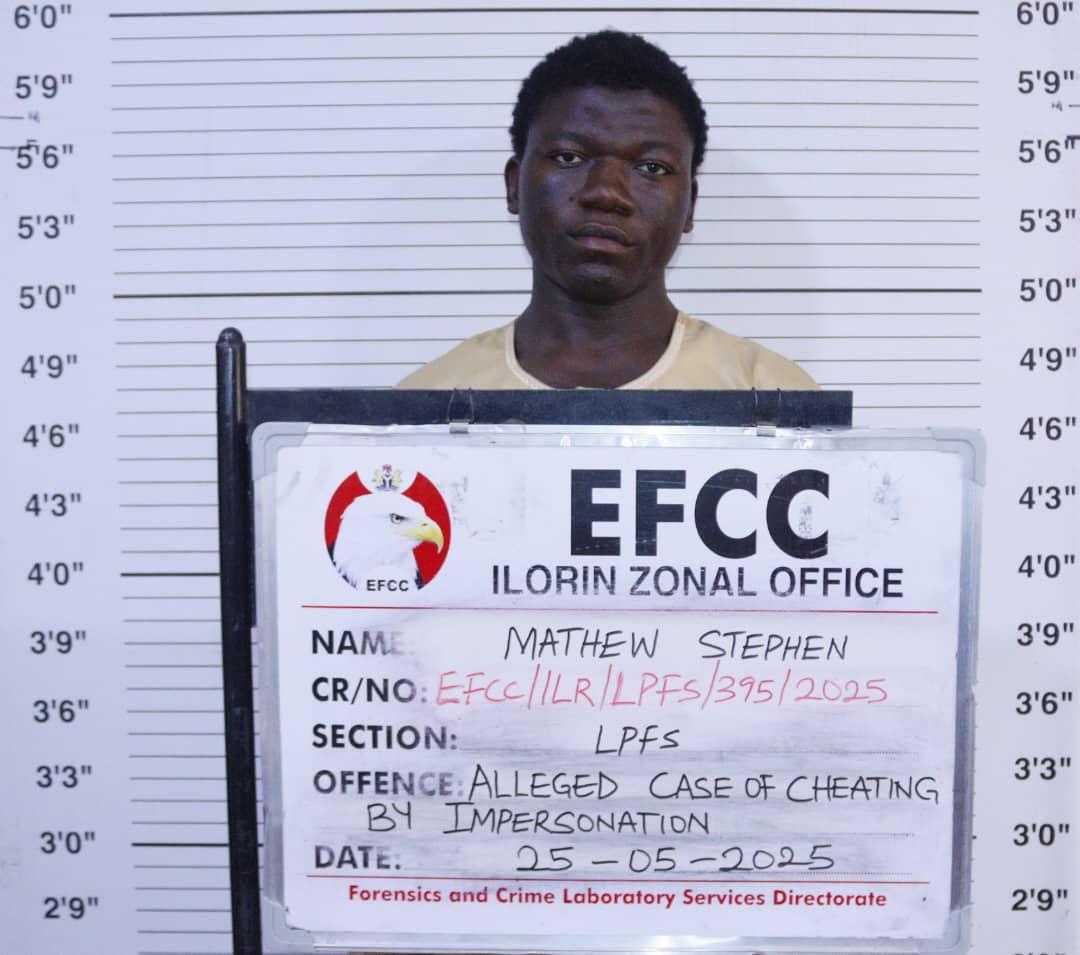
    Among those convicted is 20-year-old electrician Matthew Stephen Yaba, sentenced to nine months in prison without the option of a fine. Yaba was found guilty of impersonation and unlawful retention of N7.38 million, believed to be proceeds of cybercrime. His sentence also included the forfeiture of an iPhone 13 and N200,000 to the federal government.

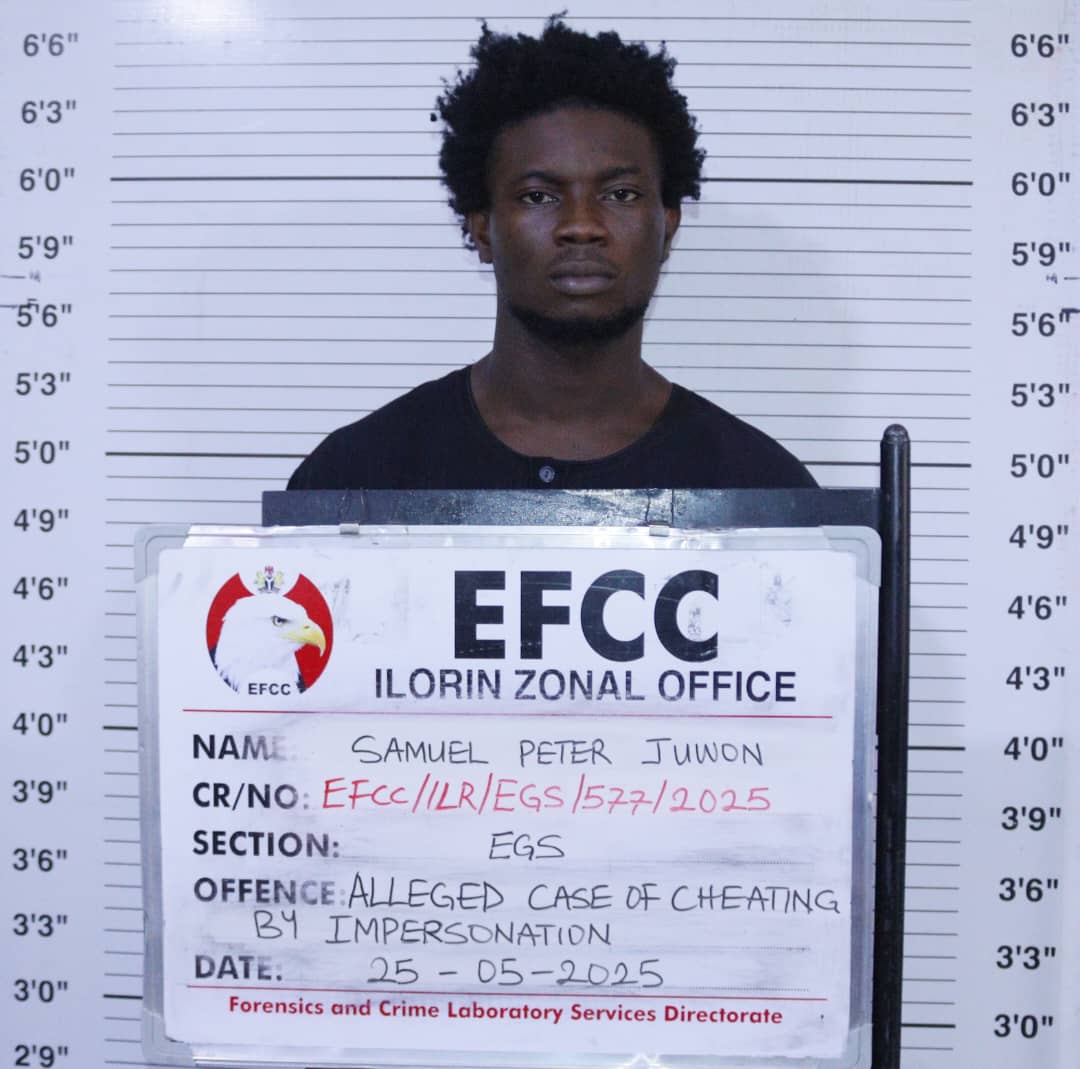
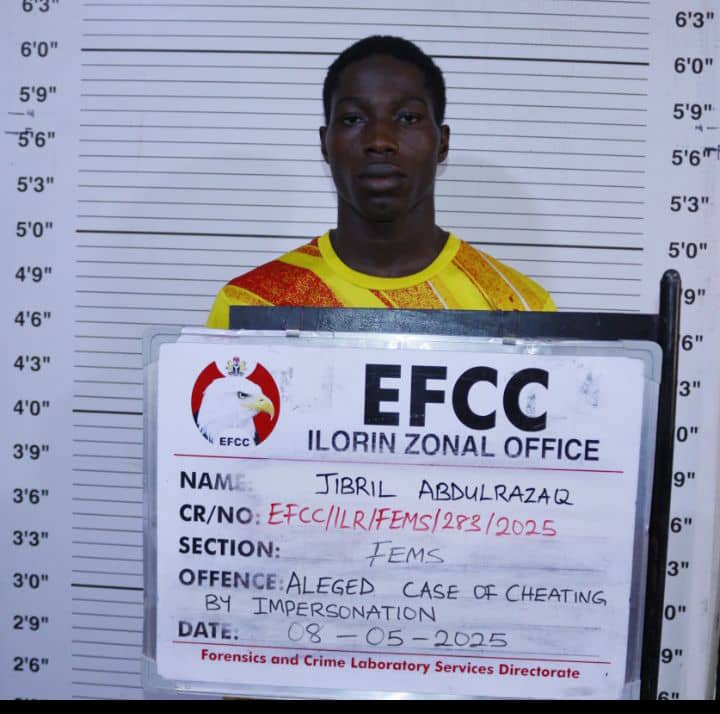
    The other convicts include Samuel Stephen Ayomide, Bamidele Favour Olajide, Isah Kadir, Abdulrasaq Jubril, Samuel Peter Juwon, Omolaiye Stephen Benefit, Kayode Emmanuel Opeyemi, Abdulrahim Lasisi, Ugwuadu Ikechukwu Michael, and Moshood Abduljawad. The offences ranged from identity theft and online impersonation to computer-related fraud and the illegal retention of funds.

    In court, all defendants pleaded guilty to the charges against them. Prosecutors Aliyu Adebayo, Andrew Akoja, and Omolade Ajibola presented evidence including confessional statements, digital devices, and cash restitutions. The courts admitted all items and testimonies.

    Justice Awogboro imposed varying penalties based on the severity of the offences. Ayomide received a nine-month prison term and forfeited $535 and an iPhone 16. Olajide was sentenced to six months and forfeited his iPhone X, Samsung A05, and $50. Kadir was ordered to complete 300 hours of community service and forfeited his Infinix phone.

    Juwon received a 12-month sentence, along with the forfeiture of multiple phones, a laptop, and $500. Benefit got nine months and forfeited N1 million and mobile phones. Opeyemi was jailed for six months and forfeited N500,000 and his phone. Lasisi was sentenced to 150 hours of community service and forfeited a Samsung S9.

    Michael and Abduljawad were sentenced to 12 and six months, respectively. Both forfeited their mobile phones, with Michael returning N500,000 and Abduljawad $190 in restitution.

    Justice Abdulgafar sentenced Jubril to a six-month suspended term, ordering the forfeiture of his iPhone 12 and $180. He was also directed to pay an additional $110 to complete restitution.

    The EFCC stated that the convictions reflect its continued effort to curb cybercrime across the country.

  • Gospel singer, eight others jailed for cybercrime in Kwara

    Gospel singer, eight others jailed for cybercrime in Kwara

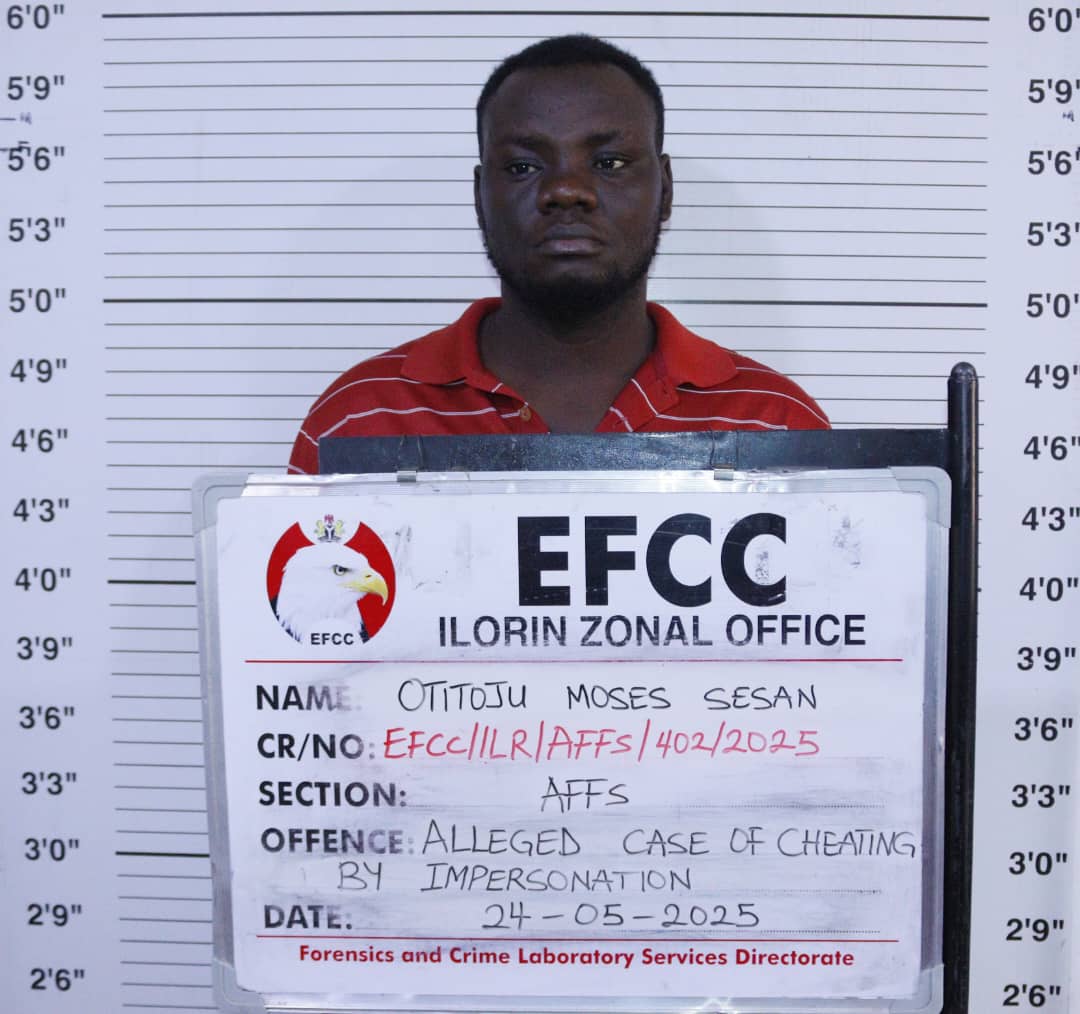
    The Federal High Court in Ilorin, Kwara State, has sentenced self-acclaimed gospel singer, Otitoju Moses Sesan, and eight others to varying jail terms for cybercrime and related offences prosecuted by the Economic and Financial Crimes Commission (EFCC).

    Justice Abimbola Awogboro on Thursday, July 17, 2025, sentenced 31-year-old Otitoju to six months imprisonment without an option of fine. The Kogi-born gospel performer was found guilty of retaining over N8.4 million traced to criminal activity in his UBA bank account.

    Otitoju, who claimed he performed at weddings and funerals in Lokoja, was convicted under Section 17 of the EFCC Act, 2004.

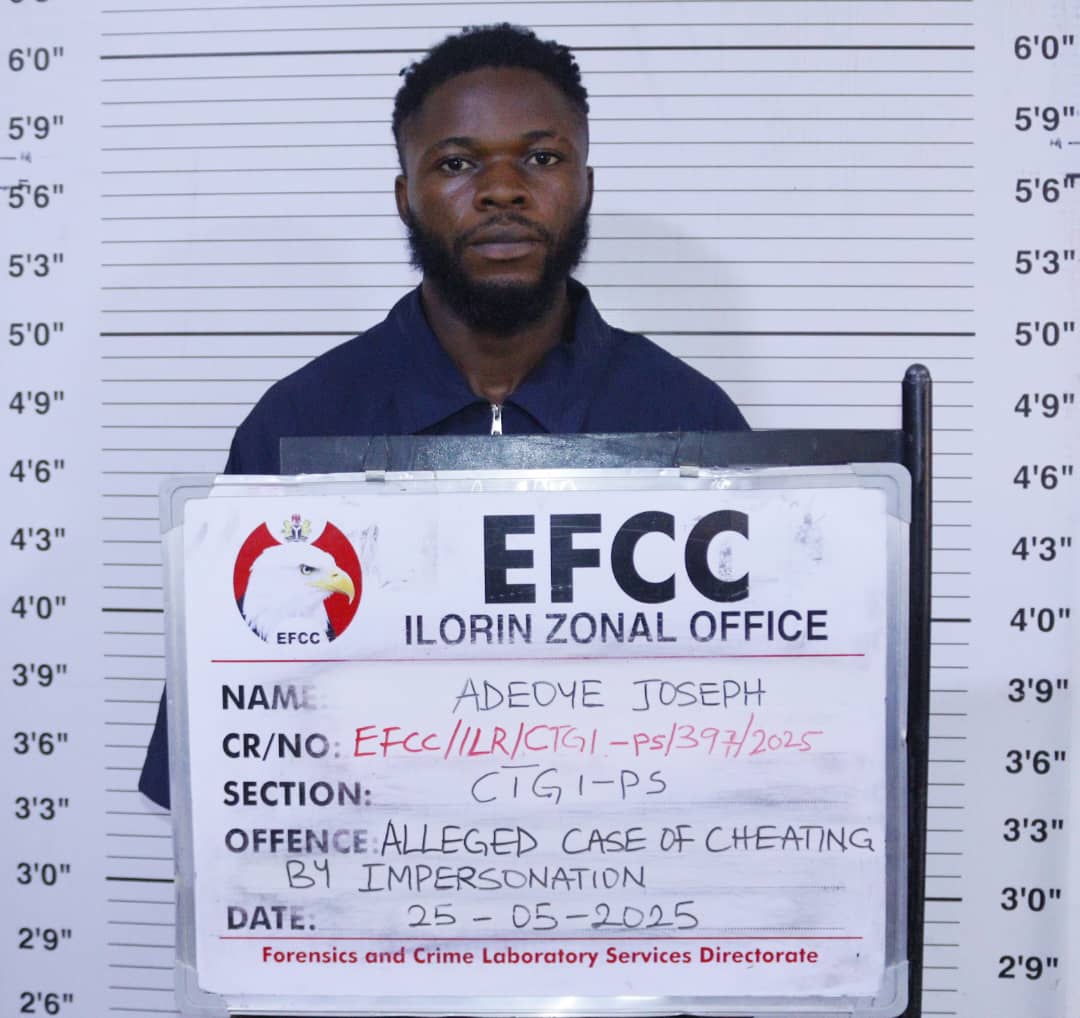
    Three others—Ayodele Joseph Daisi, Adeoye Joseph, and Abubakar Aliyu Abdulmalik—were also convicted on similar charges by the same court. Ayodele received an eight-month sentence without an option of fine, and forfeited his Techno 19 phone. Adeoye was handed eight months and forfeited $220, an iPhone 13, and a Techno Pop 9. Abubakar received six months and forfeited his iPhone 16 and Samsung S10.

    Prosecution lawyers Aliyu Adebayo, Sesan Ola, Rashidat Alao, and Mustapha Kaigama presented statements and evidence, which the court admitted.

    In related rulings, Justices Haleema Saleeman and Sulaiman Akanbi of the Kwara State High Court convicted five others on charges ranging from cybercrime to misappropriation.

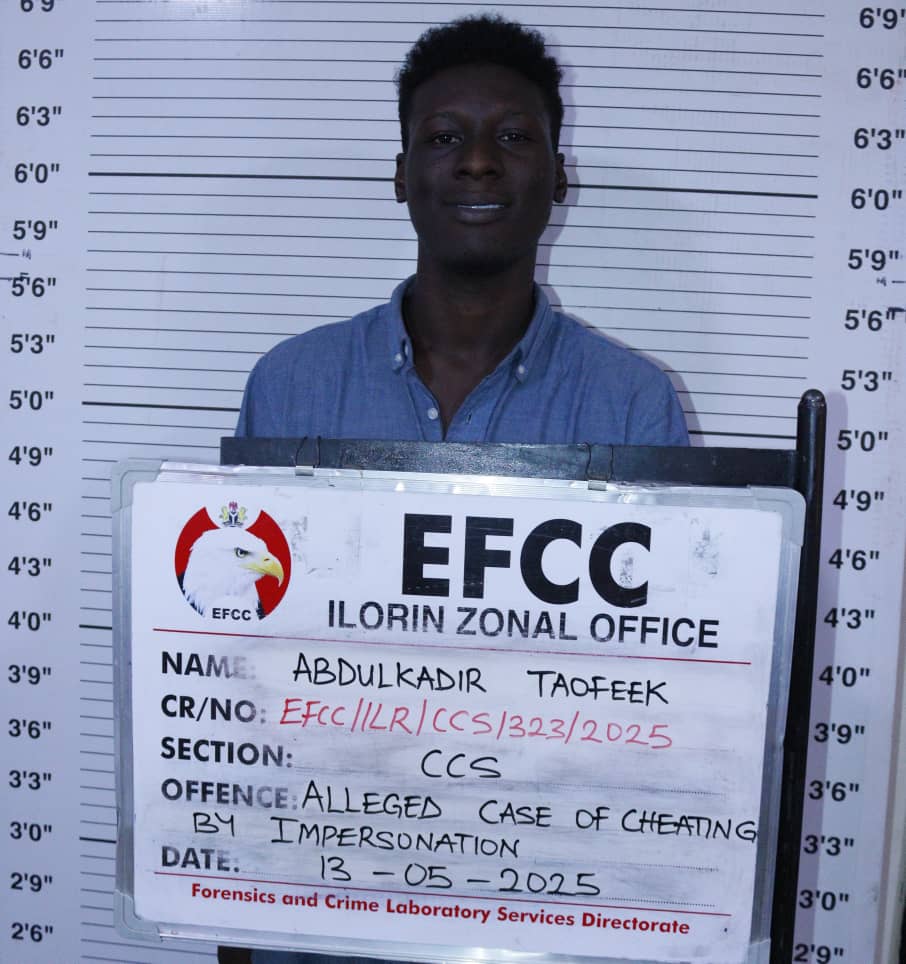
    Justice Akanbi sentenced Abdulkadir Taofeek to three years imprisonment with an option of N500,000 fine and ordered the forfeiture of N800,000 and two smartphones to the federal government.

    Justice Saleeman sentenced Emeka Oluwatobi Achi, Isaac Babalola Oluwafemi, and Afolabi Faith Olatoye to six months imprisonment each with an option of N100,000 fine. Emeka was also directed to repay N3.35 million within three months and report biweekly to the EFCC with his parents until the full amount is refunded.

  • EFCC Witness Details $12m Forex Deals in SunTrust Bank Trial

    EFCC Witness Details $12m Forex Deals in SunTrust Bank Trial

     A bureau de change operator on Thursday testified before the Federal High Court in Abuja, outlining how multi-million-dollar foreign exchange transactions allegedly facilitated by senior SunTrust Bank officials were routed through him.

    The witness, appearing as the first prosecution witness (PW1), gave his account in the trial of SunTrust Bank Managing Director, Halima Buba, and Chief Compliance Officer, Innocent Mbagwu, who are facing a six-count charge of money laundering totalling $12 million.

    Prosecuted by the Economic and Financial Crimes Commission (EFCC), the case involves multiple cash transactions linked to Aisha Achimugu, identified as the first defendant, and her company, Ocean Gate Energy Oil and Gas.

    Led in evidence by EFCC counsel Ekele Iheanacho, SAN, the witness said Achimugu contacted him in March 2025 to facilitate foreign exchange transactions at SunTrust Bank branches in Abuja and Lagos. He confirmed with Buba before proceeding.

    On March 13, the witness said a staff member of Achimugu delivered $1 million to the Abuja branch for conversion, with the proceeds paid into Ocean Gate Energy’s Zenith Bank account. He claimed all transactions were verified with Buba via WhatsApp.

    He testified that additional transactions followed, including $2 million reportedly received from Mbagwu on March 13, another $2 million on March 14, and a further $2 million on March 20. These cash swap arrangements were also confirmed with Buba.

    A final tranche of $2 million was allegedly collected on March 24. The funds were later transferred in tranches into Ocean Gate Energy’s Zenith Bank account to support the purchase of an oil block, according to the witness.

    He also stated that Achimugu conducted further Naira-to-dollar exchange deals, with Naira credited to local accounts and dollar equivalents sent to Ocean Gate Energy, again with confirmation from Buba.

    The witness submitted screenshots of WhatsApp chats, including exchanges between himself and Mbagwu, who initially denied knowledge of the transactions.

    The trial continues as the EFCC presents its case against the bank executives.

  • Fayose Acquitted of All Money Laundering Charges

    Fayose Acquitted of All Money Laundering Charges

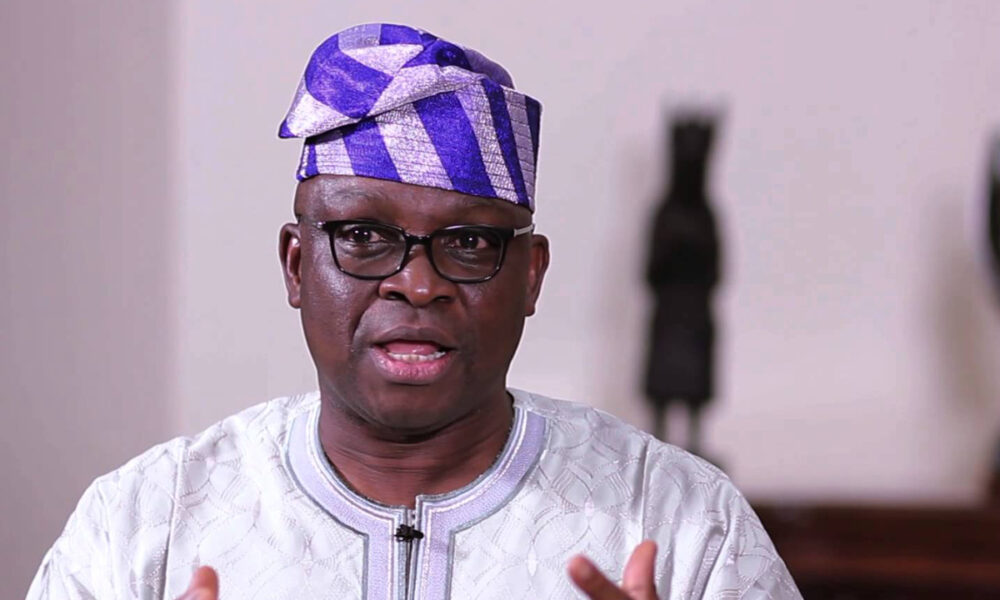
    Ayodele Fayose

    A Federal High Court in Lagos on Tuesday acquitted former Ekiti State Governor, Ayodele Fayose, of all charges in the long-standing money laundering case filed against him by the Economic and Financial Crimes Commission (EFCC).

    The court upheld Fayose’s no-case submission, ruling that the prosecution had failed to present sufficient evidence to establish a prima facie case against him. As a result, the court determined there was no need for the defendant to enter a defence.

    Fayose was first arraigned on charges relating to alleged fraud and money laundering during his time in office as governor. The EFCC had accused him of financial misconduct and misappropriation of public funds.

    However, after years of trial proceedings, the court concluded that the evidence brought forward by the anti-graft agency was inadequate to support the allegations.

    The decision marks the end of a protracted legal battle for the former governor, who has consistently denied the charges since the case began.

  • EFCC Chair Pushes for Law Against Unexplained Wealth

    EFCC Chair Pushes for Law Against Unexplained Wealth

    Chairman of the Economic and Financial Crimes Commission (EFCC), Ola Olukoyede, has called on the National Assembly to pass legislation criminalising unexplained wealth, warning that Nigeria’s anti-corruption efforts will remain ineffective without such a legal tool.

    Speaking at the National Conference on Public Accounts and Fiscal Governance in Abuja, organised by the Public Accounts Committees of the Senate and House of Representatives, Olukoyede described financial misconduct in the public sector as a major driver of economic hardship and insecurity.

    “In the last three weeks, we began a commission-wide investigation into the extractive sector, particularly oil and gas. What we’re uncovering is staggering—and we’ve only scratched the surface,” he said.

    Olukoyede stressed that mismanagement of public funds is directly linked to the country’s insecurity, including terrorism, kidnapping, and banditry, all fuelled by diverted resources that should have improved citizens’ lives.

    He criticised legal constraints that hinder asset recovery, citing the requirement of a “predicate offence” before action can be taken on suspicious wealth. “Someone earns a modest civil service salary for 20 years and ends up with five luxury properties, yet we must prove theft before acting. That’s unacceptable,” he said.

    Olukoyede appealed to lawmakers to urgently pass the Unexplained Wealth Bill, which was previously rejected by the last Assembly.

    Meanwhile, the EFCC boss disclosed that 146 out of 194 foreigners arrested for cyber-related financial crimes in 2024 have been successfully prosecuted and convicted. “They will serve their sentences and be repatriated,” he confirmed.

    In a related development, National Security Adviser (NSA), Nuhu Ribadu, reiterated President Bola Tinubu’s commitment to national development and digital security, dismissing political distractions as “noise.”

    Ribadu spoke at the opening of the International Cybersecurity Conference in Abuja, organised by the National Information Technology Development Agency (NITDA). He emphasized collaboration between the public and private sectors, urging collective responsibility in securing Nigeria’s digital future.

    “We are building a resilient, secure digital Nigeria. Let this conference be a turning point—not just policy talk but real action,” Ribadu said.