Tag: Ukraine

  • Sweden Arrests Chinese Ship Captain Over Suspected “Shadow Fleet” Links

    Sweden Arrests Chinese Ship Captain Over Suspected “Shadow Fleet” Links

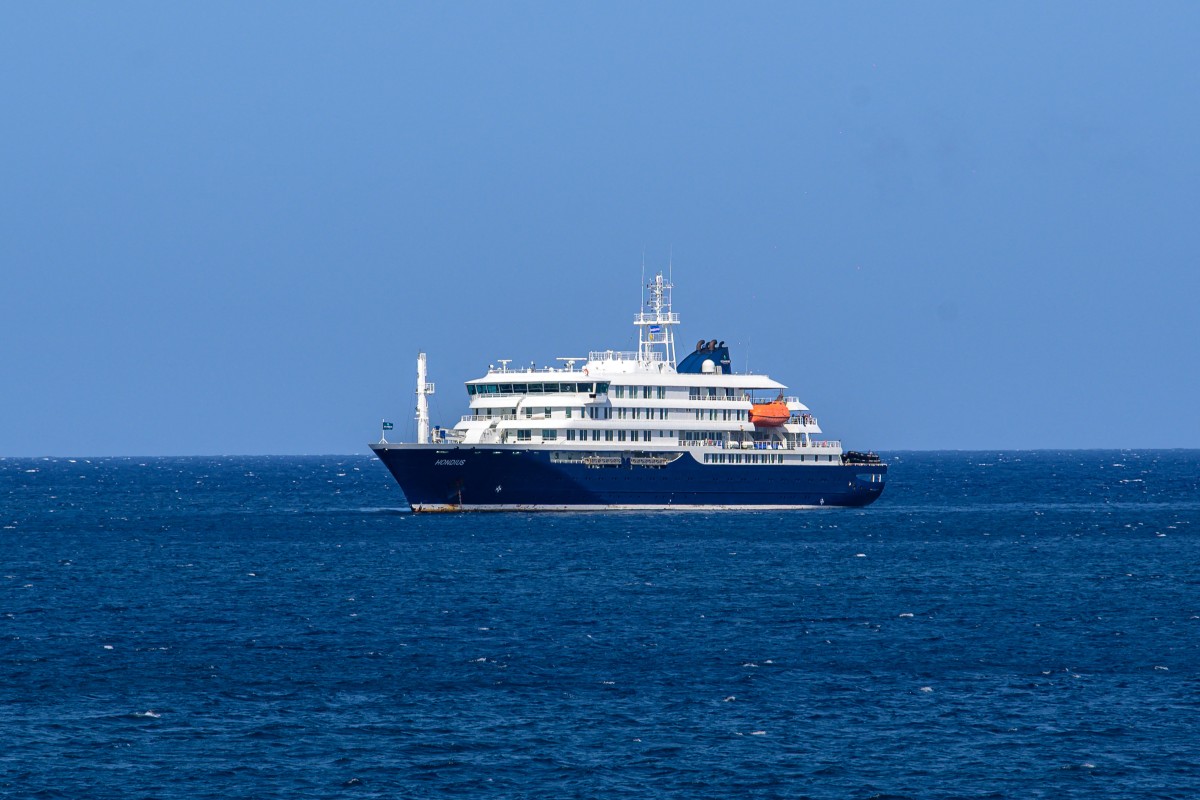
    A general view of the cruise ship MV Hondius stationary off the port of Praia, the capital of Cape Verde, on May 3, 2026. An outbreak of “severe acute respiratory illness” on board a cruise ship in the Atlantic has left two people dead and a third in intensive care in Johannesburg, South Africa’s health ministry told AFP on May 3, 2026.
    The outbreak occurred on the MV Hondius, travelling from Ushuaia in Argentina to Cape Verde. The patient being treated in Johannesburg tested positive for a hantavirus, a family of viruses that can cause hemorrhagic fever, South African spokesperson Foster Mohale said. (Photo by AFP)

    Swedish authorities have arrested the captain of a cargo vessel suspected of being linked to Russia’s so-called “shadow fleet,” according to the country’s prosecution authority.

    The arrested captain, a Chinese national, was in charge of the ship Jin Hui, which was boarded by Sweden’s coast guard on Sunday.

    The vessel is suspected of sailing under a false Syrian flag and is believed to be part of a network of ships allegedly used by Russia to bypass Western sanctions. These “shadow fleet” vessels are often older ships with unclear ownership structures and limited insurance coverage, raising concerns among European maritime authorities.

    Sweden said the ship has been listed under sanctions by the European Union, the United Kingdom, and Ukraine.

    According to the Swedish Prosecution Authority, the captain is being held on suspicion of using forged documents and violating maritime safety regulations related to seaworthiness.

    “An interrogation of the detainee will be held during the day, and contact has been initiated with other authorities and countries,” said prosecutor Adrien Combier-Hogg.

    The incident is the latest in a series of maritime inspections by Sweden targeting vessels suspected of sanctions evasion activity in the Baltic Sea region, amid heightened tensions linked to the ongoing Russia–Ukraine conflict.

    Authorities say investigations are continuing, and further details will be released as diplomatic and legal processes progress.

  • Civilians Feared Dead After Russian Attack on Train in Ukraine

    Civilians Feared Dead After Russian Attack on Train in Ukraine

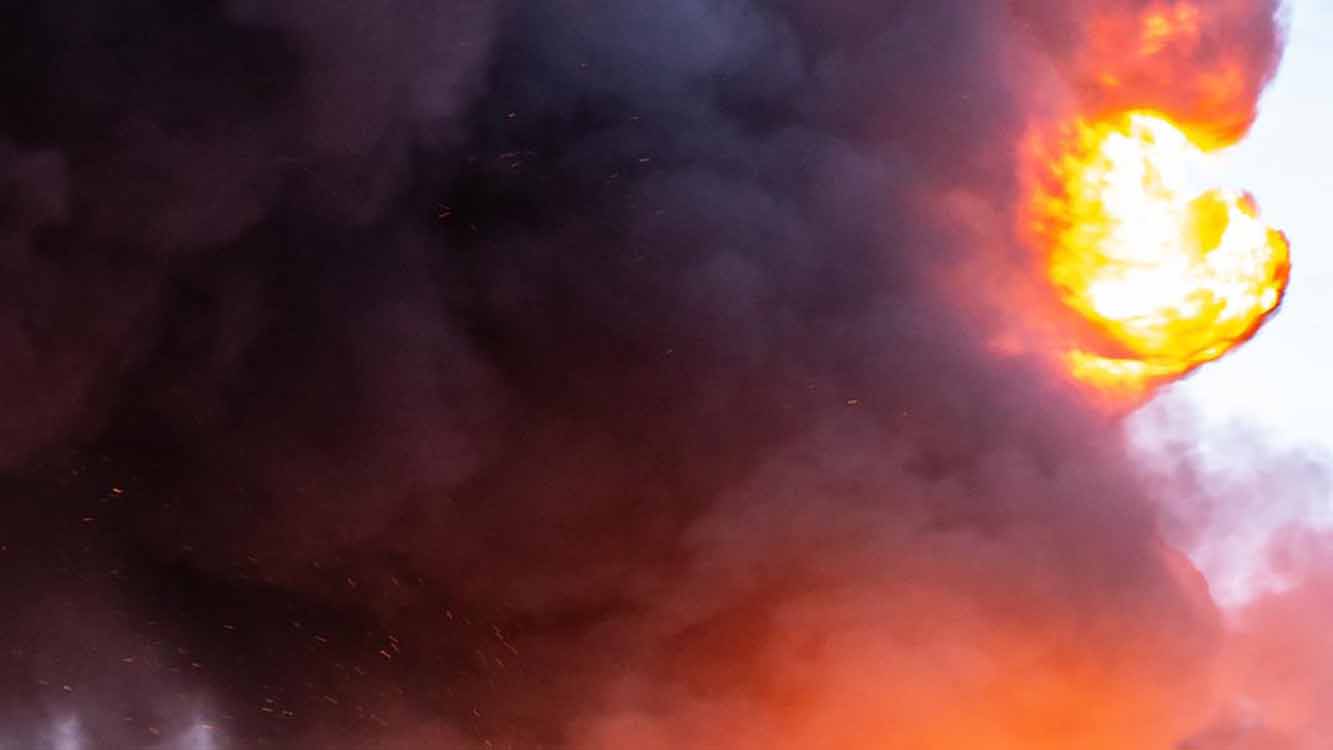
    Russian forces launched strikes across several regions of Ukraine, killing civilians and hitting a passenger train in the Dnipropetrovsk region. A drone strike on a moving train killed a 75-year-old man and wounded nine others, while authorities reported that the train crew evacuated passengers and provided first aid after the attack.

    In the eastern city of Kramatorsk, three people were killed as fighting intensified, according to local military officials. In Druzhkivka, Donetsk region, separate attacks left two people dead and 13 others injured.

    Further casualties were recorded in the Dnipropetrovsk region, where the body of a 55-year-old man was recovered from rubble following another strike. In the northern Chernigiv region, a woman born in 1937 was also reported killed.

    Ukrainian Railways CEO Oleksandr Pertsovskyi said attacks on rail infrastructure appear to be a deliberate effort to isolate regions and disrupt civilian movement. Officials said the strikes targeted key infrastructure amid ongoing hostilities.

    The attacks come as international efforts, led by the United States, continue to push for a peace settlement between Kyiv and Moscow. The conflict, which began in February 2022, remains the deadliest in Europe since World War II, with heavy military and civilian casualties reported.

  • Russian Strikes Wound 11 in Ukraine, Knock Out Power Across Regions

    Russian Strikes Wound 11 in Ukraine, Knock Out Power Across Regions

    Russian drone and missile attacks overnight wounded 11 people and caused widespread power outages across Ukraine, officials said on Thursday.

    In the southeastern city of Zaporizhzhia, the regional military administration chief, Ivan Fedorov, said several residential buildings were struck during the bombardment.

    “The number of wounded in the enemy attack on Zaporizhzhia has increased to 11,” Fedorov wrote on Telegram. “Among the wounded are six children — three girls and three boys, aged between three and six years.”

    Ukraine’s Energy Minister, Svitlana Grinchuk, confirmed that the strikes targeted the country’s energy infrastructure. “Russia is once again launching a massive missile and drone strike on Ukraine’s energy infrastructure,” she said on Facebook.

    She added that emergency crews were working to assess the damage and restore power once conditions allowed. The state energy operator, Ukrenergo, reported emergency power cuts across most regions as a result of the attacks.

    Meanwhile, Russia’s Defence Ministry claimed its forces had intercepted 170 Ukrainian drones overnight, including 48 over the Bryansk region, which borders Ukraine, and nine near Moscow. Six drones, it said, were headed toward the Russian capital.

    Moscow has maintained an almost continuous campaign of missile and drone strikes on Ukrainian infrastructure since the full-scale invasion began in February 2022. Ukraine has increasingly retaliated with its own attacks on Russian oil refineries and energy facilities.

    The latest assault comes amid reports that US President Donald Trump, who returned to the White House in January, is seeking to broker a peace deal, though diplomatic efforts have so far made little progres

  • Trump Considers Sending Tomahawk Missiles To Ukraine

    Trump Considers Sending Tomahawk Missiles To Ukraine

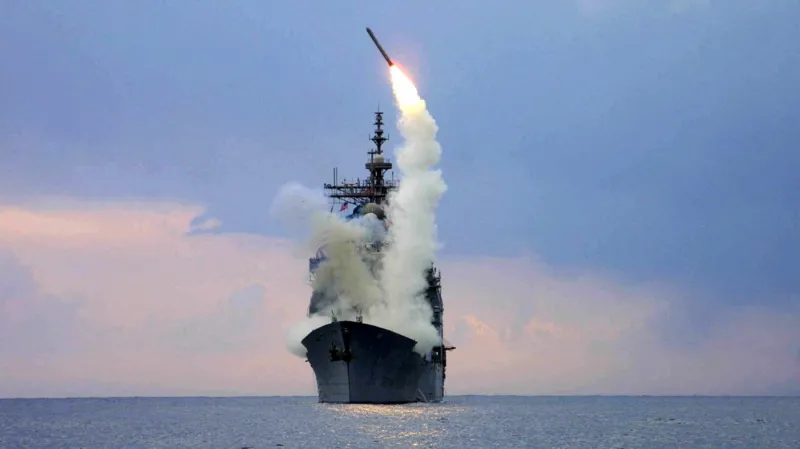
    US President Donald Trump has indicated he is considering providing long-range Tomahawk cruise missiles to Ukraine, a potential escalation in the ongoing conflict with Russia. Speaking to reporters on Air Force One on Sunday, Trump said the decision was not final: “We’ll see… I may.”

    The comments followed a weekend phone call with Ukrainian President Volodymyr Zelensky, who urged stronger military capabilities to support counter-attacks against Russian forces. Trump suggested he might discuss the matter with Russia before making a final decision. “I might tell them [Russia] that if the war is not settled, we may very well, we may not, but we may do it,” he said.

    Tomahawk missiles have a range of approximately 2,500 kilometers (1,500 miles), which would place Moscow within reach. Trump added, “Do they [Russia] want Tomahawks going in their direction? I don’t think so.”

    The Kremlin has voiced strong concern over the potential delivery of such weapons. On Sunday, spokesman Dmitry Peskov described the prospect as of “extreme concern” and warned that escalating tensions could have serious consequences. Peskov noted that Russia would not be able to determine whether any launched missiles carried nuclear warheads.

    Former Russian President Dmitry Medvedev echoed Peskov’s warning, posting on social media that the delivery of long-range missiles “could end badly for everyone. And first of all – for Trump himself.” Medvedev has increasingly taken a hawkish stance online, often expressing views more extreme than official Kremlin positions.

    Ukraine has repeatedly requested long-range missiles since Russia launched its full-scale invasion in 2022. Kyiv argues the weapons are necessary to target Russian positions far from front-line combat, particularly as Russian drone and missile attacks intensify against Ukrainian cities and critical energy infrastructure.

    Last month, Trump’s special envoy to Ukraine, Keith Kellogg, suggested the president had authorized strikes deep into Russian territory, stating, “there are no such things as sanctuaries” from attacks in the conflict.

    The discussions between Trump and Zelensky also covered broader efforts to strengthen Ukraine’s air defences and military capabilities ahead of winter, when Russian strikes have historically targeted civilian infrastructure to disrupt power and energy supplies.

    The potential provision of Tomahawk missiles underscores the high stakes of U.S. involvement in Ukraine and the delicate balance of managing relations with Moscow amid an ongoing and escalating war.

  • EBRD Warns Of Slower Growth Ahead For South-East Europe

    EBRD Warns Of Slower Growth Ahead For South-East Europe

    The European Bank for Reconstruction and Development (EBRD) has warned that economic growth in South-East Europe is set to slow next year, citing U.S. tariffs, rising Chinese competition, and budgetary constraints as key pressures.

    In its latest outlook released Thursday, the bank slightly downgraded its 2026 growth projections across all its regions of investment, which now include some sub-Saharan African nations for the first time.

    The lender raised its 2025 growth forecast to 3.1 percent, up from 3.0 percent projected in May. However, it cut its 2026 estimate to 3.3 percent, weaker than earlier expectations. The downgrade was largely attributed to Romania and the Balkan economies.

    “The first pressure point everybody has been thinking about is access to the U.S. market,” EBRD chief economist Beata Javorcik told AFP. She noted that while some countries saw short-term gains ahead of new tariffs, the overall impact varied widely.

    For instance, Kazakhstan recorded higher shipments of silver and gold bullion to the United States, while Hungary benefited from pharmaceutical and computer exports. But exports from EBRD regions as a whole fell in the second quarter after an initial surge in anticipation of tariffs.

    Ukraine’s economy is also facing greater strain than expected. The bank cut its 2025 forecast for Ukraine to 2.5 percent growth, down from 3.3 percent, citing the continuing war with Russia, energy risks, and dependence on international support. Russia’s growth was revised to 1.3 percent.

    Founded in 1991 to help post-Soviet states transition to market economies, the EBRD has since expanded its reach to the Middle East, North Africa, and now parts of Africa.

    The bank also highlighted fiscal pressures across governments in its regions, noting limited room for spending to counter economic shocks.

    The Organisation for Economic Co-operation and Development (OECD) this week gave a slightly more optimistic view, forecasting stronger-than-expected global growth in 2025, though it cautioned that the full effects of U.S. tariffs remain uncertain.

  • Trump, Lula, Macron to Open UN General Assembly Debate

    Trump, Lula, Macron to Open UN General Assembly Debate

    The 80th session of the United Nations General Assembly (UNGA) General Debate will open in New York on Tuesday, with U.S. President Donald Trump scheduled to deliver the first address.

    Brazilian President Luiz Inácio Lula da Silva, Turkish President Recep Tayyip Erdoğan, and French President Emmanuel Macron are also listed among the first day’s speakers. Proceedings are set to begin at 9 a.m. (1300 GMT).

    UN Secretary-General António Guterres and General Assembly President Annalena Baerbock will deliver opening remarks. Later in the week, the Security Council will convene a special session on the war in Ukraine, with President Volodymyr Zelensky expected to attend.

    More than 150 heads of state and government are expected to speak during the debate, which will focus heavily on the conflicts in Ukraine and the Middle East, as well as the UN’s financial challenges and the evolving global role of the United States under Trump’s leadership.

    Nigeria’s Vice-President, Sen. Kashim Shettima, has already arrived in New York to represent President Bola Tinubu and lead the country’s delegation at the high-level gathering.

  • Looking forward to the day Ukraine joins NATO — Joe Biden

    Looking forward to the day Ukraine joins NATO — Joe Biden

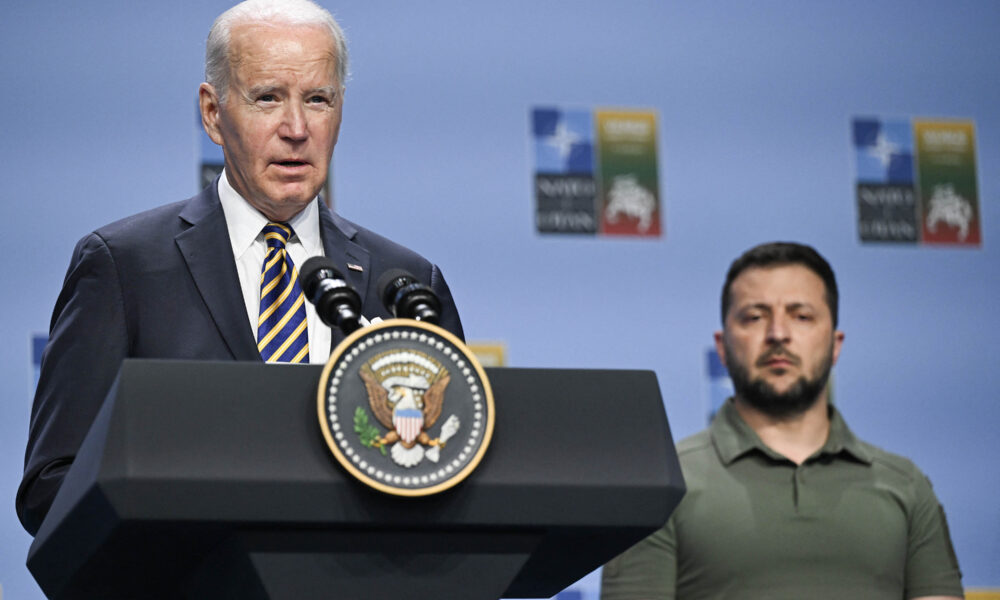
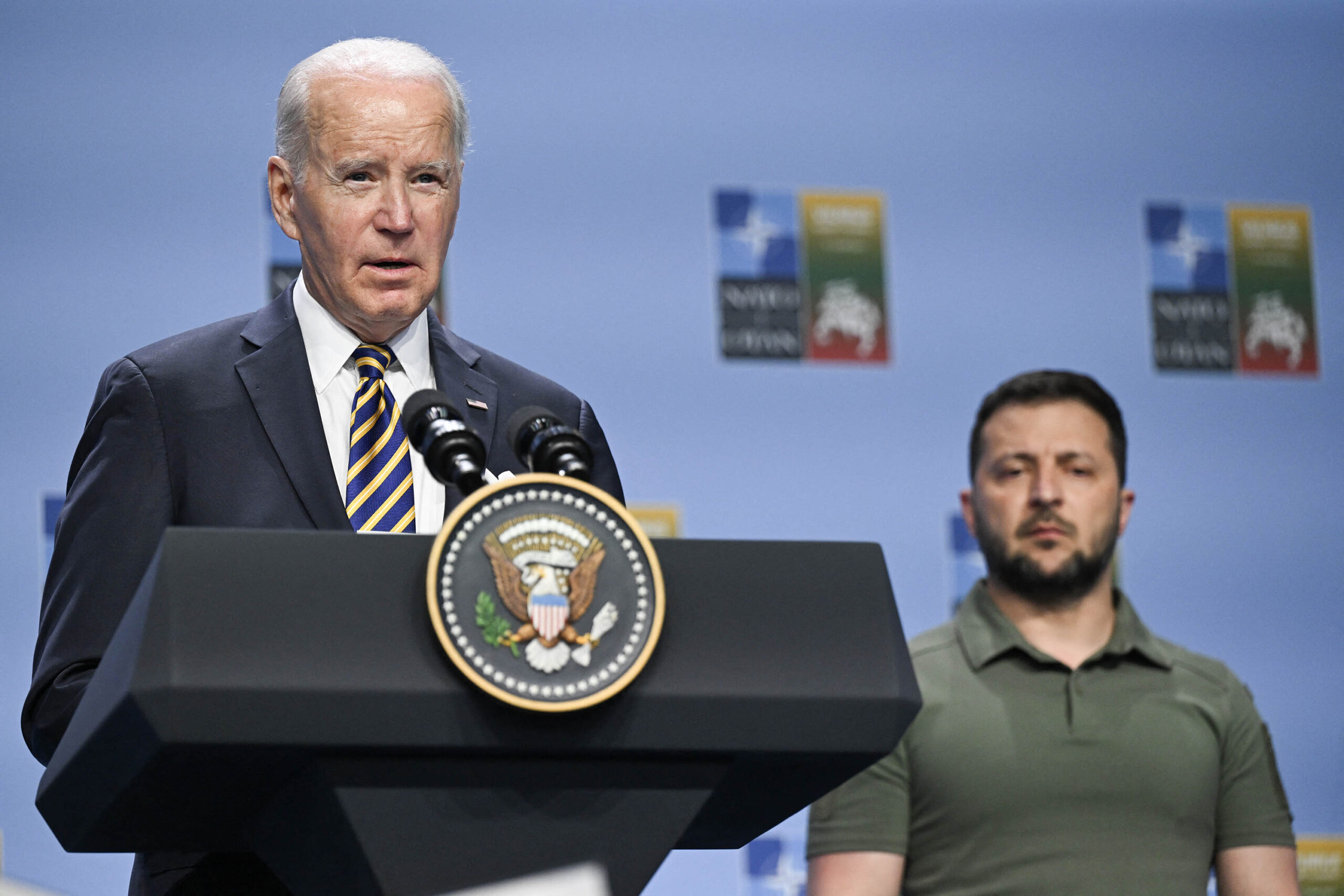
    President of the United States, Joe Biden said that he looks forward to Ukraine’s entry into the alliance.

    He said this during a meeting with Ukrainian President Volodymyr Zelensky at the Vilnius summit on July 12.

    “I look forward to… having the meeting, celebrating your official, official membership in NATO,” Biden said.

    The two leaders met for bilateral talks during the NATO summit where Ukraine’s partners pledged to ramp up their support and provided new security commitments. Kyiv has not received its much-desired NATO membership invite, however.

    Biden said he understands Zelensky’s frustration but assured him of continued U.S. support.

    “I hope you all got a sense today from all my colleagues how much public support you have. It’s real and I hope we finally have put to bed the notion about whether or not Ukraine is welcome in NATO. It’s going to happen,” Biden said at the meeting.

    “We’re all moving in the right direction. I think it’s just a matter of getting by the next few months,” he added.

    At the summit, NATO adopted a three-part package to bring Ukraine closer to the Alliance, and dropped the need for the Membership Action Plan (MAP), but stopped short of a full invitation.

    I look forward to the day Ukraine joins NATO – US President Biden

    NATO Secretary-General Jens Stoltenberg said that Ukraine will be able to join once “allies agree, and conditions are met.”

    NATO was formed as a transatlantic military alliance after the cold war to prevent the Soviet Union from ever attacking the West.

  • Pope Francis meets with Ukrainian President Zelenskyy

    Pope Francis meets with Ukrainian President Zelenskyy

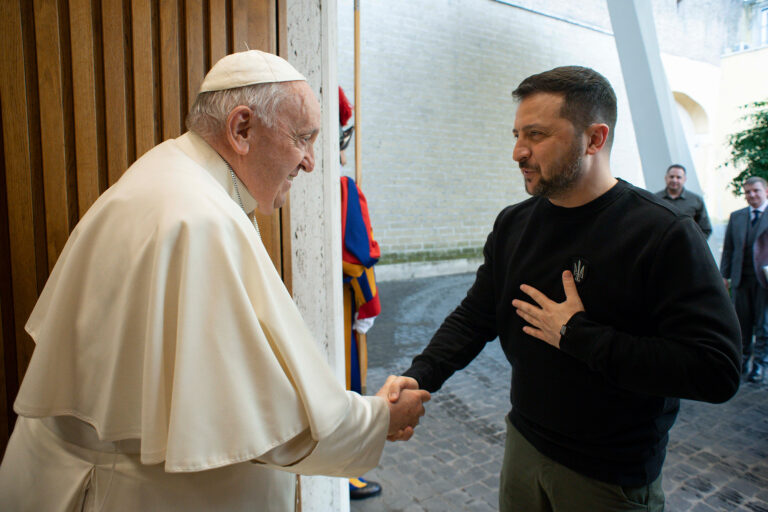
    This image made available by Vatican News shows Pope Francis meeting Ukrainian President Volodymyr Zelenskyy during a private audience at The Vatican, Saturday, May 13, 2023. Francis recently said that the Vatican has launched a behind-the-scenes initiative to try to end the war launched last year by Russia. (Vatican News via AP)
    Ukrainian President Volodymyr Zelensky meets with Pope Francis at The Vatican on May 13. Vatican News/AP

    Vatican’s leader, Pope Francis met with Ukrainian President Volodymyr Zelenskyy on Saturday May 13, at the Vatican.

    Zelenskyy’s visit – a rare meeting between a pontiff and a head of state during war, comes two weeks after the pope told reporters that he is engaged in a secret mission to end Russia’s war against Ukraine.

    Zelenskyy has made regular appeals for the pope to visit the war-torn country, since the start of the war on February 24, 2022.

    The pope has said he will visit Kyiv but only if he could travel to Moscow, as well, to make an appeal for peace.

    Upon his arrival at the Vatican, Zelenskyy greeted the Pope at the door of the Vatican’s Pope Paul VI Hall, rather than the Apostolic Palace, which is traditionally used for meetings with heads of state.

    “Thank you for this visit,” the pope said to Zelenskyy in Italian. “A great honor,” Zelenskyy replied in English, placing his hand over his heart.

    The pope and the president met for 40 minutes behind closed doors, with Zelenskyy giving the pope a bullet-dented plate and a poster in the style of an icon titled “Loss.” The image memorialized the lives of children who died in the early days of the conflict.

    In a tweet, Zelenskyy emphasized that he asked the pope to condemn Russian war crimes, writing that “there can be no equality between the victim and the aggressor.”

    He also said that he asked the Vatican to back Ukraine’s peace formula, which includes the withdrawal of Russian forces from the country, a restoration of all of Ukraine’s sovereign territory, Russian war reparations and postwar security guarantees for Ukraine.

    Zelenskyy’s visit to the Vatican is his second since being elected president of Ukraine in 2019. His last visit took place on Feb. 8, 2020, just prior to the start of the COVID-19 pandemic.

  • South Africa hits back as US Issues warning to countries arming Russia

    South Africa hits back as US Issues warning to countries arming Russia


    The United States has sounded a warning that it would be wise for countries to step back from any kind of engagement with the Russian military.

    That’s the view of the Head of the US Office of Sanctions Coordination Ambassador Jim O’Brien.

    He was reacting to claims by the US ambassador to South Africa Reuben Brigety that Pretoria had allowed weapons and ammunition transfers to Moscow via a Russian cargo ship that docked in Simonstown in early December last year.

    O’Brien says they are working with G7 colleagues and other allied governments to communicate the importance of not supplying the Russian war machine.

    “We are we are working with governments around the world to restrict access to to anything that will support the Russian military on the ground in Ukraine. I’m not going to discuss any specific possible punitive measures. I do think any country that reads the press can see that even the European Union is preparing to provide itself with additional tools to address actions by third countries. So it’s clear this is moving in the direction that, you know, I think it’d be wise of countries to to step back from any kind of engagement with the Russian military.”

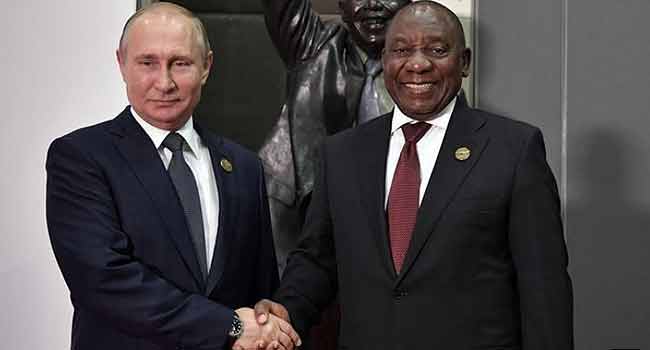
    Earlier on Thursday, President Cyril Ramaphosa told Parliament that the matter was being looked into. In other developments, the US says it will continue to engage governments around the world to support the UN Charter.

    That view was expressed by US envoy to the United Nations and a member of President Joe Biden’s Cabinet – Ambassador Linda Thomas-Greenfield.

    “We continue to certainly have a strong bilateral relationship with South Africa. We have worked over the course of the past two years to encourage all countries to condemn Russia’s invasion of Ukraine and not to give any support to those efforts. We will continue to have conversations along those lines with all countries here in New York to ensure that they take on the important position of supporting the UN Charter and supporting our commitment to not allowing one country to invade another country and compromise the territorial integrity of that country.”

    But President Cyril Ramaphosa’s office hit back, saying it was “disappointing” that Brigety had “adopted a counter-productive public posture.”

    The remarks “undermine the spirit of cooperation and partnership” between the two nations, Ramaphosa’s spokesman Vincent Magwenya said in a statement.

    “While no evidence has been provided to date to support these allegations, the government has undertaken to institute an independent enquiry to be led by a retired judge.”

    South Africa has refused to condemn the invasion of Ukraine, which has largely isolated Moscow on the international stage.

    The country — an African powerhouse that also wields moral clout for its victory over apartheid — says it wants to stay neutral, and champions dialogue as the means to end the conflict.

    But critics cite a number of recent incidents as evidence of a tilt towards the Kremlin.

  • Ukraine President Zelensky appoints Oby Ezekwesili as ambassador

    Ukraine President Zelensky appoints Oby Ezekwesili as ambassador


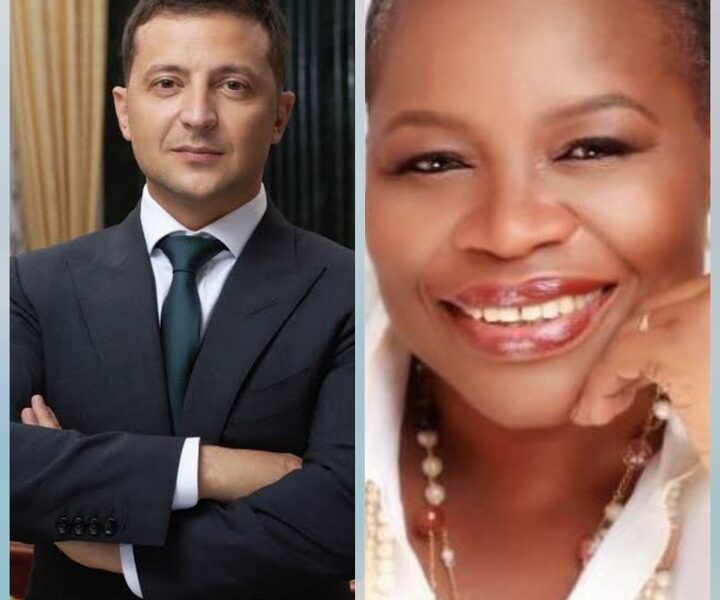
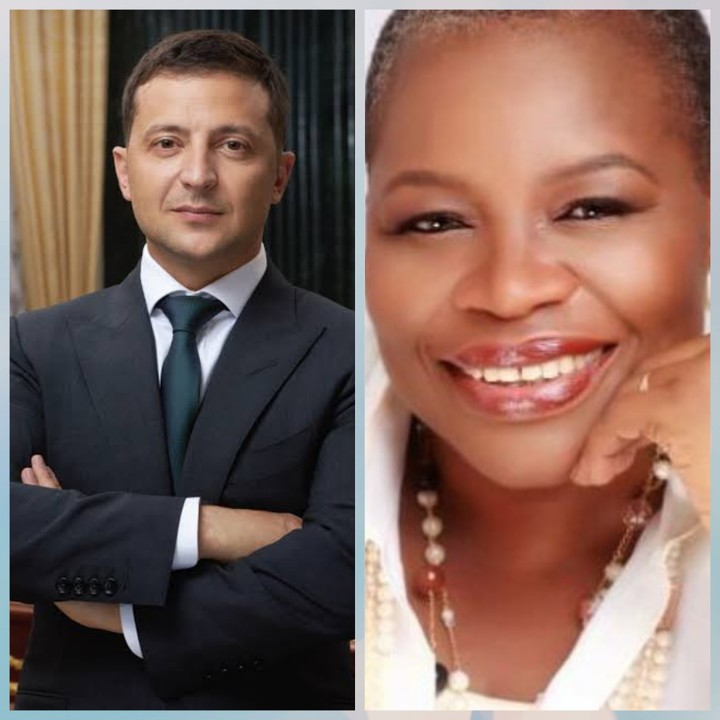
    Ukraine’s President Volodymyr Zelensky has appointed former Nigerian minister, Mrs Obiageli Ezekwesili, as an ambassador of ‘Grain from Ukraine.’

    The programme is an initiative of the Ukrainian government to assist countries suffering from severe food shortages relative to the war with Russia.

    Head Office of the President of Ukraine, Andriy Yermak, disclosed that Ezekwesili and her colleagues are joining international experts and leaders to support the initiative. Since the initiative’s launch in November 2022, more than 30 donor countries have signed up.

    Yermak added, “We see the prospect of expanding the project. To do this, we need reliable partners with knowledge and extensive connections.

    Ezekwesili, on her Facebook page (Oby Ezekwesili), gave a reaction over her new appointment where she wrote, “I am delighted to accept the invitation of President @Zelenskyy to be one of 3 leading African experts recently named as Ambassadors of the “Grain from Ukraine” initiative. “Glad to be joining @DrJoyceBanda and @ChrisFomunyoh on this crucial program to stem food insecurity.”