Tag: Waec

  • WAEC Exams Disrupted by Delays, Candidates Write Late Into Night

    WAEC Exams Disrupted by Delays, Candidates Write Late Into Night

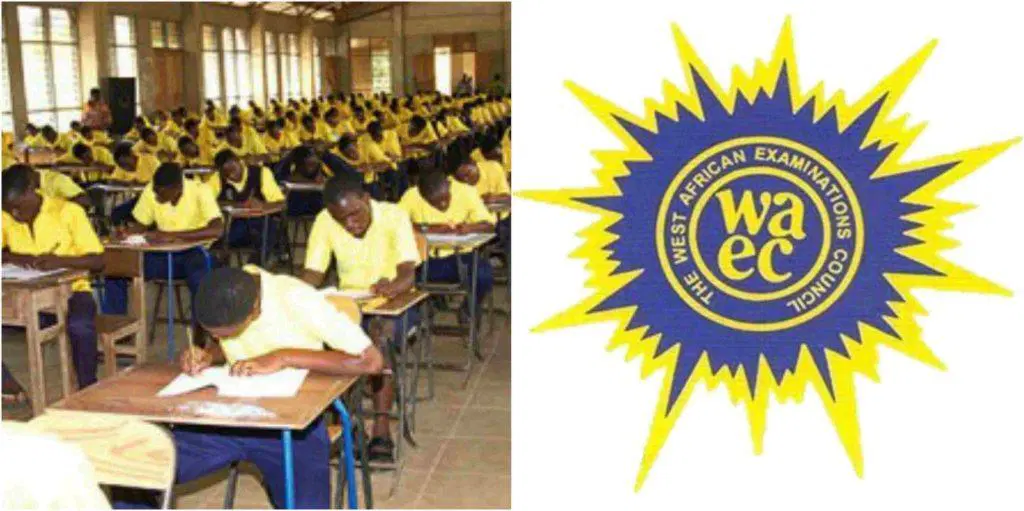
    The ongoing West African Senior School Certificate Examination (WASSCE), conducted by the West African Examinations Council, has been marred by widespread delays in several centres, forcing candidates to sit for papers late into the night and raising fresh concerns among parents and education stakeholders.

    The disruptions were reported across parts of Lagos, particularly on Lagos Island and within the Lekki axis, where candidates experienced significant delays in the commencement of examinations this week.

    On Monday, Physics Papers 2 and 1, originally scheduled for 2 p.m. to 5 p.m., reportedly started several hours late in some centres, with candidates said to have begun one of the papers around 8 p.m.

    A similar situation occurred on Wednesday during the General Mathematics examination. Candidates reportedly remained in examination halls for most of the day, with the essay and objective papers eventually concluding around 10 p.m., despite being scheduled to end earlier in the afternoon.

    As of Thursday evening, some candidates waiting to sit for Agricultural Science Practical examinations were still stranded at their centres due to delays in the arrival of examination materials.

    Several schools and parents expressed frustration over the recurring challenges, especially following similar incidents recorded during the 2025 WASSCE examinations.

    A school principal, who spoke anonymously, said the repeated delays were affecting candidates psychologically and exposing them to security risks.

    “Imagine preparing for an examination scheduled for noon and eventually writing it at 7 p.m. or later,” the principal said, questioning why lessons had not been learned from last year’s incidents.

    Parents also voiced concerns over students returning home late at night. One parent in Lekki described the situation as unacceptable, saying his child arrived home around 10 p.m. after Wednesday’s examination.

    The issue has also triggered reactions on social media, where users complained about delayed arrival of supervisors, shortages of question papers, and alleged demands for payments for mathematics sets in some schools.

    Reacting to the development, a WAEC official acknowledged the disruptions, attributing them to unforeseen circumstances. The official said the council was working to resolve the challenges and restore normal examination schedules.

    However, WAEC has yet to release an official public statement explaining the exact cause of the delays, as stakeholders continue to demand accountability and improved coordination to prevent further disruptions.
  • WAEC launches innovative DigiCert platform to improve certificate accessibility

    WAEC launches innovative DigiCert platform to improve certificate accessibility

    The West African Examinations Council (WAEC) has fully launched its Digital Certificate Services System, WAEC DigiCert, across its five member countries: Gambia, Ghana, Liberia, Nigeria, and Sierra Leone. The announcement was made in a statement dated February 16, 2026, signed by Demianus G. Ojijeogu, Head of Public Affairs at WAEC Headquarters in Accra, Ghana.

    WAEC DigiCert is a mobile and web-based platform designed to simplify access to certificates for candidates and other stakeholders. The system allows users to request, access, confirm, and share digital versions of their original certificates, as well as recover lost WAEC examination numbers.

    The council highlighted that the platform guarantees the authenticity of certificates while providing significant cost benefits. WAEC noted that the system received positive feedback from candidates and educational institutions during a successful pilot phase in Nigeria.

    WAEC encouraged the public and stakeholders to adopt DigiCert to reduce administrative bottlenecks and challenges associated with manual certificate issuance. However, the council assured that the digital platform would not replace the conventional printing and issuance of physical certificates.

    The WAEC DigiCert mobile application is available for download on iOS and Android devices via the App Store and Google Play Store. Additional information can be accessed through WAEC’s official website and social media channels.

  • 16-Year-Old Student Serves As Ogun State One-Day Education Commissioner

    16-Year-Old Student Serves As Ogun State One-Day Education Commissioner

    The Commissioner for Education, Science and Technology, Prof Abayomi Arigbabu in group photograph with 16-year-old one-day Comissioner and SS3 student of African Grammar School, Ita Iyalode, Abeokuta, Alaka Oluwagbemisoke alongside other students of the school and officials of the ministry. Credit: Taiwo Bankole:

    A 16-year-old final-year student of African Grammar School, Ita Iyalode, Abeokuta, Oluwagbemisoke Alaka, served as the One-Day Commissioner for Education, Science, and Technology in Ogun State on Thursday.

    Alaka resumed duty at the Ministry within the Governor’s Office, Oke-Mosan, Abeokuta, at 9:45 a.m., where she was received by the substantive Commissioner, Prof. Abayomi Arigbabu, and senior ministry officials.

    She earned the role after emerging as the overall winner of an essay competition organised by the Adebiyi Habib Foundation for selected secondary schools in the state.

    Before handing over the position, Commissioner Arigbabu said the initiative was designed to promote and reward hard work and excellence among students. “Alaka has done so well for herself and the state, and we are proud of her achievements. We hope other learners will find this occasion motivating enough to pursue excellence in their studies,” he said.

    Alaka, amid applause, took over the Commissioner’s seat, signed documents, and toured various departments within the ministry.

    During the event, she urged the government to prioritise investment in ICT infrastructure in public schools, noting the shift of national examinations such as JAMB and some WAEC components to computer-based testing. She highlighted that only a limited number of public schools currently have functional CBT centres.

    She also appealed for improved teachers’ welfare, stressing that the quality and motivation of teachers determine the success of any education system. While commending recent reforms in Ogun State’s education sector, particularly in infrastructure, she urged further action to enhance learning outcomes.

    Alaka described the experience as life-changing, motivating her to continue excelling academically and inspiring other students across the state.

    Habib Adebiyi, founder of the Adebiyi Habib Foundation, said Alaka was selected from over 300 participants. He explained that appointing a One-Day Commissioner helps build leadership capacity and prepare students for future roles, noting that the foundation’s programmes have benefited over 50,000 students in the last three years.

    The initiative follows similar programmes, such as in Lagos State, where Abdulazeez Abdulrahmon, winner of the 20th Spelling Bee Competition in October 2024, served as One-Day Governor, illustrating the ongoing commitment of Nigerian states to nurturing future leaders.

  • House Of Reps: Ask WAEC, Education Ministry To Halt 2026 CBT Exams

    House Of Reps: Ask WAEC, Education Ministry To Halt 2026 CBT Exams

    The House of Representatives has called on the Federal Ministry of Education and the West African Examinations Council (WAEC) to suspend plans to introduce Computer-Based Testing (CBT) for the 2026 school examinations.

    Lawmakers raised concerns that most secondary schools, particularly in rural areas, lack the necessary infrastructure, electricity supply, and trained personnel to support a full transition to computer-based exams.

    WAEC had earlier announced its intention to conduct the 2026 May/June examinations using computers, after a partial rollout for private candidates in 2024. However, the House urged a gradual implementation, recommending that the policy be deferred until at least 2030.

    The resolution followed a motion of urgent public importance sponsored by Rep. Kelechi Wogu, titled “Need for Intervention to Avert the Pending Massive Failure of Candidates Intending to Write the 2026 WAEC Examination Using Computer-Based Testing (CBT), Capable of Causing Depression and Deaths of Students.”

    Leading the debate, Wogu warned that a hasty rollout could lead to widespread failure and distress among students. He noted that most schools lack functional computer labs, internet access, and qualified computer teachers, especially in rural areas where over 70 percent of candidates are based.

    He recalled that WAEC’s 2025 result portal temporarily crashed due to technical issues, causing anxiety among candidates, and cautioned that similar disruptions could occur if the examination is digitised without adequate preparation.

    “Computer-based examinations require fully equipped halls, stable internet, and constant electricity—either from the grid or standby generators,” Wogu said, adding that about 25,500 schools are expected to participate in the 2026 exams.

    The lawmaker also noted that, unlike JAMB, WAEC candidates take up to nine subjects, including practicals and theory papers, making a swift switch to CBT logistically challenging.

    The House recommended that federal and state governments make provisions in their 2026–2029 budgets for computer infrastructure, recruitment of ICT teachers, and assessment of schools’ readiness ahead of a phased rollout in 2030.

    The motion was unanimously adopted, with the House directing its Committees on Basic Examination Bodies, Digital and Information Technology, Basic Education and Services, and Labour to engage relevant stakeholders and report back within four weeks.

    Meanwhile, WAEC has continued preparations for the transition, with officials conducting sensitisation campaigns under the theme “CB-WASSCE: New Way, Same Destination,” maintaining that the 2024 pilot phase recorded significant progress.

  • WAEC Denies Issuing New Subject Directive for 2026 WASSCE

    WAEC Denies Issuing New Subject Directive for 2026 WASSCE

    The West African Examinations Council (WAEC) has dismissed reports claiming it directed senior secondary school students to take specific subjects in the forthcoming 2026 West African Senior School Certificate Examination (WASSCE) for school candidates.

    In a statement issued by the Acting Head of Public Affairs, Moyosola Adeshina, the Council described the claim as false and misleading.

    “We wish to categorically distance ourselves from this unfounded assumption and the information making the rounds on the said subject,” the statement read.

    WAEC clarified that it does not determine or alter school curricula, noting that the responsibility for curriculum development and regulation in Nigeria lies solely with the Federal Government.

    “The introduction or modification of any curriculum in Nigeria is a function of the Federal Government. WAEC operates strictly within the established legal and operational frameworks of its host country,” Adeshina explained.

    The Council reaffirmed its commitment to professionalism and fairness in the conduct of examinations, assuring that all candidates for the 2026 WASSCE for School Candidates will have equal opportunities during assessment.

    It urged schools, students, and the public to disregard the false reports and to rely only on official communications from WAEC for accurate information regarding examination guidelines.

  • WAEC Extends CB-WASSCE Registration Deadline to September 19

    WAEC Extends CB-WASSCE Registration Deadline to September 19

    The West African Examinations Council (WAEC) has extended the registration deadline for the Computer-Based West African Senior School Certificate Examination (CB-WASSCE) for private candidates.

    In a statement released on its official X account on Friday, WAEC said the deadline, previously set for September 5, has been moved to September 19, 2025.

    “The registration period for CB-WASSCE for Private Candidates, 2025—Second Series, has been extended to Friday, September 19, 2025. All prospective candidates are encouraged to take advantage of this opportunity,” the statement read.

    The extension is expected to give more applicants additional time to complete their registration for the upcoming exams.

    However, some stakeholders have expressed concern over the council’s transition from manual to digital application processes. Critics argue that accessibility and ease of use could present challenges for candidates unfamiliar with computer-based systems.

    WAEC introduced the CB-WASSCE model to modernize its examination process, improve efficiency, and reduce malpractice, but the shift has continued to draw mixed reactions across West Africa.

  • Abia Bans Multiple Textbooks for One Subject in Schools

    Abia Bans Multiple Textbooks for One Subject in Schools

    The Abia State Government has directed publishers supplying textbooks to schools to separate workbooks from the main textbooks, in order to ensure the books can be reused by other pupils.

    The directive was announced by the Commissioner for Basic and Secondary Education, Goodluck Ubochi, during a stakeholders’ meeting convened by the ministry in Umuahia.

    Ubochi also cautioned schools against recommending multiple textbooks for a single subject, describing the practice as a financial burden on parents. He reminded participants that Governor Alex Otti had declared free and compulsory education at the primary and junior secondary school levels, urging compliance with the policy.

    The commissioner further stressed the importance of standard examinations, noting that the Primary Six School Leaving Assessment Test (PSLAT), Basic Education Certificate Examination (BECE) for JSS3, and the mandatory SS2 examination before WAEC registration remain government requirements.

    On child welfare, Ubochi condemned the practice of children hawking or loitering during school hours. He disclosed that Education Marshals have been directed to apprehend parents and guardians of defaulters, while advising families to enroll their children in school.

    He assured stakeholders that government plans are underway to address manpower gaps in the education sector through future teachers’ recruitment.

    The meeting was attended by representatives from WAEC, NECO, ANCOPPS, NUT, PTA, publishers, LGA education secretaries, NASU, and top officials of the ministry.

  • WASSCE 2025 Fallout: Teachers, Students Slam Exam Irregularities

    WASSCE 2025 Fallout: Teachers, Students Slam Exam Irregularities

    Reactions have continued to trail the recently released 2025 West African Senior School Certificate Examination (WASSCE) results, as stakeholders, parents, and education groups express outrage over the sharp decline in performance and alleged irregularities in the conduct of the examination.

    The West African Examinations Council (WAEC) had, on August 4, announced the release of results for over 1.9 million candidates who sat for the examination. According to the council, only 754,545 candidates, representing 38.32 percent, secured credits in at least five subjects, including English Language and Mathematics. This represents a drastic drop compared to the 72.12 percent recorded in 2024, sparking widespread criticism.

    The mass failure has raised questions about WAEC’s credibility and the integrity of Nigeria’s education assessment system. Some stakeholders, including parents and education unions, have demanded an independent investigation, with calls for a total overhaul of the council’s management team.

    Following public backlash, WAEC acknowledged technical glitches in its system, which it claimed affected the results of Mathematics, English Language, Biology, and Economics. The council said it had corrected the errors and temporarily withdrew access to the portal during the internal review.

    The Nigeria Union of Teachers (NUT) blamed the poor outcome on systemic failure, citing irregularities in the administration of some papers, particularly English Language, which leaked and was written at odd hours. The National Association of Nigerian Students (NANS) also condemned the poor conduct, noting that many candidates were emotionally drained due to the disruptions.

    Teachers have expressed fears that the debacle could jeopardize WAEC’s proposed Computer-Based Testing (CBT) system scheduled for 2026, especially given Nigeria’s digital infrastructure gaps.

    Meanwhile, some affected students, disheartened by their performance, said they had shifted their hopes to the National Examination Council (NECO) results.

    Minister of Education, Dr. Maruf Olatunji Alausa, through the ministry’s spokesperson, reassured Nigerians of the government’s commitment to restoring public confidence in the examination system. He noted that examination malpractice had consistently declined in recent years, attributing this to WAEC’s anti-cheating measures such as serialized question papers in key subjects.

    Alausa also emphasized the government’s focus on continuous teacher training to raise academic standards, stressing that every child deserves a fair chance to succeed.

  • WAEC Suspends 2025 WASSCE results over technical glitches, faces backlash from students, parents

    WAEC Suspends 2025 WASSCE results over technical glitches, faces backlash from students, parents

    The West African Examinations Council (WAEC) has temporarily suspended access to the 2025 WASSCE results following technical glitches discovered during a post-release review.

    Head of Public Affairs, Moyosola Adesina, said internal checks uncovered bugs linked to the new paper-serialisation method used in Mathematics, English Language, Biology, and Economics. She urged candidates who had checked their results to re-check from Friday for corrected versions.

    WAEC apologised for the disruption, saying the move was to ensure fairness and professionalism.

    The announcement came less than 24 hours after WAEC admitted shutting down its portal over “technical issues,” and days after data revealed only 38.32% of candidates obtained five credits, including English and Mathematics—the worst pass rate in a decade.

    Stakeholder Reactions
    The National Association of Parent-Teacher Associations of Nigeria (NAPTAN) welcomed WAEC’s admission of fault but criticised plans to fully switch to Computer-Based Testing (CBT) for external exams, calling it “unrealistic” due to poor infrastructure and low computer literacy among students, especially in rural areas.

    The National Association of Nigerian Students (NANS) was harsher, calling the incident “unforgivable” and accusing WAEC of incompetence for releasing results without thorough system testing. NANS demanded sanctions and leadership changes at the Council.

    On social media, Nigerians questioned WAEC’s ability to fix the errors within 24 hours and warned that any discrepancies in the updated results could trigger lawsuits and calls for a full script review.


    If you want, I can also make an SEO-optimised headline list for this story to maximise clicks and search ranking.

  • WAEC Faces Backlash Over Poor 2025 Results

    WAEC Faces Backlash Over Poor 2025 Results

    The West African Examinations Council (WAEC) has come under renewed criticism following the temporary shutdown of its result checker portal on Wednesday, which it attributed to “technical issues.”

    In a statement on its official X handle, @waecnigeria, the Council assured candidates that efforts were ongoing to restore access within 24 hours. The outage comes just days after WAEC announced that only 38.32% of the 1.9 million candidates who sat for the 2025 West African Senior School Certificate Examination (WASSCE) earned credits in five subjects, including English and Mathematics—the worst performance in a decade.

    The result release has sparked widespread outrage, with many Nigerians blaming WAEC’s logistical lapses, particularly the delayed English Language exam that reportedly took place late at night in some centres. Social media has been flooded with complaints from candidates and parents demanding a review of the English scripts, alleging mass failures, unfair grading, and deliberate sabotage.

    WAEC has yet to respond to calls for a re-evaluation of the English Language results or address allegations of systemic failure.