


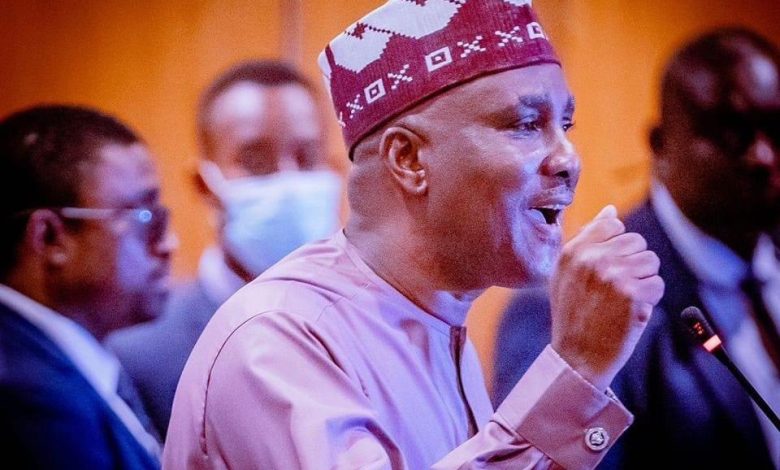
Speaker of the House of Representatives, Hon. Abbas Tajudeen, on Wednesday paid tribute to former President Muhammadu Buhari, praising his contributions to Nigeria’s democratic and infrastructural development.
Speaking during a special valedictory session held in honour of the late former president, who died on July 13, 2025, in London at the age of 82, Speaker Abbas described Buhari as a statesman whose legacy should unify Nigerians despite differing opinions about his time in office.
“President Buhari’s passing marks the close of a significant chapter in our nation’s history,” the Speaker said. “His legacy, like that of any leader, invites varied perspectives. Yet, we recognize a leader who served Nigeria for nearly six decades—from a young military officer to a democratic president—always striving for national progress.”
Abbas highlighted Buhari’s infrastructural achievements, citing the revival of major rail lines such as Abuja-Kaduna and Lagos-Ibadan, completion of the Second Niger Bridge, and the rehabilitation of thousands of kilometres of roads. He also emphasized the late president’s partnership with the legislature in delivering critical reforms.
According to Abbas, Buhari’s administration signed 129 bills into law between 2015 and 2023, marking a period of “unprecedented legislative productivity.” These included landmark laws such as the Not Too Young to Run Act (2018), the Electoral Act (2022), the Petroleum Industry Act (2021), and the Police Act (2020), which modernized the policing framework for the first time since 1943.
Other key legislation endorsed during Buhari’s tenure included the Nigeria Startup Act (2022) and the Discrimination Against Persons with Disabilities (Prohibition) Act (2018), among others that addressed long-standing national issues.
The Speaker also commended Buhari’s respect for the principle of separation of powers, noting that he upheld the independence of the National Assembly and refrained from interfering in its internal affairs or leadership processes.
“He recognised the legislature as a co-equal arm of government,” Abbas stated. “His directive to ministers and heads of agencies to honour National Assembly committee invitations during budget cycles exemplified his respect for democratic oversight.”
Speaker Abbas urged Nigerians to let Buhari’s legacy—particularly his commitment to integrity, accountability, and democratic institutions—serve as a unifying force. “Leadership is not about perfection but about steadfast dedication to the public good,” he said.


