


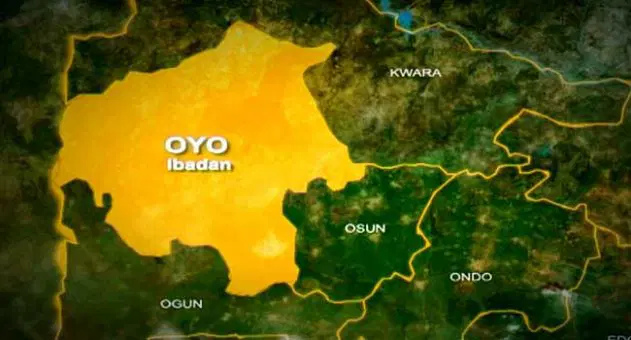
 The Federal Government has intensified efforts against terrorism and kidnapping, declaring that all available resources are being deployed to rescue abducted schoolchildren and teachers in Oyo and Borno states.
The renewed security push follows recent abductions that prompted President Bola Ahmed Tinubu to approve the deployment of a specialised rescue team and the recruitment of 1,000 forest guards to strengthen security in vulnerable communities.
Speaking at a national security briefing in Abuja tagged #UniteAgainstTerror, Minister of Information and National Orientation, Mohammed Idris, said the kidnappings represent a direct attack on the nation’s future.
Delivering President Tinubu’s message, Idris declared that “no child belongs in captivity” and assured affected families that the government remained fully committed to securing the safe return of every abducted victim.
“The President has directed that every lawful instrument available to the Nigerian state be deployed towards achieving this objective,” the minister said.
According to him, intelligence gathering, aerial surveillance, coordinated rescue missions and community engagement efforts are currently ongoing in both Oyo and Borno states.
Idris said the administration’s security strategy extends beyond military operations and includes reforms aimed at strengthening Nigeria’s security architecture, including plans to institutionalise state policing.
He highlighted recent military successes, stating that troops of Operation Hadin Kai repelled terrorist attacks in parts of Borno State, killing more than 50 insurgents, including senior commanders.
The minister further disclosed that about 1,000 terrorists, including several top leaders, were eliminated during the first quarter of 2026.
He also revealed that a joint Nigeria-United States-supported operation in May disrupted logistics networks linked to the Islamic State West Africa Province (ISWAP) and led to the rescue of 92 civilians near Buratai.
According to Idris, security operations have also intensified across Zamfara, Sokoto, Katsina, Kaduna, Niger, Kogi and Kwara states, resulting in the destruction of criminal hideouts and arrests of suspected kidnappers and bandits.
On terrorism prosecutions, Idris announced that four terrorists were recently sentenced to death by a Federal High Court in Abuja over the 2022 attack on St. Francis Catholic Church in Owo, Ondo State.
He added that Nigeria is currently conducting one of its largest terrorism prosecution exercises, with over 500 suspects standing trial and 386 convictions already secured from 508 terrorism-related cases.
The minister urged Nigerians and media organisations to support the fight against terrorism by avoiding sensational reporting and verifying information before publication.
“Terrorists thrive on fear, division, misinformation and public despair,” he said, calling for national unity under the #UniteAgainstTerror campaign.
Meanwhile, former Vice President and presidential candidate of the African Democratic Congress, Atiku Abubakar, criticised the Tinubu administration’s counter-terrorism strategy, accusing the government of failing to adapt to evolving security threats.
In a statement issued by his aide, Phrank Shaibu, Atiku warned that terrorists continue to refine their tactics while the government appears unable to do the same.
“The terrorists are learning from every attack. They study their successes and failures. They refine their tactics. They identify vulnerabilities. They adapt and strike again,” he said.
Atiku argued that Nigeria’s security framework relies too heavily on centralised and imported models instead of lessons drawn from communities directly affected by terrorism.
He called for an urgent review of Nigeria’s National Counter-terrorism Policy and proposed the establishment of a Terrorism Violence Peer Review Mechanism to allow communities, security agencies and stakeholders share lessons and improve response strategies.
The former vice president also advocated the creation of specialised Counter-terrorism Fusion Centres across the six geopolitical zones to improve intelligence sharing among the military, police, DSS, immigration officials, customs and local vigilantes.
Atiku further urged the government to invest heavily in surveillance technology, border security, intelligence gathering and community-based security partnerships while addressing poverty, unemployment and underdevelopment, which he described as drivers of insecurity.
He also criticised what he described as a lack of transparency in counter-terrorism spending, arguing that despite huge security budgets over the years, Nigerians remain increasingly unsafe.


