


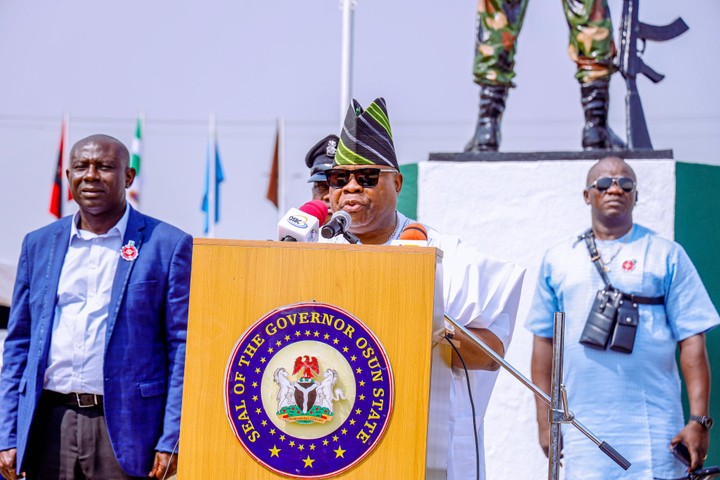
 Mixed reactions have trailed the recent communiqué released by the Osun State Peoples Democratic Party (PDP) leadership and Governor Ademola Adeleke, which declared the governor’s continued stay in the party and endorsed him for re-election in 2026.
The communiqué, dated July 21, 2025, came after weeks of speculation and political tension surrounding Adeleke’s rumoured defection to the All Progressives Congress (APC). It followed what party insiders described as “extensive statewide consultations” and was signed by Adeleke and 27 other PDP chieftains.
The document reaffirmed Adeleke as the PDP’s 2026 governorship candidate, directed all members to remain loyal to the party, and interestingly, acknowledged Osun as the ancestral home of President Bola Tinubu—declaring support for his 2027 re-election bid.
While the communiqué was intended to restore order, it has stirred contrasting sentiments.
“We have been confused. Now that the governor is staying in PDP, we can focus on the election,” said Kehinde Ajibola, a trader at Owode-Ede market.
“Some APC leaders insulted the governor online. We felt betrayed,” added Saheed Oladimeji, a youth leader in Ejigbo.
The PDP noted that while grassroots loyalty to Adeleke remained strong, the idea of his defection was largely unpopular within the party. The statement subtly cited resistance and hostility from APC figures as key factors in the decision to stay.
However, not everyone is buying the narrative.
Former Deputy Governor of Osun State and ex-APC National Secretary, Senator Iyiola Omisore, claimed in a recent interview that Governor Adeleke had been actively “begging” to join the APC in preparation for the 2026 election.
“The people are tired of confusion. We must go into 2026 with clarity and strategy,” Omisore said, while hinting at a broader need for realignment in Osun’s political landscape.
The timing of the endorsement also comes shortly after the resignation of key PDP figures, including Senator Francis Fadahunsi, Senator Olubiyi Fadeyi, Sanya Omirin, and Hon. Taofeek Ajilesoro—moves seen by analysts as fallout from internal discontent and a lack of clear leadership within the party.
Taiwo Alao, a retired teacher in Osogbo, reacted with caution.
“Let the governor continue his Five Point Agenda. But we also need assurances that the infighting won’t return.”
Chief Olatunji Akanbi, a community leader in Ede, urged all political actors to de-escalate tensions.
“This is not the time for division. Let all parties show maturity. Politics is not a do-or-die affair.”
As the 2026 elections draw nearer, Adeleke’s re-election bid will test whether public endorsements and intra-party loyalty can overcome accusations of desperation, party-switching rumors, and unresolved fractures within Osun’s political elite.


