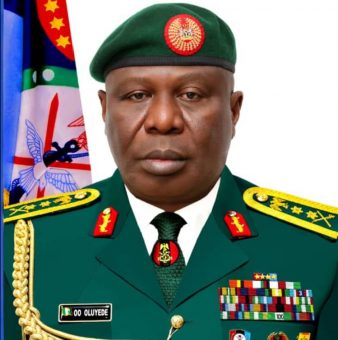
The Chief of Defence Staff, Olufemi Oluyede, has called on military veterans to take on proactive roles as first responders to conflicts within their communities across Nigeria.
Oluyede made the appeal while chairing the opening ceremony of the Mediation and Conflict Resolution Skills Accreditation and Certificate Training for veterans, held at the Command Officers’ Mess in Abuja. The programme was organised by retired members of the Nigerian Armed Forces in collaboration with the Mediation Training Institute Nigeria and the Defence Headquarters.
The Defence Chief explained that the training reflects the changing nature of security challenges, where non-kinetic approaches such as dialogue, negotiation, and structured engagement are increasingly essential in maintaining peace.
He noted that while military force remains important, long-term stability is better achieved through early conflict de-escalation and resolution before situations spiral out of control. According to him, the initiative strengthens ongoing military operations by focusing on community-based peacebuilding efforts.
Oluyede described the programme as a major step toward enhancing Nigeria’s security architecture through inclusiveness and innovation. He emphasised that veterans remain valuable assets due to their experience, discipline, and deep understanding of conflict dynamics.
Through the initiative, participants are being equipped with modern skills in mediation, crisis communication, negotiation, and peacebuilding—marking what he described as a transition “from the battlefield to the negotiation table.”
He added that the training also covers critical areas such as family mediation, counselling, intelligence gathering, and workplace conflict management, noting that unresolved minor disputes often escalate into larger conflicts.
The CDS stressed that veterans are expected to go beyond passive roles and actively serve as community-based peace advocates, facilitating dialogue and contributing to early warning systems through credible information sharing.
He concluded that the framework is designed to complement existing security institutions, ensuring that veterans’ contributions align with constitutional responsibilities while helping to prevent conflicts and strengthen national stability.