


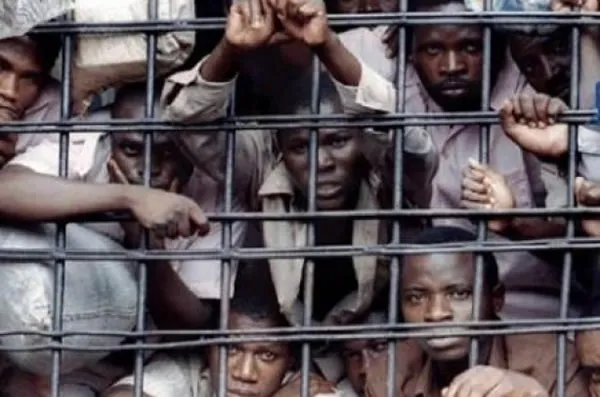
When Idris (not his real name) recalls his time at the Ibara Correctional Centre in Abeokuta, Ogun State, he describes it as nothing short of “hell.”
“We slept in hundreds, packed like sardines in a space meant for twenty,” the 50-year-old recounted. “From skin rashes to head lice, bedbugs, and eventually mental illness—it was a nightmare.”
His ordeal began innocently when he stopped to greet a long-lost friend near the PDP Secretariat in Abeokuta. Unbeknownst to him, a cult clash had occurred at the same location a day earlier. Chaos erupted, shots were fired, and Idris was caught in the crossfire.
“I was shot and fought back in self-defense, but I was outnumbered. I landed at Federal Medical Centre, Idi-Aba, before being transferred from Ibara Police Station to Eleweran. After months in detention, I was arraigned for attempted murder and unlawful possession of firearms,” he told DAILY POST.
Life in a Broken System
Idris spent nearly two years awaiting trial before he was eventually freed through the efforts of the Islamic Humanitarian Service (IHS). During this period, he described conditions inside the facility as overcrowded and unsanitary.
“My cell was next to the kitchen; we felt constant heat. The food served couldn’t satisfy a 10-year-old. We had rice only on Wednesdays and Saturdays. Garri and beans made up the rest of the week. Eating the soup too often could cause a disability—we used to joke and say, ‘Sapa ti mu mi lepon’ (Hunger has affected my scrotum),” he said.
Healthcare was almost non-existent. “People died of ulcer. Two inmates went mad from untreated measles. All we were given was paracetamol. Families had to pay for hospital bills in serious cases.”
Ogun Prisons Overflowing
Despite the Nigerian Correctional Service Act of 2019, which rebranded prisons into centers of rehabilitation and reintegration, the reality on ground is bleak.
As of 2025, Nigeria holds 81,287 inmates—only 27,701 are convicted, while 53,178 await trial. Ogun State’s Ibara Correctional Centre was built for 700 but now houses over 1,468 inmates. The Oba Correctional Centre, designed for 850, is home to 999 inmates.
The result is a crisis of space, sanitation, and healthcare.
‘Correctional Centres Now Breed Criminals’
According to Idris, the correctional facilities are doing more harm than good.
“There are people in prison for as little as N1,000 offenses. Their minor crimes become felonies as they mix with hardened criminals. Some are still committing crimes from inside. Prisons are now breeding grounds for more crime,” he said.
Inmates Cry for Help
Ayomide Olagoke, another inmate at Ibara Correctional Centre and a master’s degree holder in Banking and Finance, appealed to the government during his theology graduation from the West African College for Christian Missions, held inside the facility.
“We are now changed people, and we plead for a second chance. The center is congested, and people are dying daily. Some inmates have been awaiting trial for 7 to 9 years—what happens to the families they left behind?” he asked.
Chief Judge: ‘Inmates Stand, No Room to Lie Down’
Ogun State Chief Judge, Justice Mosunmola Dipeolu, recently raised alarm over the poor conditions in Sagamu Correctional Centre.
“There’s no space for inmates to lie down. They either stand or sit, which is terrible for their health. Some have been in custody since 2013, still awaiting trial,” she said during a jail delivery exercise aimed at decongestion.
Ogun Correctional Controller, Abioye Adesina, acknowledged the persistent overcrowding despite release efforts. He appealed to Governor Dapo Abiodun for more logistics support, especially vehicles for operations.
Lawyer: ‘Decongestion Measures Only Exist on Paper’
Ogaga Ediru, a legal scholar and lecturer at Philomath University, Abuja, criticized the ineffective implementation of the Correctional Service Act.
“The law mandates action when facilities exceed capacity, but in practice, nothing happens. Overcrowding harms healthcare, food quality, sanitation, and increases the spread of diseases,” he said.
Ediru blamed the slow justice system for the overcrowding crisis. “Many inmates are locked up for minor offenses far longer than allowed by law. We need more judges, legal reform, and modern laws. Without these, prison decongestion will remain on paper.”


