


 @TinubuThe Federal Government and 268 Nigerians repatriated from South Africa have rejected claims by South African authorities that all returnees were undocumented migrants, arguing that delays in South Africa’s immigration system left many residents without valid documents despite efforts to regularize their status.
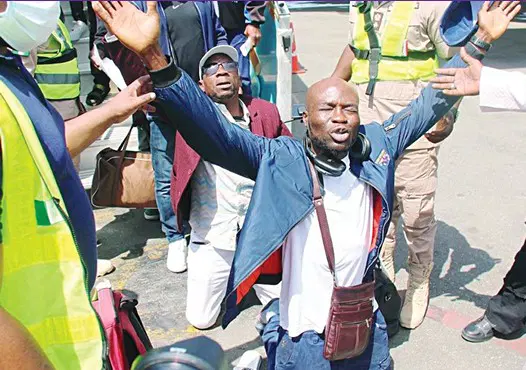
The first batch of evacuees arrived in Lagos on Wednesday aboard an Air Peace flight as part of an ongoing evacuation programme initiated by President Bola Tinubu following renewed xenophobic tensions in South Africa.
South Africa’s Head of Immigration Enforcement, Stephen van Neel, had claimed that none of the 268 Nigerians repatriated were legally resident in the country and announced a five-year travel ban on them. However, Nigeria’s Acting High Commissioner to Pretoria, Ambassador Temitope Ajayi, dismissed the assertion as “false and misleading.”
Ajayi explained that many Nigerians became undocumented due to prolonged delays in processing residence permit renewals by South Africa’s Home Affairs Department. According to him, some applications have remained unresolved for between two and five years, leaving applicants trapped in administrative backlogs.
He disclosed that President Tinubu personally monitored developments after xenophobic violence erupted in April and insisted on evacuating Nigerians despite pressure from international actors, including South African authorities, to suspend the exercise.
Ajayi said five evacuation flights had been arranged, with additional flights scheduled for June 15, 18, 22 and 24. He also criticized South African officials for allegedly breaching an agreement not to discuss the operation publicly until its completion.
Minister of State for Foreign Affairs, Ambassador Sola Enikanolaiye, assured returnees that the Federal Government would activate the Nigeria-South Africa Binational Commission and an Early Warning Mechanism to address future threats against Nigerians living in South Africa. He emphasized that Nigeria would continue to pursue dialogue and diplomatic engagement with Pretoria.
The Minister of Humanitarian Affairs and Poverty Reduction, Dr. Bernard Doro, said the government had begun profiling the returnees to facilitate reintegration through skills development, livelihood support, medical assistance, psychological care and family reunification programmes.
Meanwhile, Nigerians in Diaspora Commission (NiDCOM) Chairman, Abike Dabiri-Erewa, announced support packages from private organizations and state governments. She revealed that MTN Nigeria pledged N100,000 cash support, N50,000 airtime and starter packs for each returnee, while Imo State Governor Hope Uzodimma promised N1 million for every evacuee.
Several returnees accused both South African authorities and the Nigerian High Commission in Pretoria of making it difficult to renew immigration and travel documents. Some alleged that bureaucratic delays, extortion and discrimination contributed to their predicament.
Many also recounted experiences of xenophobia, harassment and intimidation, with some warning that attacks against foreign nationals in South Africa could worsen in the coming weeks. Despite differing experiences, several evacuees urged Nigerians still living in South Africa to consider returning home, describing the situation as increasingly unsafe.
Air Peace, which facilitated the evacuation, described the circumstances leading to the operation as unfortunate and reaffirmed its willingness to support further evacuation efforts if required. The airline said discussions with the Federal Government on additional flights were ongoing.


