


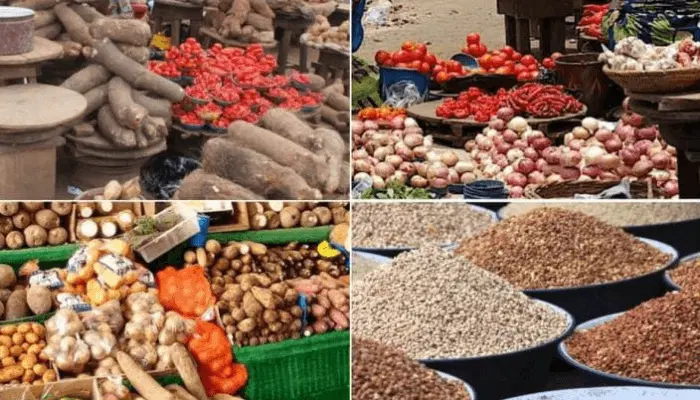
 LAGOS — Across many Nigerian homes, rising food prices are quietly reshaping daily life as families reduce portions, skip meals and rethink how they feed their households amid worsening economic hardship.
For many residents, meals that once comfortably fed an entire family are now stretched carefully across the day. Rice, beans and soup are rationed into smaller portions, while breakfast is increasingly skipped to save costs.
The deepening cost-of-living crisis tightened its grip in the first quarter of 2026 as fresh data from the National Bureau of Statistics, NBS, showed continued increases in the prices of major food staples, worsening pressure on millions of households already battling weak incomes and inflation.
A mother of four in Ikeja, Adebimpe Olatunji, said feeding her family had become a daily struggle. “We manage. The children may take bread before school, then the proper meal comes later. Sometimes everybody skips breakfast,” she said.
Another parent, Patricia, described the situation as survival rather than nutrition. “It is no longer about eating well, it is just making sure everybody eats something,” she said.
Teachers are also witnessing the impact in classrooms. Tunde Lawal, a public school teacher in Lagos, said some pupils now arrive without food for break time. “You can tell when a child has not eaten properly. Some struggle to pay attention,” he added.
At major Lagos markets including Mile 12 and Oyingbo, traders say consumers now buy in much smaller quantities. “Everything is now small, small,” said Ope, a pepper seller. “Before, somebody buys a basket, now it may just be a handful.”
According to NBS data, food inflation remained in double digits through most of 2025, with staples such as rice, beans, yam and maize recording sharp increases. In Lagos markets, rice that sold for about N250 to N300 per kilogram in 2015 now costs between N1,800 and N2,200, while beans have risen from roughly N300 to as much as N2,800 per kilogram. A crate of eggs, previously below N1,000, now sells for up to N6,000 in some areas.
The rising prices have drastically altered household budgets. Findings showed that a family of five that could spend between N35,000 and N45,000 monthly on food in 2015 may now require between N200,000 and N300,000 to maintain similar feeding patterns.
Nutrition experts warn that many households are coping by cutting protein, fruits and vegetables first while relying more heavily on cheaper carbohydrate-based meals. Community nutrition practitioner Eunice Obi said families increasingly depend on starchy foods simply to feel full.
Dr. Shoba Suri, a nutrition researcher, warned that such diets may leave people full but lacking essential nutrients, while paediatric nutrition specialist Carina Venter said poor diets could affect children’s growth and brain development even when they appear to eat regularly.
The NBS Food Price Watch covering December 2025 to March 2026 showed sweet potatoes recorded the sharpest increase, rising by 10.03 per cent, while Irish potatoes, eggs, yam, beans, rice, garri and fresh vegetables also posted significant increases. Food inflation climbed to 16.06 per cent in April 2026, reflecting persistent pressure on household spending.
Meanwhile, the Federal Government has raised alarm over a growing food safety crisis, revealing that unsafe food causes nearly 50 million illnesses and more than 53,000 deaths annually in Nigeria.
Speaking during activities marking the 2026 World Food Safety Day in Abuja, Minister of State for Health and Social Welfare, Dr. Iziaq Salako, said children under five account for more than 80 per cent of the country’s foodborne disease burden.
According to him, diarrhoeal diseases linked to pathogens such as Salmonella, E. coli, Campylobacter, Shigella and Rotavirus account for over 40 million illnesses annually. He also warned about increasing chemical contamination risks, particularly lead exposure linked to contaminated grains, spices and water sources.
“Safe food is not only about preventing sickness and death, it is also about protecting the developmental potential of our children and the productivity of the country,” Salako said.
The government said Nigeria had strengthened food safety systems through improved surveillance, outbreak response and food safety regulations, while agencies including the National Agency for Food and Drug Administration and Control, NAFDAC, continue efforts to regulate sodium levels, eliminate industrial trans-fats and improve food labeling standards.
Nutritionists, however, urged Nigerians to return to affordable local foods such as beans, millet, sweet potatoes, vegetables and groundnuts, while encouraging meal planning and home cooking as practical ways to reduce waste and maintain healthier diets despite rising prices.


