The Federal Government, in collaboration with private investors, has unveiled new initiatives to strengthen local battery manufacturing and expand access to affordable, cleaner energy alternatives.
At the launch of a mobile solar generator and youth bootcamp on Thursday, the Director-General of the Energy Commission of Nigeria (ECN), Mustapha Abdullahi, said the government is prioritising the localisation of battery and solar component production.
“Nigeria is very rich in mineral resources. We have lithium in almost every state. It baffles us why Nigeria is still importing lithium batteries. The government is taking huge steps to localise and domesticate technology,” Abdullahi said.
He disclosed that Nigeria has signed agreements with major international solar component manufacturers to establish factories in the country. “We are talking to investors to scale up production here. Once local mass production begins, Mr. President is ready to ban the importation of lithium batteries and solar panels,” he added.
Abdullahi noted that the ECN already operates a pilot solar module plant producing about 10,000 kWh annually, though new investments are expected to significantly increase capacity. He also reaffirmed President Bola Tinubu’s commitment to achieving a 30 per cent renewable energy share in the national mix, focusing on solar, wind, and hydro.
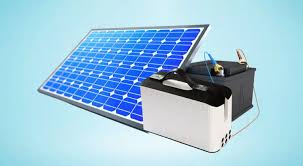
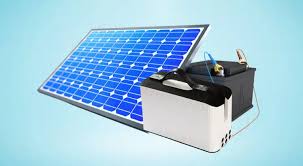
Also speaking at the event, Abdul Gbadamosi, CEO of Citibim Nigeria Limited, presented a mobile solar generator designed to provide alternatives to petrol and diesel generators. “Generators dominate businesses and households, but we have taken up the challenge of providing cleaner solutions,” he said.
Gbadamosi stressed that the company’s efforts extend beyond energy access, with investments in training and capacity building. “We asked ourselves, can we not build local capacity in AI, geo-intelligence, and virtual reality? That is why we are organising this bootcamp—to show youths there are opportunities in sustainability, the green revolution, and the digital economy,” he said.
He added that Citibim’s solar model was designed to be both bankable and income-generating. “We have made it easy for banks and financiers to support users. The system is structured so that people can not only access clean energy but also generate income from it,” he explained.
Government and private sector leaders emphasised that these initiatives aim to bridge Nigeria’s energy gap, create jobs, and position the country as a hub for renewable energy technology in Africa.
Leave a Reply