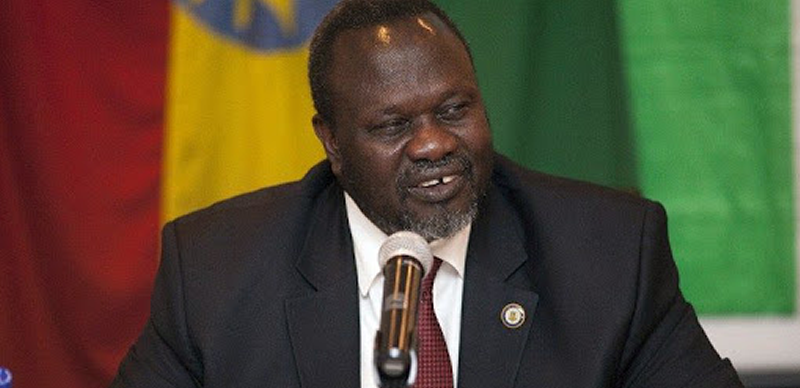
South Sudan’s opposition leader and former vice president, Riek Machar, appeared in court on Monday after being charged with crimes against humanity, murder, and treason, state media reported.
The charges come amid the collapse of a fragile power-sharing agreement between President Salva Kiir and Machar, raising fears of renewed conflict in the young nation, which suffered a civil war in the 2010s that killed around 400,000 people.
Machar, who has been under house arrest for several months, was stripped of his position as first vice president in the unity government. The government accuses him of ordering an ethnic militia attack on a military base in March in Upper Nile State, which it claims killed more than 250 soldiers.
Machar’s faction denies the allegations, describing them as politically motivated efforts by Kiir to marginalize the opposition and consolidate power. “His Excellency Dr Riek Machar should not be tried by this incompetent court, which lacks jurisdiction,” Machar’s lawyer told the court during Monday’s hearing.
South Sudan gained independence from Sudan in 2011 but descended into a civil war between Kiir and Machar from 2013 to 2018. Despite international efforts, the peace process has struggled, with elections originally scheduled for December 2024 now postponed to 2026, and the two sides failing to merge their armed forces.
A recent United Nations report accused the government of misappropriating billions in oil revenue since independence, providing minimal funding for essential services such as health and education.
Machar’s supporters view the charges as proof that the power-sharing agreement has collapsed. Some have called for armed mobilization to push for “regime change.” Edmund Yakani, a civil society leader in Juba, described the charges as “politically motivated” and “legally… not justifiable” since crimes against humanity are not defined under South Sudanese law.
The attack in March, which triggered the charges, involved fighters from Machar’s Nuer ethnic community, known as the White Army, though his faction denies he gave any orders.
A spokesperson for Machar’s faction criticized the proceedings, saying, “With Machar being forced to appear before a kangaroo court and imposing charges against him, it is a clear indication that the SPLM-IG has chosen instability over peace.”
The case marks a critical point in South Sudan’s fragile political landscape, with observers warning that any escalation could undo years of tentative progress toward stability.