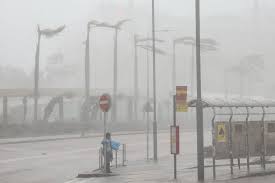
Residents across Taiwan, Hong Kong, and China’s southern coast are grappling with the effects of Super Typhoon Ragasa, which has caused heavy rainfall, strong winds, and flooding in several major cities.
In Taiwan, residents in the tourist town of Guangfu expressed concern over insufficient warnings from authorities, despite the island’s usual rapid evacuation procedures. The typhoon killed at least 14 people in Hualien, a popular tourist hub.
Hong Kong faced massive waves along its eastern and southern shorelines, flooding streets and residential areas. Videos circulated on social media showed seawater surging into the Fullerton Hotel in the south of the city. Authorities reported at least 50 injuries, and 791 people sought refuge in 50 temporary shelters. A mother and her five-year-old son were swept into the sea while observing the storm and are now in intensive care. Macau casinos also closed their gambling floors as a precaution.
China’s marine authority issued its first “red” wave warning of 2025, forecasting storm surges of up to 2.8 metres (9 feet) in Guangdong province. Tens of thousands of tents, folding beds, and emergency supplies were dispatched, while over 770,000 residents were evacuated. Some businesses protected storefronts with large trucks to shield against flooding.
Ragasa, which formed over the Western Pacific last week, rapidly intensified to a Category 5 super typhoon with winds exceeding 260 kph (162 mph) before weakening to Category 3. Cities in its path, including Guangzhou, Shenzhen, Foshan, and Dongguan, collectively house around 50 million people.
Despite preparations, some residents took risks to experience the storm firsthand. Local authorities emphasized the danger, particularly in low-lying areas prone to flooding. Hong Kong lowered its typhoon signal from 10 to 8 on Wednesday afternoon, keeping the city in partial lockdown.
While infrastructure in the Pearl River Delta is considered resilient, the typhoon disrupted economic activity, delaying Zijin Gold International’s $3.2 billion IPO in Hong Kong. Officials warned that strong winds could still bring down trees, power lines, and damage buildings as the storm moves inland.