Tag: FG

  • FG Faults Contractor Over Poor Work on Keffi–Nasarawa–Abaji Road

    FG Faults Contractor Over Poor Work on Keffi–Nasarawa–Abaji Road

    File: Construction ongoing on the Keffi-Nasarawa-Toto road

    The Federal Government has expressed dissatisfaction with the quality and pace of work on the Keffi–Nasarawa–Toto–Abaji road project in Nasarawa State, accusing the contractor, Wizchino Engineering Limited, of failing to meet required standards.

    Speaking on Friday after inspecting ongoing federal road projects across the state, the Federal Controller of Works in Nasarawa, Ishaku Mamri, said the contractor had not adhered to the specifications of the Federal Ministry of Works despite repeated directives.

    Mamri lamented that the pace of work remained slow even after funds were released to ensure steady progress on the project. He said several efforts had been made to compel the contractor to follow laid-down procedures, but compliance had remained unsatisfactory.

    “To be honest, I’m disappointed. The work is not done the way it is supposed to be done,” Mamri said. “When we give them instructions, they ignore them and do what they like. This is not a banana republic; the ministry has procedures that must be followed.”

    According to him, the ministry had already summoned the contractor to a meeting at its headquarters, where assurances were given that improvements would be made, but no significant changes had been observed since.

    Also reacting, the chairman of the Nigeria Union of Journalists, Nasarawa State Council, Salihu Alkali, urged the Minister of Works, David Umahi, to revoke the contract due to the slow pace of work and alleged use of substandard equipment.

    Alkali criticised what he described as unprofessional construction practices, claiming that workers were seen pouring bitumen on the road using watering cans. He said such actions amounted to a disservice to both the state and the federal government.

    Similarly, the Nasarawa State Commissioner for Works, Housing and Transport, Mu’azu Adamu Gosho, expressed concern over the contractor’s performance. He noted that the road project was of major importance to the state and called for faster progress before the onset of the rainy season.

    Gosho warned that failure to accelerate the work could worsen road conditions once the rains begin, adding that residents were eager to see the project completed.

    Meanwhile, the Federal Ministry of Works commended progress on the 15-kilometre Lafia bypass linking Lafia to Makurdi, saying the project had reached 92.6 per cent completion and would be ready for use by the end of March 2026.

    Officials said the bypass is expected to ease heavy traffic congestion in the Lafia metropolis and improve connectivity to Nigeria’s south-eastern region.
  • FG Reaffirms Commitment to Enforcing Federal Character Principle Across MDAs

    FG Reaffirms Commitment to Enforcing Federal Character Principle Across MDAs

    The Federal Government has reiterated its commitment to strengthening enforcement of the Federal Character principle across Ministries, Departments and Agencies (MDAs) to ensure fairness, balanced representation and equitable distribution of opportunities among all states.

    The Federal Character Commissioner representing Oyo State, Ayodeji Abass-Aleshinloye, gave the assurance during a press briefing and inaugural meeting with staff of the Commission, stating that oversight mechanisms have been intensified to promote compliance with recruitment, appointments and resource allocation guidelines.

    He said the Commission, inaugurated on January 22, 2026 under the leadership of Executive Chairman Ayo Hulayat Omidiran, is strengthening monitoring systems to ensure federal institutions adhere strictly to constitutional provisions on equitable representation.

    Abass-Aleshinloye noted that the Federal Character mandate extends beyond employment to include fair access to national resources and balanced infrastructure distribution across states and ethnic groups.

    He assured residents of Oyo State that their interests would be represented in federal opportunities while emphasising that the Commission remains committed to promoting transparency, merit, professionalism and national cohesion in public service governance.

  • FG Moves to Commercialise Research, Targets Stronger Federal–State Collaboration

    FG Moves to Commercialise Research, Targets Stronger Federal–State Collaboration

    The Federal Government has intensified efforts to convert scientific research in Nigeria into commercially viable products and businesses through a new push aimed at strengthening collaboration between federal and state stakeholders.

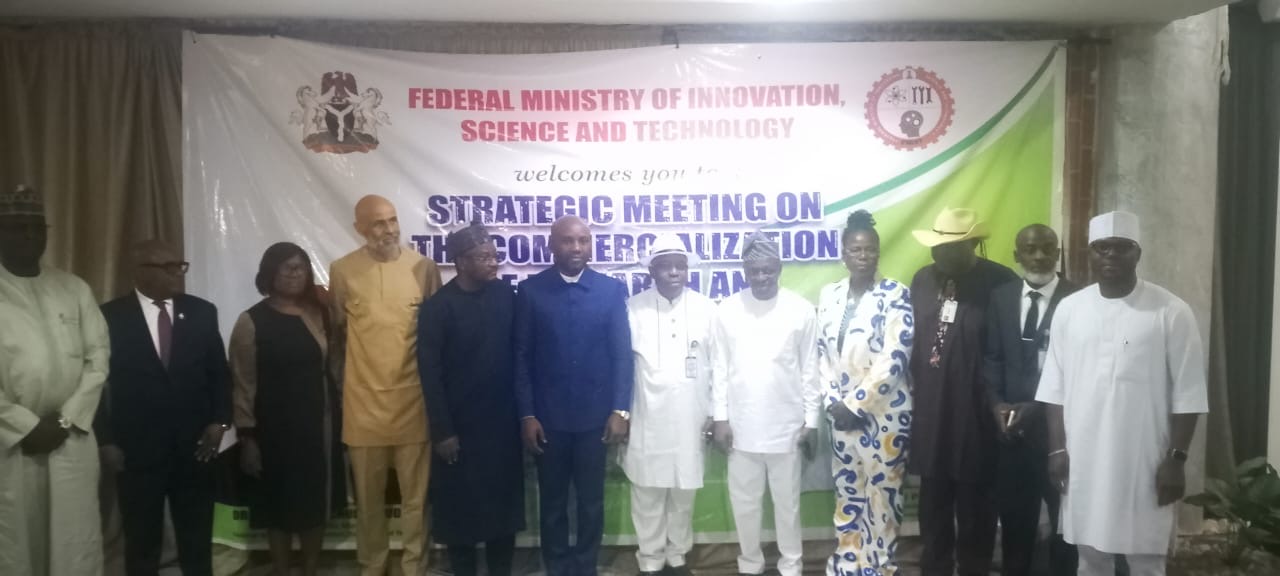
    Speaking at a strategic meeting in Abuja on research commercialisation, the Minister of Innovation, Science and Technology, Kingsley Tochukwu Udeh, said Nigeria must shift from producing academic research alone to transforming innovations into market-ready products and services.

    He noted that many research outputs from universities, polytechnics and research institutes remain unused, stressing that economic growth depends on the country’s ability to convert knowledge into value through practical application.

    The minister announced the establishment of a committee to develop a National Policy on Commercialisation of Research and Development Results and Inventions to coordinate efforts between federal and state governments and support innovation ecosystems.

    Stakeholders at the meeting, including the Permanent Secretary Philip Ndiomu Ebiogeh and the Director-General of the National Board for Technology Incubation (NBTI), Dr. Kazeem Kolawole Raji, pledged support for initiatives that promote patenting, incubation, venture funding and youth-driven innovation to drive economic growth and job creation.

  • FG Proposes N3.23tn for Federal Roads in 2026 Budget, Tripling Previous Allocation

    FG Proposes N3.23tn for Federal Roads in 2026 Budget, Tripling Previous Allocation

    The Federal Government has proposed spending N3.23 trillion on the construction and rehabilitation of federal roads in the 2026 budget, marking a dramatic increase in capital allocation for the transport sector. The move underscores the administration’s commitment to completing long-delayed highways and repairing critical corridors nationwide.

    The proposed allocation represents a 489% increase over the N548.56 billion earmarked for road projects in the 2024 budget. In 2025, the Ministry of Works received N1.013 trillion for 468 federal roads, highlighting a sharp upward trend in funding. The 2026 figure more than triples last year’s provision, signaling renewed focus on road infrastructure development.

    According to budget documents presented to the National Assembly by President Bola Tinubu, N1.39 trillion has been proposed for new road construction, while N285.62 billion is earmarked for rehabilitation and repair. An additional N1.56 trillion will support related infrastructure projects, bringing the ministry’s total capital budget envelope to N3.24 trillion.

    The government has emphasized that improved road networks are crucial for reducing transport costs, boosting trade, and supporting economic growth, amid public concern over deteriorating federal highways.

    Key allocations include N7.7 billion for the reconstruction of the Abuja–Lokoja Road (Zuba–Abaji), N4.9 billion to complete outstanding dualised sections, and N4.2 billion for the Koton-Karfi–Abaji Road in Kogi State. The Kano–Maiduguri Road will receive N13.3 billion for Section I, N4.2 billion for Section IV, and N7 billion for Section V, while the Mubi–Maiduguri corridor has N7.01 billion allocated for reconstruction.

    Other major projects include N52.5 billion for Phase II of the Kano–Katsina Road dualisation and N23.8 billion for Phase I, along with N6.31 billion for the Kano–Kwanar–Danja–Hadejia Road reconstruction. In the South-East and South-South, N11.9 billion is proposed for Enugu–Port Harcourt Road (Section III) and N7.7 billion for Section IV (Aba–Port Harcourt).

    Emergency and critical repairs also feature prominently, with N7 billion earmarked for the Eko Bridge in Lagos and N70 million for the Utor Bridge project in Delta State. Additional allocations cover roads and bridges across Anambra, Jigawa, Ogun, Oyo, Ekiti, Yobe, and Cross River states.

    The budget further includes N367.9 billion for externally financed projects, including the Lafia Bypass and the dualisation of the 9th Mile–Otukpo–Makurdi Road, with N157 billion in counterpart funding for the China Harbour Makurdi–9th Mile project. A contingency fund of N100 billion has also been set aside.

    The 2026 budget proposal outlines one of the largest road investment programmes in recent years, spanning new construction, dualisation, rehabilitation, and emergency repairs nationwide. Analysts note that timely release of funds, contractor performance, and effective project execution will be critical to translating this ambitious plan into completed roads.

    Lawmakers are expected to scrutinize the budget, examining project prioritisation, regional balance, and the ministry’s capacity to deliver on its expanded road works programme.

  • Ezekwesili Accuses Tinubu’s Government of Suppressing Civic Freedoms

    Ezekwesili Accuses Tinubu’s Government of Suppressing Civic Freedoms


    Former Minister of Education, Dr. Obiageli Ezekwesili, has accused President Bola Tinubu’s administration of stifling civic freedoms and undermining citizens’ rights in Nigeria.

    In a post on X titled “A Memo to Nigerians: A Call to Collective Voice on the Shrinking Civic Space and Erosion of Citizens’ Rights in Nigeria”, Ezekwesili condemned what she described as a “deeply troubling trend” of shrinking civic space and intolerance toward dissent.

    She called on Tinubu to order the immediate release of activist Omoyele Sowore and his colleagues and urged Lagos State Governor Babajide Sanwo-Olu to publicly apologise to EiE Nigeria’s Executive Director, Yemi Adamolekun, and fellow activist Ms. Nafziger.

    Ezekwesili highlighted three recent incidents as evidence of this trend: the harassment of Adamolekun during a peaceful #EndSARS memorial, the police crackdown on pro-Nnamdi Kanu protesters, and Sowore’s repeated arrests despite a valid court order granting him bail. She warned that these actions reflect “an unmistakable dangerous trend” of a government “intolerant of dissent, allergic to accountability, and fearful of citizens’ voices.”

    “True strength of a government does not lie in its ability to suppress criticism, but in its capacity to protect the rights of those who speak truth to power,” Ezekwesili wrote. She urged Nigerians to defend their democratic rights, emphasizing that sovereignty belongs to the people, not government officials.

    “Nigeria’s democracy cannot survive on the silencing of conscience. Every act of repression against one citizen diminishes the liberty of all. We must collectively safeguard our right to speak, assemble, and demand accountability,” she added.

  • NLC Gives Four-Week Ultimatum to End ASUU Strike

    NLC Gives Four-Week Ultimatum to End ASUU Strike

    The Academic Staff Union of Universities (ASUU) and the Nigeria Labour Congress (NLC) have united to push for a lasting resolution to the persistent disruptions in Nigeria’s academic calendar.

    On Monday, the NLC issued a four-week ultimatum to the federal government to conclude negotiations with all academic and non-academic unions in tertiary institutions nationwide.

    The NLC convened a meeting at its national headquarters in Abuja with leaders of ASUU, Senior Staff Association of Nigerian Universities (SSANU), Colleges of Education Academic Staff Union (COEASU), Academic Staff Union of Polytechnics (ASUP), and other tertiary education unions to address the ongoing strike and related concerns.

    The Nigerian higher education system has been plagued by recurring strikes, with the latest closure of universities prompted by ASUU’s industrial action. ASUU National President, Professor Chris Piwuna, announced the strike at the University of Abuja following the expiry of a 14-day ultimatum issued to the government on September 28. The union cited unresolved issues, including staff welfare, infrastructure, salary arrears, and full implementation of the 2009 ASUU-FGN agreement.

    Despite recent negotiations, the government’s efforts—including the release of N50 billion for earned academic allowances and a N150 billion allocation in the 2025 budget for a needs assessment—were deemed insufficient by ASUU. The union demands full implementation of the 2009 agreement, payment of withheld salaries, sustainable university funding, protection against victimisation, and settlement of outstanding promotions and deductions.

    The NLC expressed full solidarity with ASUU and other tertiary education unions, urging robust participation and adherence to the principle of “No Pay, No Work” to enforce compliance with collective agreements.

    Addressing journalists after the meeting, NLC National President Joe Ajaero said:

    “We have decided to give the federal government four weeks to conclude all negotiations in this sector. If after four weeks the negotiation is not concluded, the NEC will take nationwide action involving all unions to address the root of the problem.”

    He criticized the government’s no-work-no-pay policy against striking members, stating that most industrial actions in Nigeria result from failure to honor agreements.

    Professor Piwuna of ASUU backed the NLC’s stance, emphasizing that the union would no longer negotiate with government representatives lacking proper mandates.

    “We will fully back the NLC to ensure the government does not take our unions for granted and gives education the attention it rightly deserves,” he said.

    The ASUU strike entered its eighth day on Tuesday, following a two-week warning strike last week, which prompted strong resistance from the government.

  • FG Denies Scrapping UTME, Affirms JAMB’s Role in Admissions

    FG Denies Scrapping UTME, Affirms JAMB’s Role in Admissions

    The Federal Government has dismissed claims that it has abolished the Unified Tertiary Matriculation Examination (UTME), reaffirming that the Joint Admissions and Matriculation Board (JAMB) remains the sole legally recognised body for admissions into Nigerian tertiary institutions.

    In a statement issued on Thursday, the spokesperson for the Federal Ministry of Education, Boriowo Folasade, described the reports circulating on social media as false and misleading. She clarified that neither the ministry nor any of its agencies issued or approved such an announcement.

    “For the avoidance of doubt, JAMB remains the statutory and legally empowered body responsible for conducting entrance examinations and coordinating admissions into all tertiary institutions in Nigeria,” the statement read.

    The ministry maintained that all established admission procedures through JAMB remain in force, urging the public to disregard any information suggesting otherwise.

    Folasade further noted that the Minister of Education, Dr. Tunji Alausa, had reiterated the Federal Government’s continued collaboration with JAMB and other education agencies to uphold transparency, fairness, and merit in the admission process.

    According to her, the minister emphasised that safeguarding the integrity of tertiary education admissions remains a top priority for the current administration. “The Federal Government is committed to maintaining the credibility of the process and ensuring that every qualified candidate has a fair chance,” she quoted Alausa as saying.

    The clarification follows online rumours sparked by the government’s recent decision to review admission requirements, allowing candidates without a credit pass in Mathematics in their Senior School Certificate Examination (SSCE) to apply for programmes in the Faculty of Arts.

    The ministry explained that the policy adjustment aims to widen access to higher education and align Nigeria’s admission system with international best practices.

    The Federal Ministry of Education also reiterated the clarification via its verified X (formerly Twitter) account, confirming that the UTME remains an integral part of the country’s tertiary admission process.

  • South West States Tighten Borders Amid Banditry Surge In Kwara

    South West States Tighten Borders Amid Banditry Surge In Kwara

    States in the South-West have stepped up border security following a surge of attacks and killings in Kwara State by suspected bandits and terrorists.

    Security chiefs in Oyo, Osun, Ekiti, and Ondo confirmed on Thursday that they had activated containment measures to prevent fleeing gunmen from crossing into their territories amid ongoing military operations in Kwara.

    The Federal Government also disclosed that intelligence agencies were tracking the movement of bandits attempting to infiltrate the region. Sources said a detailed report on the threat had reached the highest levels of government, with a containment strategy already in motion.

    Kwara has suffered a spate of deadly attacks in recent weeks. On September 29, gunmen killed at least 12 members of a local forest guard unit in Oke-Ode, Ifelodun Local Government Area, leaving four others injured and a traditional chief dead.

    Earlier, on September 23, suspected terrorists raided Maganiko Ndanangi in Edu LGA, abducting a woman and a teenage girl. Days later, another assault on Oke-Ode left 15 vigilantes, a traditional ruler, and other residents dead, with five more abducted.

    The bandits also carried out coordinated raids in Patigi and Lafiagi, killing a pregnant woman and abducting at least 18 people, forcing many villagers to flee to Ilorin and nearby towns.

    Governor AbdulRahman AbdulRazaq condemned the killings and called for stronger military presence. On Thursday, he visited Oke-Ode alongside security chiefs to commiserate with bereaved families, pledging enhanced protection. The Nigerian Air Force has since deployed fighter jets to support ground troops and provide surveillance.

    Despite these measures, residents remain fearful, with many criticising the government’s response as inadequate

    Oyo Amotekun Corps Commander, Col. Olayinka Olayanju (retd.), assured residents that the state was prepared for any attempted incursion, while dismissing fears of a spillover from Kwara.

    The Alaafin of Oyo, Oba Akeem Owoade, offered to collaborate with the Kwara government to curb the violence, urging the Federal Government to bring culprits to justice and warning against complacency on security matters.

    In Osun, police spokesperson Abiodun Ojelabi said seven tactical teams had been deployed to border communities, with traditional rulers directed to report suspicious activities.

    The Ondo Police Command confirmed that mobile officers had been stationed across its 18 LGAs, with checkpoints and intelligence operations intensified along border communities.

    Ekiti’s Security Adviser, Brig.-Gen. Ebenezer Ogundana (retd.), disclosed that troops and police had been deployed to boundary areas, adding that operations were being coordinated with forces in Oyo, Osun, and Kwara. “This time around, we don’t want them to infiltrate the South-West,” he said.

    The Ekiti Amotekun Corps Commander, Brig.-Gen. Olu Adewa (retd.), urged residents to report strange movements and assist with intelligence sharing

    Chief of Defence Staff, Gen. Christopher Musa, warned that insurgency, terrorism, and banditry remained serious threats across Nigeria and the wider Sahel. Speaking at the closing of Exercise Haske Biyu in Jaji, he stressed the need for regional cooperation, saying, “At the end of the day, the only thing we must do is to look for the bad guys and take them out.”

    He noted that porous borders were being exploited by armed groups, urging security forces to combine regional operations with community cooperation to deny bandits safe havens.

    The Defence Chief also commended the media for shaping public perception of military operations, urging officers trained at the exercise to deliver results in the field.

    AFCSC Commandant, Air Vice Marshal Hassan Alhaji, explained that the 2025 exercise — the largest in recent years — was themed “Family and National Security” to highlight the link between social stability a

  • FG moves against influx of fake Chinese goods

    FG moves against influx of fake Chinese goods

    FG uncovers 114 coys in property fraud, nets N1.7bn tax revenue

    The recent call by the Minister of Power, Chief Adebayo Adelabu, urging China to halt the export of substandard products to Nigeria, deserves stronger diplomatic backing from the Federal Government.

    Adelabu, through his aide Bolaji Tunji, made the appeal during a meeting with the Chinese Ambassador to Nigeria, Yu Dunhai. He noted that while China has the capacity to manufacture high-quality goods—as seen in its exports to the United States and other advanced nations—products shipped to Nigeria are often of inferior quality.

    According to the minister, this discriminatory practice damages China’s reputation and undermines Nigeria’s development. He stressed the need for a uniform minimum standard for all Chinese exports, regardless of the destination. He also called for greater technology transfer from Chinese companies to Nigerian professionals.

    Nigeria’s heavy reliance on imports makes the country vulnerable to becoming a dumping ground for substandard goods. Adelabu warned that unless firm measures are taken, this trend will continue to amount to economic sabotage.

    He urged Nigeria to complement diplomacy with stricter import procedures to protect its economy. Pre-shipment inspections, he said, should be strengthened, with inspectors held liable for negligence. Persistent Chinese offenders should be blacklisted, with their goods banned from the Nigerian market.

    Despite these concerns, Nigeria and China maintain robust trade and investment ties. Trade between both countries has reached $20 billion. In 2024, the Central Bank of Nigeria renewed a $2 billion currency swap agreement with China to encourage cross-border trade and reduce dependence on the U.S. dollar.

    China has also played a major role in Nigeria’s infrastructure development, funding and constructing projects such as the $1.4 billion Zungeru Hydroelectric Power Plant and the $2.5 billion transmission project for the Eastern and Western super grid.

    While calling on China to rein in unscrupulous manufacturers, Adelabu also emphasized Nigeria’s internal failings. Corruption among importers, Customs officials, clearing agents, and regulatory bodies like the Standards Organisation of Nigeria (SON) and the National Agency for Food and Drug Administration and Control (NAFDAC) contributes to the influx of substandard products.

    He condemned Nigerian importers who deliberately patronize low-quality goods in pursuit of profit, even at the expense of citizens’ safety and lives. Faulty appliances, adulterated drugs, and unsafe food items have led to avoidable tragedies across the country.

    To safeguard public health and the economy, Nigeria must strengthen enforcement, enhance regulatory oversight, and hold both foreign and local players accountable. Only then can the country stop being a dumping ground for dangerous and substandard products.

  • FG Launches Strategy To Enhance Road Safety Nationwide

    FG Launches Strategy To Enhance Road Safety Nationwide

    Minister of Transportation Senator Said Alkali

    The Federal Government has unveiled plans to reduce road accidents across Nigeria through targeted interventions in driver training and certification.

    The Minister of Transportation, Alhaji Saidu Alkali, disclosed this on Thursday in Abuja when he received a committee tasked with addressing critical road safety challenges in the country.

    The committee, comprising key stakeholders, is responsible for developing mandatory training and certification programmes for trailer and tanker drivers, the News Agency of Nigeria (NAN) reports.

    Alkali, represented by Alhaji Musa Ibrahim, Director in the Office of the Permanent Secretary, emphasized that achieving the committee’s objectives would enhance road safety, national security, and public confidence.

    “The government of President Bola Tinubu is committed to prudent governance and road safety. The ministry will support your mandate and ensure our roads are free of accidents,” Alkali said.

    Mr. Jide Owatunmise, speaking on behalf of the committee, praised the ministry for establishing the body to address road safety, particularly within the haulage sector. He noted that the committee was created following a directive from the National Assembly (NASS).

    Owatunmise explained that the project would retrain drivers of fuel tankers and other articulated vehicles within six months. The committee has already drafted and fine-tuned a workshop plan, which has been submitted to the ministry for approval and funding.

    He stressed that implementing the programme is now more urgent than when NASS issued the directive, noting that it could significantly reduce accidents that have claimed lives and destroyed property.

    “We believe that the success of the retraining and recertification programme will enhance the ministry’s Performance Management Score and improve overall road safety,” Owatunmise added.

    The committee urged the ministry to mobilize resources promptly to fund the driver retraining and recertification initiative, underscoring its potential impact on national safety standards.