The Federal Government says it is working with stakeholders to hasten the relocation of cattle grazing in Abuja’s city center to designated reserves.
Minister of Livestock Development, Dr. Idi Maiha, disclosed this on Tuesday at the 2025 Media Retreat in Kaduna, themed “Driving Livestock Growth through Strategic Communication.”
Maiha said the ministry will soon launch a national peace campaign to address recurring farmer-herder conflicts across the country.
“In a few weeks, the ministry will embark on a national peace campaign to achieve sustainable peace between farmers and herders, organized groups, and communities,” he stated.
He added that the government recently held talks with the Miyetti Allah Cattle Breeders Association of Nigeria (MACBAN) as part of efforts to move roaming cattle in Abuja into grazing reserves.
“We need peace. We must give ourselves peace,” the minister said.
Cattle roaming in the capital have long been a source of concern and anger for residents, who have raised safety and environmental complaints.
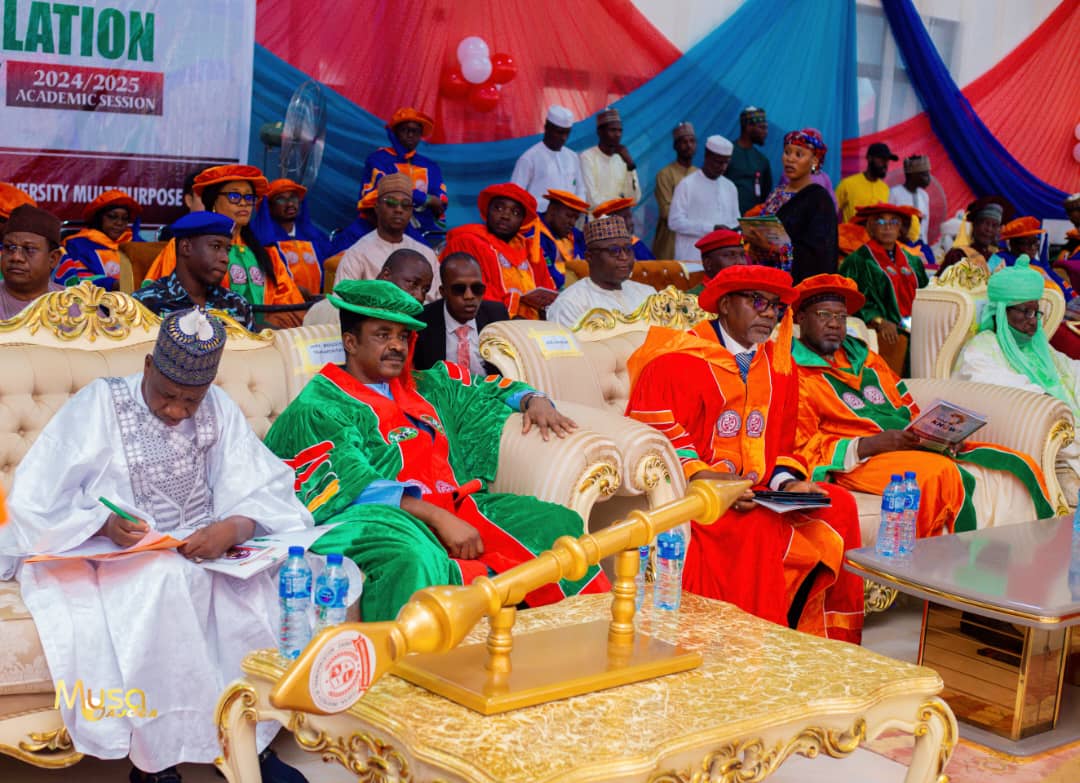
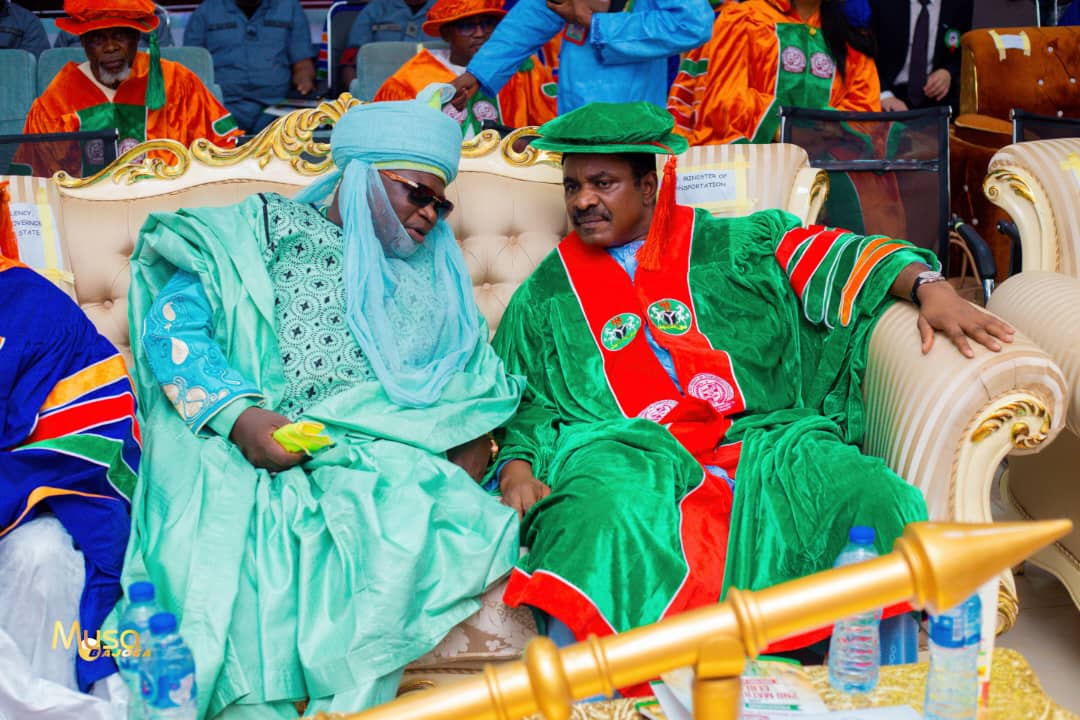
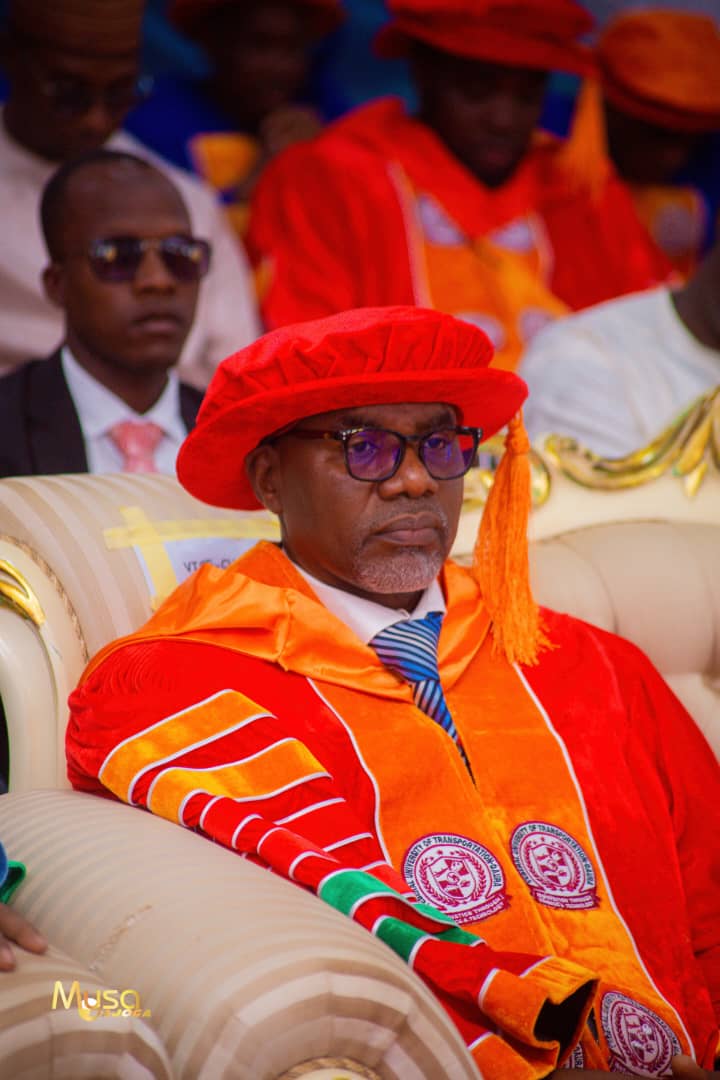
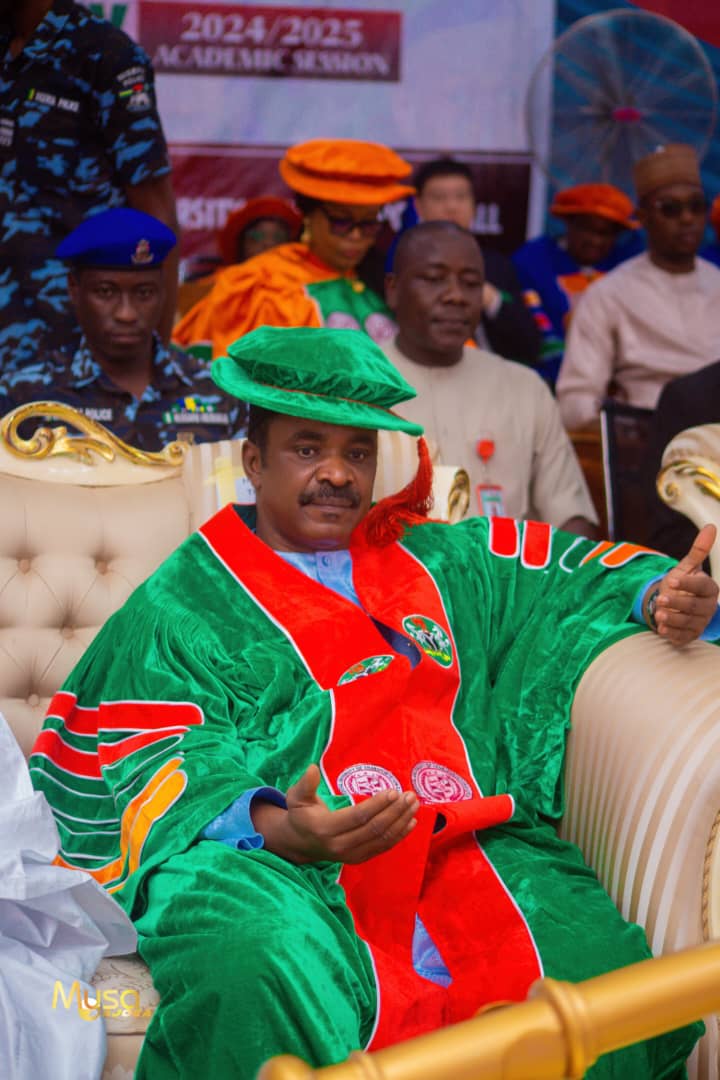
The Federal Government has praised FGFGor its role in establishing the Federal University of Transportation, Daura (FUTD), describing the company’s support as a landmark corporate social responsibility gesture.
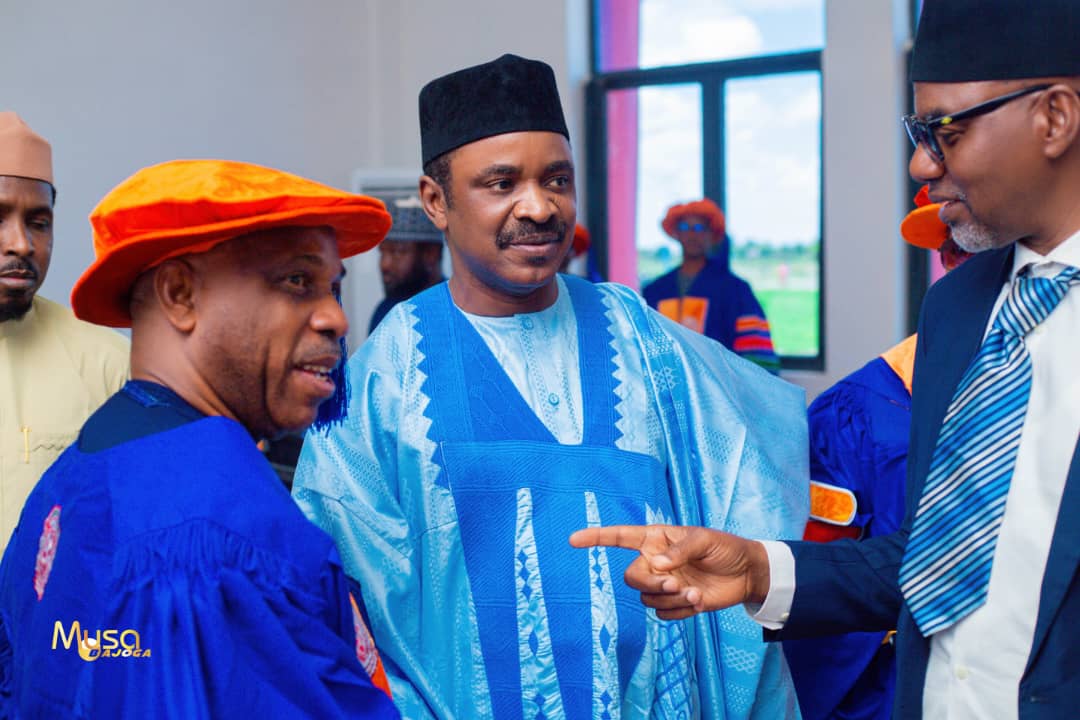
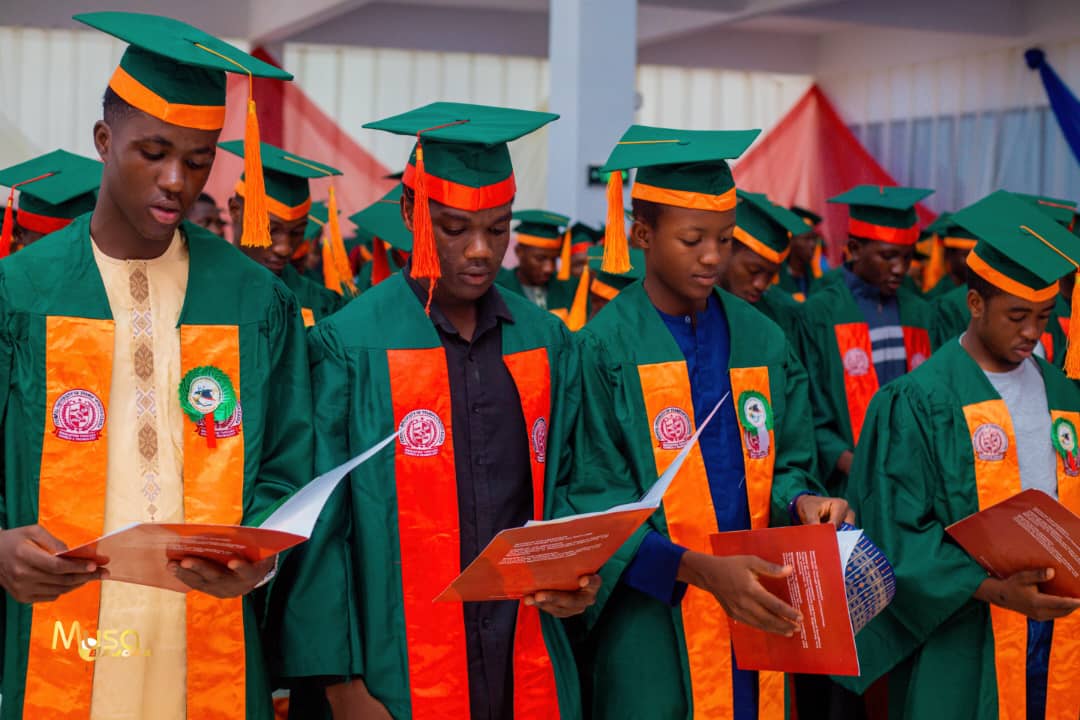
Minister of Transportation, Senator Said Alkali, made the remarks on Saturday during the institution’s second matriculation ceremony in Daura. He urged the construction giant to sustain its commitment by commencing the second phase of development projects for the university.
“This gesture is the first of its kind in Nigeria’s history. It is imperative that CCECC continues with the same level of commitment by beginning the second phase of the development project,” Alkali said.
The minister also conveyed President Bola Tinubu’s congratulations to the governing council, management, staff, and matriculating students. The president expressed pride in the university’s rapid progress and urged students to maximize the rare opportunity of studying at Africa’s only specialized university of transportation.
“I am confident that our students will excel and become the pride of the university, their parents, and the country,” Tinubu’s message read.
Alkali commended the Katsina State Government for its continued support under Governor Dikko Umaru Radda and acknowledged both CCECC and Mota-Engil Nigeria Limited for their contributions to the institution. He reiterated the federal government’s objective of producing globally competitive graduates in transportation-related disciplines.
Vice-Chancellor of FUTD, Prof. Umar Katsayal, said the university is focused on building partnerships to achieve academic excellence and innovation. He noted that FUTD aims to train professionals capable of solving current transportation challenges while driving research and technological advancement.
“Our goal is to establish ourselves as a premier institution for academic excellence and innovation in transportation engineering, management, logistics, and supply chain management, serving Nigeria and Africa,” Katsayal said.
The VC urged matriculating students to uphold the university’s values, avoid social vices, and embrace integrity throughout their studies.
Katsina State Governor Umaru Radda, represented by Commissioner for Higher Education Isa Kankara, pledged the state’s continued support to the institution.
Similarly, the Pro-Chancellor and Chairman of FUTD’s Governing Council, Hon. Wahab Akanni Owokoniran, assured that the council would work tirelessly to place the university on a solid foundation, while commending both the minister and management for their leadership.
Local farmers in Nigeria have raised alarm over the dominance of imported rice and maize in markets, warning that the federal government’s import waiver policy is undermining domestic grain production and pushing them out of business.
The outcry comes amid a drop in the prices of rice and maize nationwide, which farmers attribute to the surplus of foreign products. A survey by DAILY POST shows local rice currently sells for between ₦65,000 and ₦68,000 per 50kg bag, while imported rice sells at about ₦83,000. Maize prices have also dropped to between ₦35,000 and ₦37,000 per bag.
The Federal Government’s 150-day duty-free import window, introduced in July 2024 for staple foods including rice and maize, was intended to combat food inflation. Nigeria Customs Service Comptroller-General Bashir Adeniyi confirmed that the policy led to a decline in food prices.
However, local farmers say the move has slashed their profit margins, threatening the sustainability of domestic food production. They argue that the market is now flooded with cheaper imports, discouraging investment in local farming.
Further compounding their woes is a surge in fertilizer prices, which has increased production costs and made it even harder for local growers to remain competitive.
Reacting to the situation, Professor Godwin Oyedokun of Lead City University, Ibadan, described the farmers’ concerns as legitimate. He explained that excessive importation causes oversupply, lowers prices, and hampers the competitiveness of local produce.
“To address these issues, the government should engage directly with farmers to understand their challenges,” Oyedokun advised. He proposed several solutions, including introducing tariffs on imports, offering production subsidies, improving market access, and investing in farmer training and agricultural technology.
“Ultimately, a balanced approach that supports both consumer needs and the viability of local agriculture is essential for long-term food security and economic stability,” he said.
According to DAILY POST, while Nigeria’s headline inflation declined to 22.22% in June 2025, food inflation remained high at 21.97%.
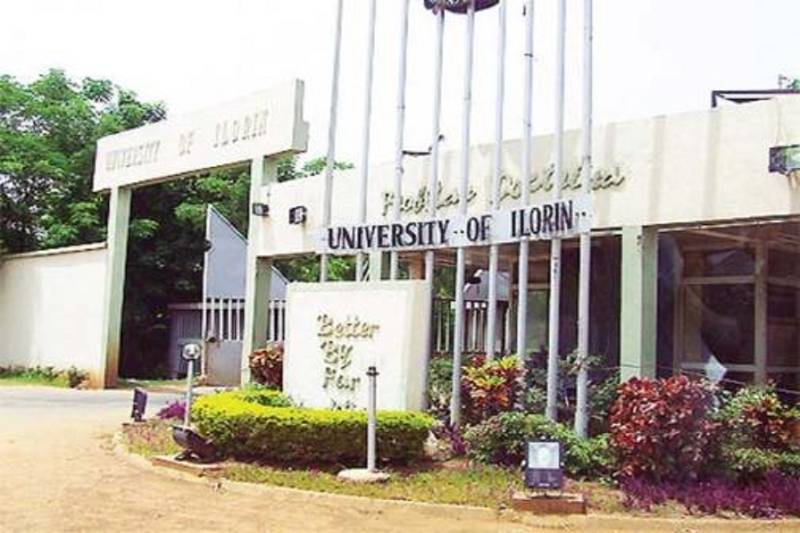
As part of efforts targeted at promoting innovation, entrepreneurship and digital skills development in Nigeria, the University of Ilorin has been selected alongside some other tertiary education institutions to host digital innovation hubs.
The project is to be implemented as part of the country’s participation in the Investment in Digital and Creative Enterprises (iDICE) programme.
According to a letter dated June 17, 2025 and addressed to the Vice Chancellor of the University of Ilorin, Prof. Wahab Olasupo Egbewole, SAN, by the Executive Secretary of the National Universities Commission (NUC), Prof. Abdullahi Yusuf Ribadu, the initiative is to be supported by the Federal Government through the Bank of Industry (BOI) in collaboration with the African Development Bank (AfDB), the Islamic Development Bank (ISDB) and the Agence Francaise de Development (AFD).
The letter, a copy of which was made available to UNILORIN Bulletin last Friday (June 20, 2025), explained that the project is targeted at fostering the emergence of job-creating enterprises and equip young Nigerians with 21st-century skills in the areas of technology, creativity and innovation.
The NUC’s Chief Executive said that the shortlisting of the University is a reflection of its demonstrated potentials and readiness to contribute meaningfully to what he called a “transformative initiative”.
Prof. Ribadu expressed conviction that the project will foster greater industry-academic linkages as it would also nurture talents, and drive enterprise development.
Meanwhile, the Vice Chancellor of the University, Prof. Egbewole, has welcomed the initiative, saying that it perfectly conforms to the vision of the University.
In a statement signed by the University’s Director of Corporate Affairs, Mr Kunle Akogun, the Vice Chancellor thanked the Federal Government through the NUC for selecting the University for the project.
While saying that the institution was already planning to launch an appeal fund for an innovation hub project as part of its upcoming Golden Jubilee celebration, Prof. Egbewole described the selection of the University for the government’s innovation hub project as a mid-year gift and an honour and privilege that would never be taken for granted.
The Vice Chancellor assured the Federal Government that the University will cooperate fully with stakeholders to ensure that the initiative is implemented swiftly for the benefit of its current and future students and the nation at large.
The Federal Government stopped paying N35,000 minimum wage after first month despite having the revenue to pay, the Trade Union Congress (TUC) has claimed.
The President of the Trade Union Congress, Festus Osifo, made this claim in an interview with Arise Television on Monday.
According to the TUC, the government has stopped the promised 6-month wage award payment after the first payment was made.
Meanwhile, the union has given President Bola Tinubu a 10-point agenda as part of its demands to the federal government.
Osifo said the Nigerian government has the required revenues to meet the demands of the trade union, but lacks the will to “actually do what is right.”
He said, “If you’ve signed an agreement and you’re finding it difficult to implement, what you do normally is for you to call the other party, and you sit down together. But we don’t even think that is the challenge, we don’t think that is the problem.
“Because today, you could see from the federation account how much they share every month, it has doubled compared to the figures that they were sharing or the amount of money that they were sharing as at April/May.
“Today, they share trillions of naira, that shows that even if the value of this money has plummeted, even if the value has gone down, but the physical note is there, the volume has actually gone up.
“So, they could actually take care of this. It is not because they don’t have revenue, but it is the will for them to actually do what is right. You know very well, that as at when this government came in, the exchange rate was somewhere around N450 to a dollar. But today, officially, it is over N900, which is times two. That has actually made the government to be earning more money.”
Osifo noted that the government had not notarised the 10-point agenda that the TUC had presented to the government, which was eventually agreed with.
He said, “The last point in that agreement that we reached as at then contained the fact that it will be a consent judgement, but up till now, to the best information available to us, that has not been done. As at today, it’s not been placed before the court of law for it to be adopted as a consent judgement.
“But even beyond that, there are some provisions in that agreement that we felt that government, they have not implemented to the latter.”
He further said, “It is left for government to tell us the reason why they have not taken that document to court, it’s left for them. But for us, our responsibility is to hold them accountable to be sure and certain that every statement in that agreement as agreed with them must be implemented.”
Osifo then said that the demands that the TUC listed in the 10-point agenda came about as they considered the suffering of the average Nigerian because of high rising prices due to inflation, the removal of fuel subsidy, and other economic challenges.
He stated, “It was based on this that the government came up with this 10-point agenda, because we feel that if government is sincere enough to implement these and put frameworks in place to address all these, the life of an average Nigerian will be better.”
“This government must sit down, buckle its belt and address the issues that are affecting Nigerians,” he said.
The Trade Union Congress, TUC, has urged the Federal Government to implement all agreements reached with organised labour in 2023, especially the national minimum wage.
Festus Osifo, TUC President, said this in a 2024 New Year message he jointly signed with Nuhu Toro, Secretary General of the union, on Wednesday in Abuja.
The message is titled “Our Hope is not Renewed Yet.”
Osifo, who said that TUC had in 2023 strived to ensure that social dialogue with the Federal Government prevailed, accused the government of failing to implement basic agreements reached with labour.
He said labour had insisted that the October 2, 2023, agreements be notarised by the court.
According to him: “However, the government has serially violated the agreements. For instance, Item 2 states that: ‘A minimum wage committee shall be inaugurated within one month from the date of this agreement.’ Today, three months after, no such committee has been set up and this is our experience with this government on at least two previous agreements reached from June.
“TUC has resolved to demand from the Tinubu administration that in 2024, all agreements between labour and government should be implemented. This includes the payment of the monthly N35,000 wage award to public servants in the local government, state and federal services. This must be implemented until a new national minimum wage is implemented.”
The Federal Government has assured Nigerians of upgrading all Nigerian airport facilities to meet global standard.
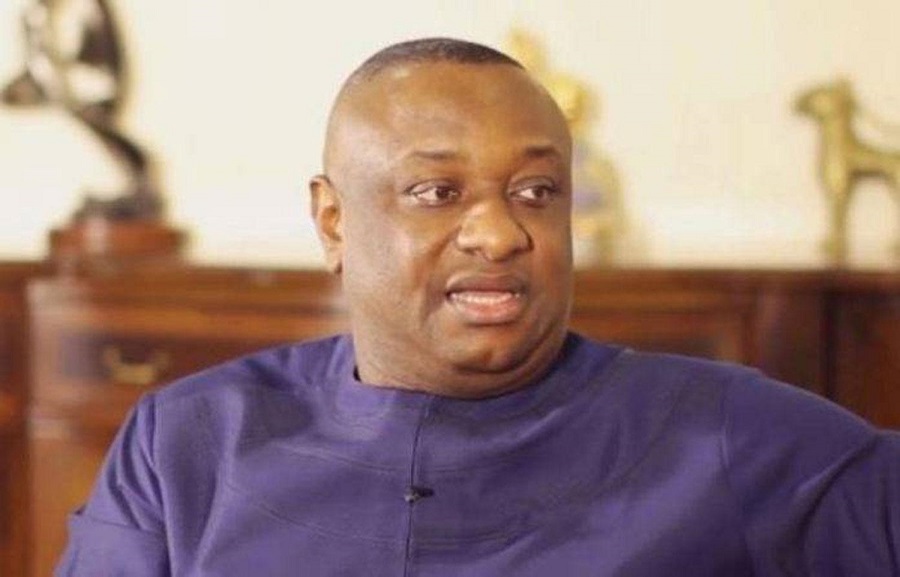
The Minister of Aviation and Aerospace Development, Barr. Festus Keyamo disclosed it when he went on an inspection tour of the Nnamdi Azikiwe International Airport, Abuja facilities on Tuesday. Noting that at any arrival, at any point in time, what passengers want to see is that the lifts, the escalators, and the carousel are working.
Keyamo said Nigerian government cannot continue to repair or service obsolete facilities at the various airports because it is not a cost effective measure but would rather remove the old ones and replace them with new ones that are up to global standards.
” On a visit to most of our airports, what we noticed is that they are facing thesame problems. I have told them that my mentality to some of these things, for example, most of those lifts that are obsolete, instead of fixing and fixing them every two months, and by the time you fix three times, you are almost buying a new one with the cost of fixing, i told them get rid of it.
“Let us buy high quality needs, the ones I saw here are not good enough. I will not be here and they would go and buy high substandard goods.
“The one that has capacity to take high traffic and we see them all over the world lifts are not what you just buy locally, there are good brands all over the world. I have told them get rid of the lifts, I wouldn’t be spending money every month repairing them, that is not my attitude to it,” he said.
The Minister also urged passengers to be patient to enable the government fix the airport facilities issues in order to enjoy their arrival.
“Let’s be patient and rush through emergency procurement and buy good lifts for Nigerians to enjoy their arrival. Beyond that, we should also have a maintenance culture.
“I told MD FAAN and my PS that if we cannot maintain, these things internally because they are the optics that we keep on seeing, let us get people who can maintain them and we can hold them responsible. We can give people these three critical infrastructure, the lifts, the escalators, the chillers, the airconditions and the carousel for the carrier belts to maintain.
“Nigerians complain so much about the things everyday and we need to just change the antics when people come into our airports. I think I want to change the narrative,’ affirmed Keyamo.
Speaking on the second runway, the Minister said, the second runway way for a gateway city like Abuja is extremely important and paid that the national assembly, the presidency and agencies involved would give the necessary support to deliver project within 12months.
“I had to meet the FCT Minister and we got approval for clearing the obstacles on the way. The information as of today is that they have started paying the settlers there, the CCECC is giving next week to clear the site and move to site.
“So we are going to invite Mr President to come and commission it, it is a project that Nigerians have been waiting for. It has been a controversial project from obasanjo time till now, but thankfully this government is set to commence that project and it is one of the projects that is a no hanging fruit for us.
“The second runway way for a gateway city like Abuja is extremely important. And I pray that the national assembly, the presidency and agencies would all give us the support to make sure we deliver that project within 12months,” said Keyamo.
ROYAL NEWS reports that the Minister was accompanied by the President Secretary, Emmanuel Meribole, MD FAAN, Kabir Mohammed, among many other government officials.
The Colleges of Education Academic Staff Union, COEASU has directed its members to work for only two days a week, until the federal government yields to its demand for a 200% salary increase following the difficulty of its members to get to work as a result of the hike in the price of petrol.
In a release after its extra-ordinary executive meeting, COEASU President, Smart Olugbeko said the over 250 percent hike in Petrol prices increased the price of food transportation and other services is a huge challenge for its members.
COEASU expressed concern that salaries were last increased in Colleges of Education in 2010, when a litre of fuel was between 65 and 70.
The Union described as ridiculous, the government’s avoiding the negotiation table, after it proposed a 35% salary increase against 200% put forward by organised labour.
COEASU warns that if something urgent is not done, Nigerian students will end up bearing the brunt as semesters will because longer in the face of the shortened work schedule of lecturers.
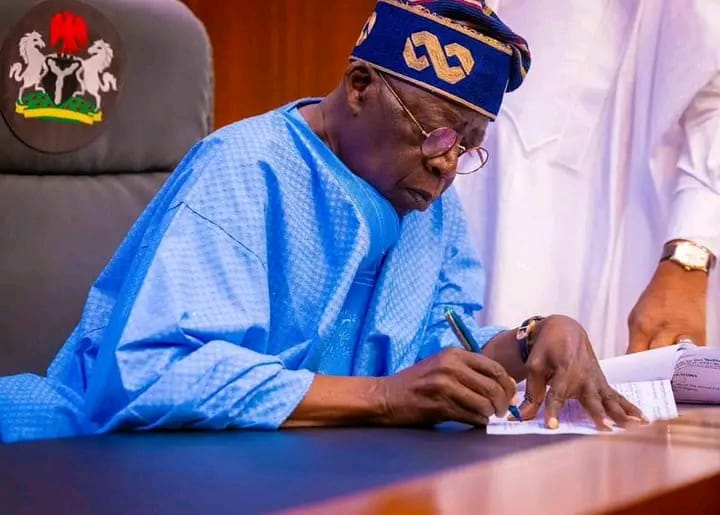
Ahmed Tinubu
The Debt Management Office (DMO) has issued a warning to the Federal Government (FG) against additional borrowing, citing that 73.5% of this year’s revenue will be used to service debt. According to the DMO, this high Debt Service-to-Revenue ratio is unsustainable and poses a threat to debt sustainability.
The DMO recommended that the FG focus on increasing revenue generation to achieve a sustainable Debt Service-to-Revenue ratio. It suggested raising the projected FGN revenue from N10.49 trillion to about N15.5 trillion. These recommendations were made after analyzing the nation’s debt profile in 2022.
DMO’s analysis revealed that the Total Public Debt-to-GDP ratio is projected to increase to 37.1% in 2023, mainly due to new borrowings, FGN Ways and Means at the CBN, and estimated Promissory Notes issuance. While the baseline scenario indicates that the debt stock remains sustainable, the borrowing space has been reduced compared to the self-imposed debt limit of 40%.
The projected FGN Debt Service-to-Revenue ratio of 73.5% for 2023 exceeds the recommended threshold of 50% due to low revenue. This highlights the urgent need to significantly increase government revenue. The DMO emphasized the importance of adhering to existing legislation on government borrowing, such as the Fiscal Responsibility Act 2007 and the Central Bank of Nigeria Act 2007, to moderate the growth rate of public debt.
Furthermore, the DMO called for a focus on revenue mobilization initiatives and reforms to increase the country’s tax revenue to GDP ratio. It also suggested encouraging private sector involvement in funding infrastructure projects through Public-Private Partnerships (PPP) and reducing borrowing by privatization or sale of government assets.
Experts have supported the DMO’s caution against further borrowing, highlighting the precarious nature of the debt service-to-revenue ratio. They emphasized the need for fiscal discipline, adherence to borrowing limits, and implementation of measures to improve revenue generation.
The DMO’s warning serves as a reminder of the challenges posed by Nigeria’s high debt burden. It underscores the importance of pursuing sustainable revenue generation strategies and prudent fiscal management to ensure long-term debt sustainability and economic stability.
Results of 2022 MAC-DSA shows that the Total Public Debt-to GDP ratio is projected to increase to 37.1 percent in 2023 relative to 23.4 percent as at September 2022, due to the inclusion of the N8.80 trillion (New Borrowings) for the year 2023, the FGN Ways and Means at the CBN of over N23 trillion and
estimated Promissory Notes issuance of N2.87 trillion in the Debt stock under the
Baseline Scenario.
The Country’s Debt stock remains sustainable under these criteria, but the borrowing space has been reduced when compared to the Nigeria’s self-imposed debt limit of 40 percent set in the MTDS, 2020-2023. On the other hand, FGN Debt Service-to-Revenue ratio at 73.5 percent in 2023 which exceeds the recommended threshold of 50 percent due to low revenue, which means that there is need to significantly increase Government revenue.
Under the Alternative Scenario, the Total Public Debt-to-GDP ratio at 45.4 percent in 2023 exceeds the Nigeria’s self-imposed debt limit of 40 percent, while the FGN Debt Service-to-Revenue also exceeds the recommended threshold of 50 percent.
Based on the analysis of the results of the 2022 MAC-DSA, the DMO recommends that:
1. Although the Baseline analysis projects Total Public Debt-to-GDP ratio at 37.1 percent for 2023 indicating a borrowing space of 2.9 percent (equivalent of about N14.66 trillion) when compared to the self-imposed limit of 40 percent, it is recommended that this should not be used as a basis for higher level of borrowing as was the case in the 2023 Budget.
This is because the outcome of the Shock Scenario, which is more realistic in the circumstances, exceeded the self-imposed limit.
2. The projected FGN Debt Service-to-Revenue ratio at 73.5 percent for 2023 is high and a threat to debt sustainability. It means that the revenue profile cannot support higher levels of borrowing. Attaining a sustainable FGN Debt Service-to-Revenue ratio would require an increase of FGN Revenue from N10.49 trillion projected in 2023 Budget to about N15.5 trillion.
3. With respect to expansion in fiscal deficit, there is need to strictly adhere to the provision of extant legislations on Government borrowing, especially the Fiscal Responsibility Act 2007 and Central Bank of Nigeria Act, 2007 as it relates to Ways and Means Advances, in order to moderate the growth rate of public debt.
4. There is urgent need to pay more attention to revenue generation by implementing far reaching revenue mobilization initiatives and reforms including the Strategic Revenue Growth Initiatives and all its pillars with a view to raising the country’s tax revenue to GDP ratio from about 7 percent (one of the lowest in the world) to that of its peer.
5. Government should encourage the private sector fund infrastructure projects through the Public-Private Partnership schemes and take out capital projects in the Budget that are being funded from borrowing, thereby reduce budget deficit and borrowing.
6. Government can reduce borrowing through privatization and/or sale of Government assets.
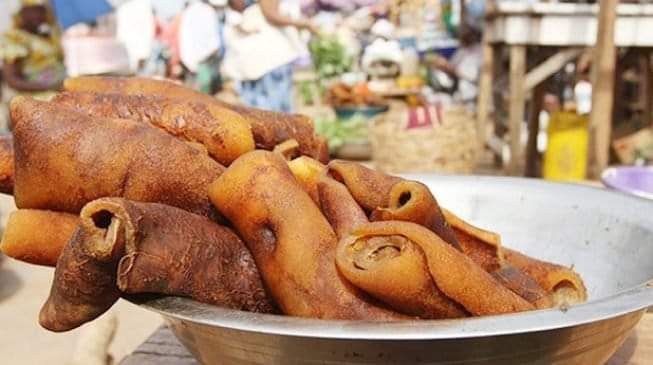
The Federal Ministry of Agriculture and Rural Development has raised an alarm of ponmo now being dangerous for Nigerians to consume following the outbreak of Anthrax in some neighbouring countries within the West African sub-region.
Nigerians have been asked to desist from the consumption of hides (ponmo), smoked meat and bush meat as they pose serious risk until the situation is brought under control.
The anthrax outbreak was first recorded in northern Ghana bordering Burkina Faso and Togo putting the whole sub-region at risk.
The statement read;
“The disease which has claimed some lives, is a bacterial disease that affects both animals and man, that is a zoonotic disease. Anthrax spores are naturally found in the soil and commonly affect domestic and wild animals.
“People can get infected with Anthrax spores if they come in contact with infected animals or contaminated animal products. However, Anthrax is not a contagious disease and so, one cannot get it by coming in close contact with an infected person.“Signs of anthrax are flu- like symptoms such as cough, fever, muscle aches and if not diagnosed and treated early, lead to pneumonia, severe lung problems, difficulty in breathing, shock and death.”
Nigerians have also been warned against closeness to non-vaccinated animals with Anthrax as it can easily be transmitted to man through the inhalation of Anthrax spores including consumption of contaminated/Infected animal products, such as hides and skin, meat or milk.