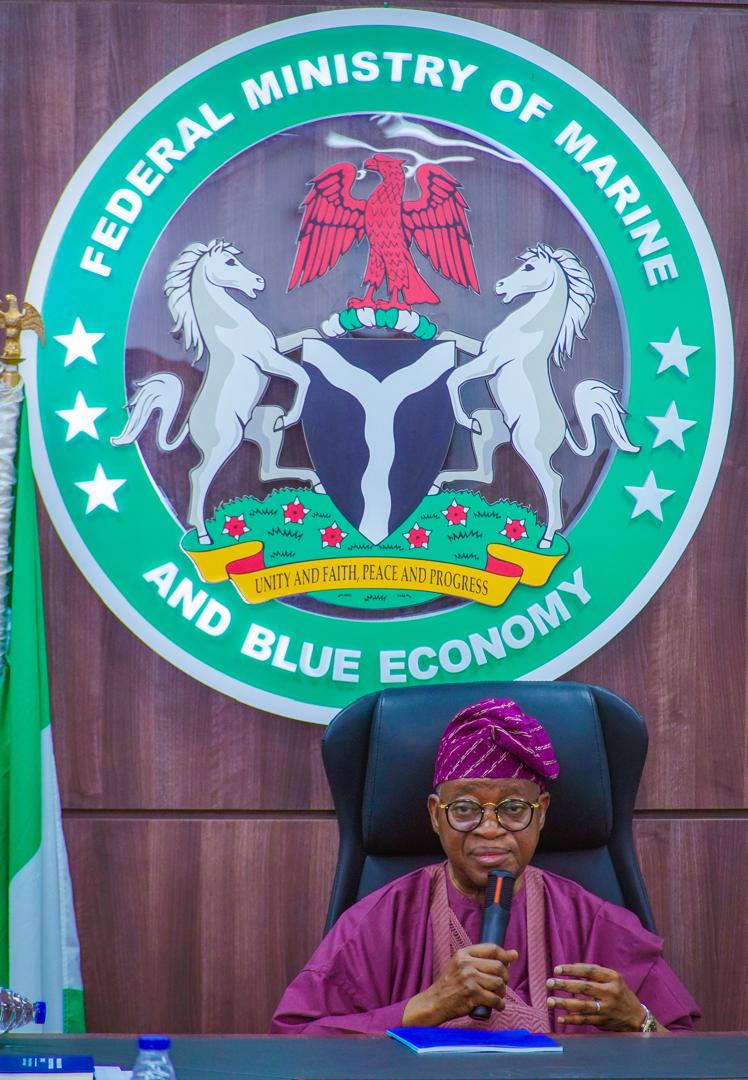
Nigeria’s Minister of Marine and Blue Economy, Adegboyega Oyetola, has urged international stakeholders to remove war risk insurance premiums imposed on vessels bound for Nigeria, describing the surcharge as outdated and harmful to the country’s competitiveness.
Speaking at the 3rd Annual Maritime Lecture in Lagos on Wednesday, Oyetola—represented by his Special Adviser on Media and Communications, Dr. Bolaji Akinola—argued that Nigeria’s security and reform achievements justify its removal from global high-risk maritime classifications.
Oyetola, who has led the newly established ministry since 2023, highlighted reforms that have reshaped Nigeria’s maritime landscape within two years. Among the achievements, he cited the resolution of the Apapa gridlock that had stifled port operations, the launch of Africa’s first National Policy on Marine and Blue Economy, and approval for the modernization of Lagos and Tin Can Island Ports, with similar upgrades planned for Eastern Ports.
He also noted a sharp rise in government revenue from the sector, which more than doubled from ₦700.79 billion in 2023 to ₦1.39 trillion in 2024.
Despite these gains, Oyetola said the continued application of war risk premiums has cost Nigeria an estimated $1.5 billion, even as its security efforts have drawn global recognition. He pointed to the Deep Blue Project and other maritime security initiatives as evidence that Nigeria has addressed past vulnerabilities.
The minister added that the government is engaging with international bodies, including BIMCO, the International Chamber of Shipping, and Lloyd’s, to push for updated risk assessments. He also pledged continued investment in maritime security architecture, publication of regular security reports, and promotion of local maritime insurance.
Reaffirming the administration’s priorities, Oyetola said Nigeria remains committed to securing its waters, modernizing ports, empowering local operators, and advancing the blue economy as a driver of jobs, growth, and sustainability.