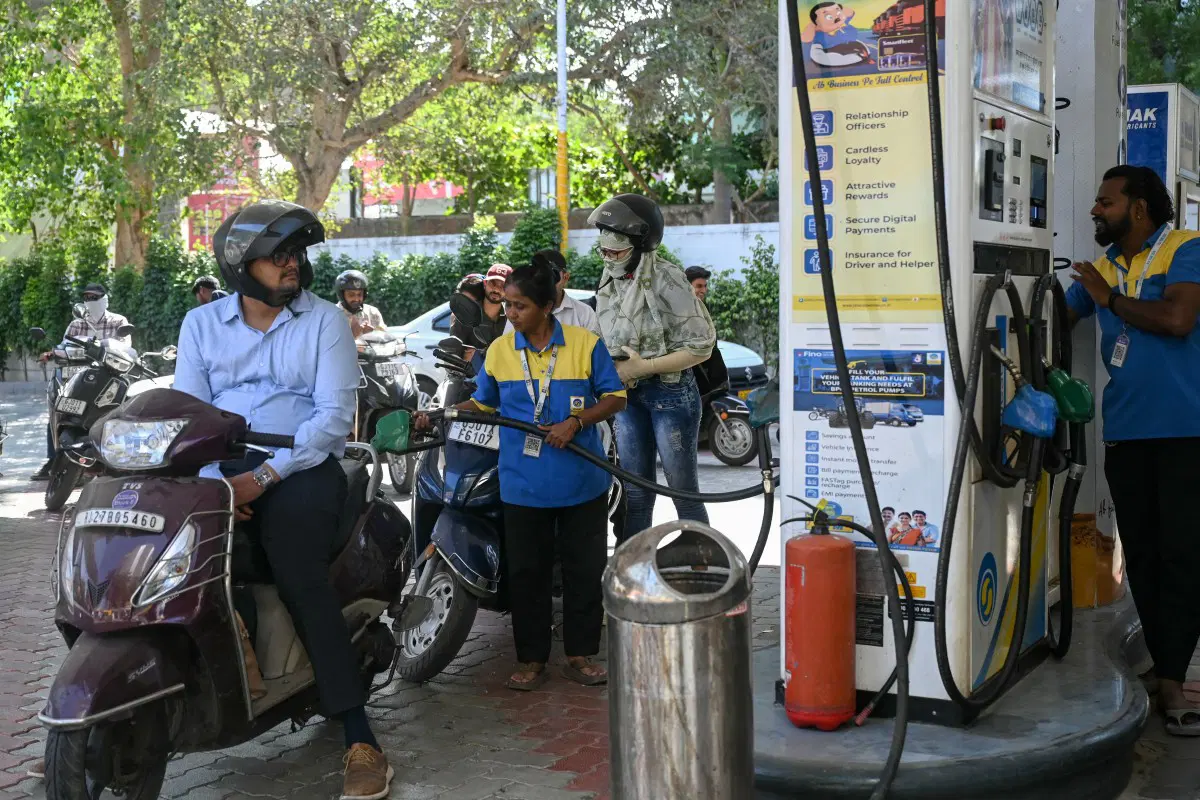
 Fuel prices in India rose by more than three per cent on Friday as the ongoing war involving Iran continues to disrupt global energy supplies and increase pressure on the country’s economy.
The increase is the first adjustment to petrol and diesel prices in India since the conflict began in February and led to Iran’s near-total blockade of the Strait of Hormuz, a key global oil shipping route.
India, the world’s third-largest crude oil importer, typically sources about half of its oil imports through the strategic waterway.
According to the Indian Oil Corporation, petrol prices in Delhi increased from 94.77 rupees to 97.77 rupees per litre, while diesel prices rose from 87.67 rupees to 90.67 rupees per litre. Fuel prices vary across India due to differences in local taxation.
State-owned oil companies said the adjustment became necessary because of rising global crude prices, which have increased operational losses.
The government had earlier raised the price of liquefied petroleum gas used by millions of households, while authorities have also introduced measures aimed at reducing fuel consumption and conserving foreign exchange reserves.
Delhi authorities announced that public workers who can operate remotely will work from home two days each week, while residents have been encouraged to reduce private vehicle usage.
Prime Minister Narendra Modi said restrictions on fuel consumption are necessary to reduce pressure on the country’s foreign exchange spending on fuel imports.
India has also increased imports of Russian crude oil following a temporary United States sanctions waiver that helped offset reduced supplies from the Middle East. However, with the waiver expected to expire on Saturday, Indian Foreign Minister Subrahmanyam Jaishankar criticised what he described as “unilateral coercive measures” during a meeting of BRICS foreign ministers.
Speaking alongside Iranian Foreign Minister Abbas Araghchi and Russian Foreign Minister Sergey Lavrov, Jaishankar said such measures disproportionately affect developing countries and cannot replace diplomacy or dialogue.