Despite a fourth consecutive drop in Nigeria’s inflation rate, many citizens and businesses are yet to feel the expected economic relief.
The National Bureau of Statistics (NBS) reported that inflation fell to 21.88 percent in July from 22.22 percent in June, continuing a downward trend since April 2025, when it stood at 23.7 percent month-on-month. The decline, alongside a Gross Domestic Product (GDP) growth to N372.8 trillion in 2024 after the rebase in July 2025, has been hailed by President Bola Ahmed Tinubu’s administration as a reflection of positive economic management.
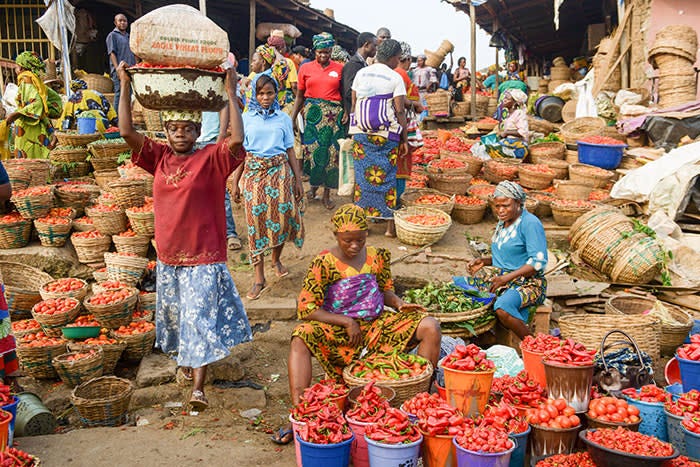
However, the reduction in headline inflation has not translated into tangible benefits for Nigerians. Food prices, energy costs, transportation fares, and interest rates remain elevated. A 50-kilogram bag of local rice costs between N69,000 and N75,000 in Abuja and Lagos, while fuel prices range from N865 to N925 per litre. Cooking gas sells for N1,000 to N1,200 per kilogram, and Band A electricity tariffs remain at N209.50 to N231.79 per kilowatt-hour.
Economic experts have offered differing views on the significance of the July inflation data. Mazi Okechukwu Unegbu, former president of the Chartered Institute of Bankers of Nigeria (CIBN), described the official figures as disconnected from reality, stating, “There is a wide difference between the inflation figure by NBS and the reality on the ground. The government believes in statistics, ignoring realities.”
Gbolade Idakolo, CEO of SD & D Capital Management, noted that while core inflation has declined due to Central Bank interventions, food inflation continues to rise due to insecurity in agrarian regions and exchange rate pressures affecting imported agricultural inputs. He stressed the need for stronger government policies to address these issues.
Renowned economist Prof. Segun Ajibola explained that the headline inflation figure reflects a weighted basket of consumable items, which may not fully capture price fluctuations across Nigeria. “The inflation figure rolled out may not be representative of the real situation nationwide,” he said.
The contrast between statistical improvements and everyday hardships has intensified debates over the effectiveness of current economic policies, highlighting the gap between macroeconomic indicators and the lived experiences of Nigerians.