


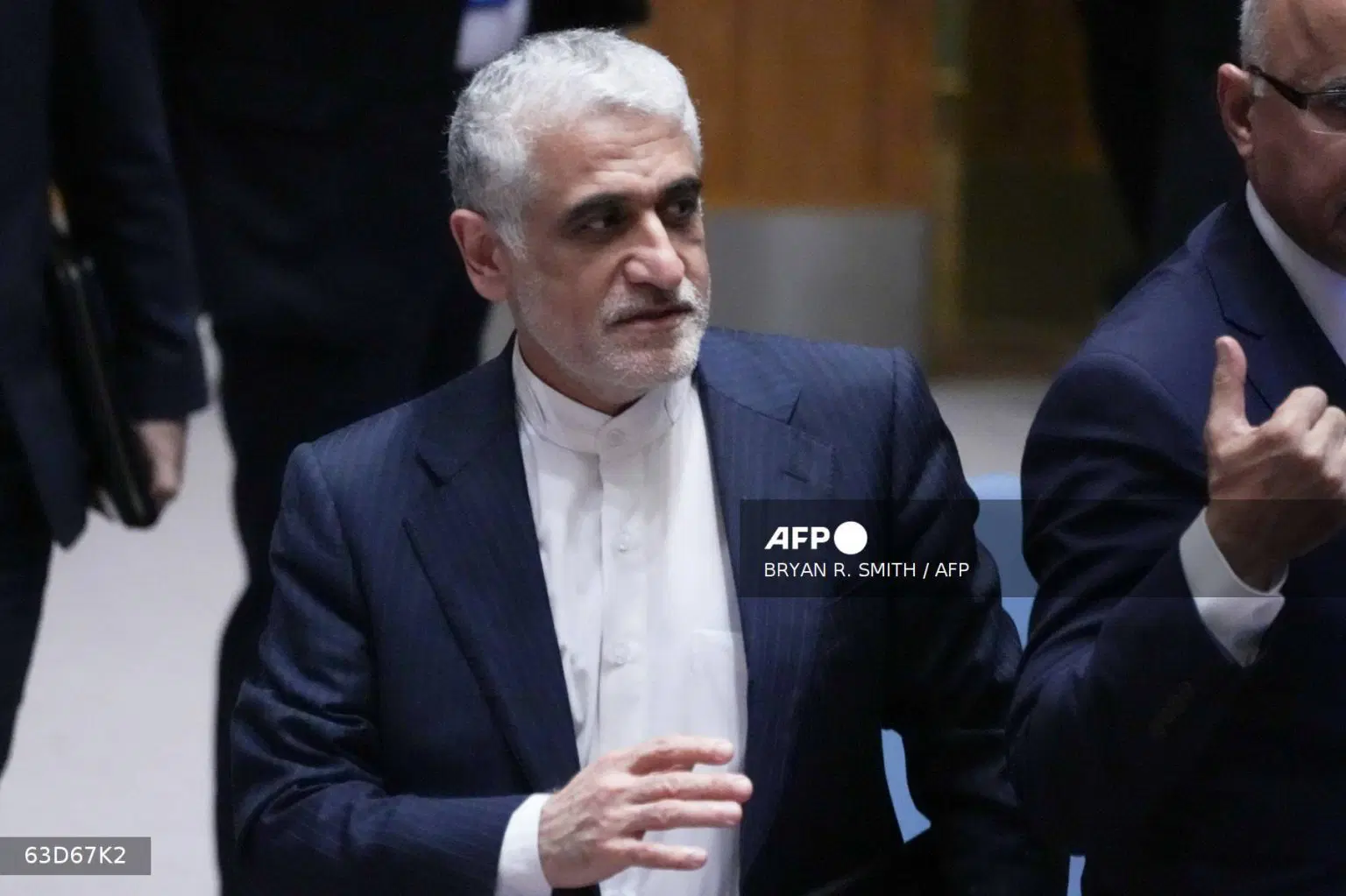
Iran on Monday strongly condemned a United States maritime blockade around its ports, describing the move as a serious violation of its sovereignty and international law, amid rising tensions despite an earlier ceasefire agreement between the two countries.
In a letter to UN Secretary-General António Guterres, Iran’s ambassador to the United Nations, Amir Saeid Iravani, said the blockade represented a “grave violation” of Iran’s territorial integrity and breached fundamental principles governing freedom of navigation under international maritime law.
The protest followed an order by US President Donald Trump directing naval forces to block vessels entering or leaving Iranian ports and coastal areas in the Gulf after peace negotiations between Washington and Tehran collapsed over the weekend. Trump also warned that any Iranian attack boats challenging the blockade would be destroyed.
The blockade took effect at 1400 GMT on Monday, only days after both sides agreed to a two-week ceasefire brokered with support from Pakistan and Qatar, raising concerns about the durability of the fragile truce.
Guterres urged “all parties” to respect freedom of navigation through the Strait of Hormuz, a critical global shipping route through which roughly one-fifth of the world’s oil and gas supplies pass.
The strait has become a central pressure point in ongoing ceasefire negotiations, with both the United States and Iran seeking leverage as diplomatic efforts continue.
Iravani warned that the blockade posed a serious threat to international peace and security and risked escalating tensions in an already volatile region.
In a separate communication to the United Nations, the Iranian envoy also called on Middle Eastern countries hosting US military bases—including Bahrain, Saudi Arabia, Qatar, the United Arab Emirates and Jordan—to halt what he described as “internationally wrongful acts” and compensate Iran for alleged material and moral damages linked to the crisis.


