


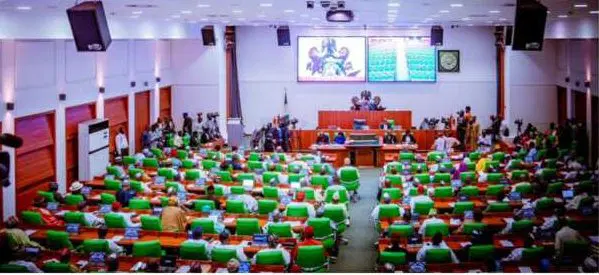
 Tension is mounting at the National Assembly of Nigeria as lawmakers from both chambers meet to harmonise their positions on the method of transmitting election results to the portal of the Independent National Electoral Commission ahead of the 2027 general elections.
The 24-member conference committee, comprising 12 senators and 12 members of the House of Representatives, is expected to decide whether to adopt the Senate’s flexible model or the House’s mandatory real-time electronic transmission clause in the proposed amendment to Section 60(3) of the Electoral Act. The issue sparked heated debate last week, prompting emergency consultations to calm public concerns.
While the House approved compulsory real-time electronic transmission of results from polling units, the Senate removed the phrase “real time” and inserted a proviso allowing manual collation through Form EC8A where communication networks fail. The Senate’s position permits electronic transmission but leaves room for discretion, a move critics argue could create loopholes.
Former Inter-Party Advisory Council chairman, Chief Peter Ameh, described the Senate’s revision as cosmetic, warning it could perpetuate confusion and distrust. Senators Seriake Dickson and Natasha Akpoti-Uduaghan have publicly backed the House version, insisting that mandatory real-time uploads would strengthen transparency and public confidence in the electoral process.
However, the ruling All Progressives Congress, which controls both chambers, is reportedly pushing for the Senate’s version. With a numerical majority in the Senate and dominance on the conference committee, party insiders say the final outcome is likely to reflect its preference for what it calls a “practical and flexible” framework.
APC lawmakers argue that Nigeria’s infrastructural limitations make mandatory real-time uploads risky. They cite poor network connectivity in remote polling units and warn that technical failures could trigger legal disputes capable of nullifying legitimate votes.
Defending the Senate’s stance, Senate Leader Opeyemi Bamidele said the decision was guided by empirical data rather than sentiment. He referenced statistics from the Nigerian Communications Commission indicating about 70 per cent broadband coverage and 44.53 per cent internet penetration in 2025, as well as global rankings that place Nigeria low in mobile and fixed broadband reliability. He also noted that about 85 million Nigerians lack access to grid electricity, raising concerns about the feasibility of mandatory real-time transmission.
Opposition lawmakers counter that technological challenges should not override transparency, arguing that fallback systems such as satellite backups can address connectivity gaps. They warn that leaving transmission to discretion may erode public trust ahead of 2027.
As deliberations continue, three outcomes appear possible: adoption of the House’s strict real-time clause, endorsement of the Senate’s discretionary model, or a compromise blending both approaches. The final decision is expected to shape not only the legal framework for the 2027 elections but also public confidence in Nigeria’s democratic process.


