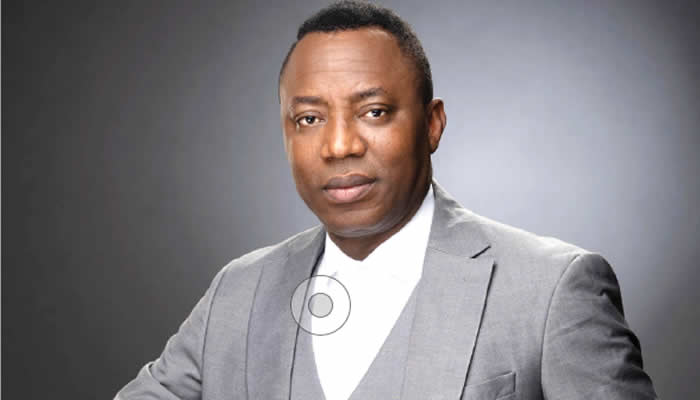
Omoyele Sowore, human rights activist and former presidential candidate of the African Action Congress (AAC), has warned that credible and transparent elections would drastically alter Nigeria’s political landscape, with most current officeholders unlikely to retain their positions. He made the comments on Channels Television’s The Morning Brief, responding to debates around the recent Electoral Act amendment, particularly provisions on result transmission and collation.
The controversy follows the Senate’s approval of electronic transmission of election results while retaining manual collation in areas with limited internet access. Sowore criticised this move, arguing that lawmakers are deliberately resisting reforms that would threaten their political survival. “They are afraid of transparent elections because once elections become truly transparent, 90 per cent of those sitting in the National Assembly—and even those occupying other elected offices, including the presidency—will not be there,” he said.
Sowore described the retention of manual collation as a tactic to weaken the impact of electronic transmission, creating opportunities for manipulation and undermining public confidence in election credibility. He argued that the current arrangement reflects a compromise that maintains the traditional system of declaring results while avoiding full transparency.
He also criticised the Independent National Electoral Commission’s (INEC) infrastructure, particularly the IReV platform, describing it as outdated and not aligned with global best practices. Sowore cited India’s use of electronic voting for over 900 million voters as an example, stressing that Nigeria—with roughly 90 million voters—should be capable of implementing secure and reliable electronic elections.
Sowore further questioned the logic of resisting electronic voting when Nigerians already conduct sensitive digital transactions daily. He urged deeper technological reforms in the electoral process, warning that without them, public trust in elections will continue to decline and democratic progress in the country will remain limited.
Leave a Reply