Tag: budget

  • IMF Urges Nigeria to Adjust 2025 Budget Amid Lower Oil Prices

    IMF Urges Nigeria to Adjust 2025 Budget Amid Lower Oil Prices


    The International Monetary Fund (IMF) has advised the Nigerian government to revise its proposed 2025 budget to reflect current global oil market trends, citing lower-than-anticipated crude prices.

    The recommendation was contained in the IMF’s Article IV Consultation Report on Nigeria, released on Wednesday in Washington, D.C.

    While the Fund upgraded Nigeria’s 2025 economic growth forecast from 3.2% to 3.4%, it warned that the country’s budget assumptions may be overly optimistic. The growth revision was attributed to improved oil production, which the Minister of State for Petroleum Resources (Oil), Heineken Lokpobiri, said had reached 1.745 million barrels per day, along with a decline in inflation to 22.97% in May.

    Despite these positive indicators, the IMF stressed that Nigeria’s N54.99 trillion budget for 2025—based on a crude oil benchmark of $75 per barrel—may not be sustainable, given current market prices.

    As of Wednesday, Brent crude futures traded at approximately $68.68 per barrel, while West Texas Intermediate stood at $67.04, both significantly below the government’s budget benchmark.

    The IMF noted that such a gap between projected and actual prices could lead to fiscal imbalances unless adjustments are made.

    Crude oil prices briefly touched the $75 mark in mid-June 2025 amid heightened geopolitical tensions between Israel and Iran, but have since declined.

    The Fund’s caution highlights the vulnerability of oil-dependent economies like Nigeria to global price fluctuations and reinforces the need for prudent fiscal planning.

    Nigeria relies heavily on oil revenues to fund its budget, making accurate price projections critical to maintaining economic stability.

  • Lagos Assembly passes N2.267tn budget for 2024

    Lagos Assembly passes N2.267tn budget for 2024

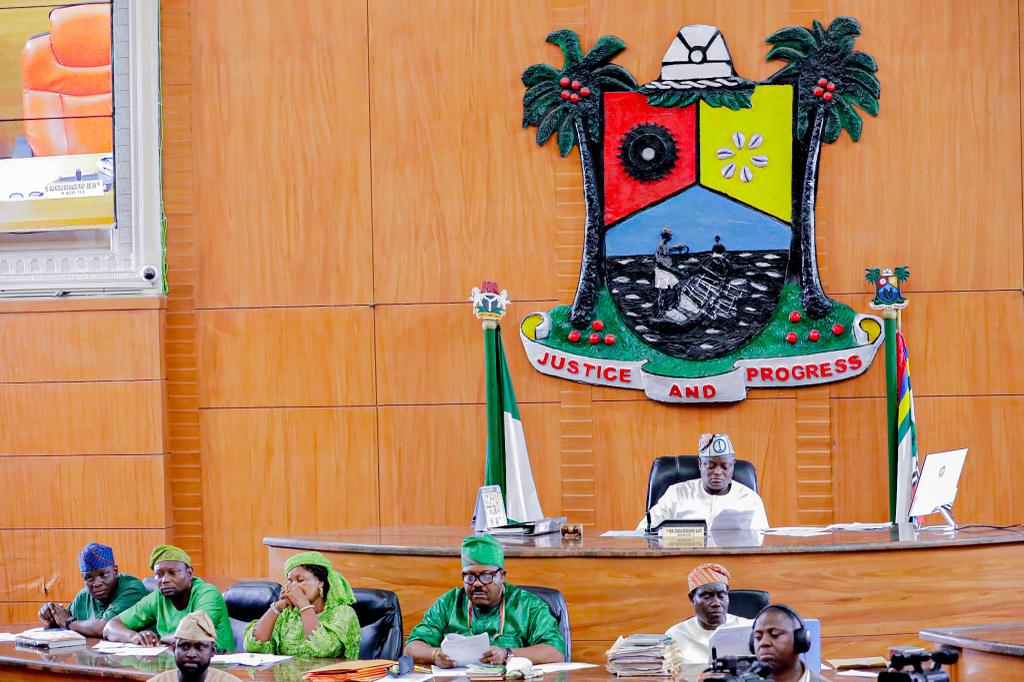
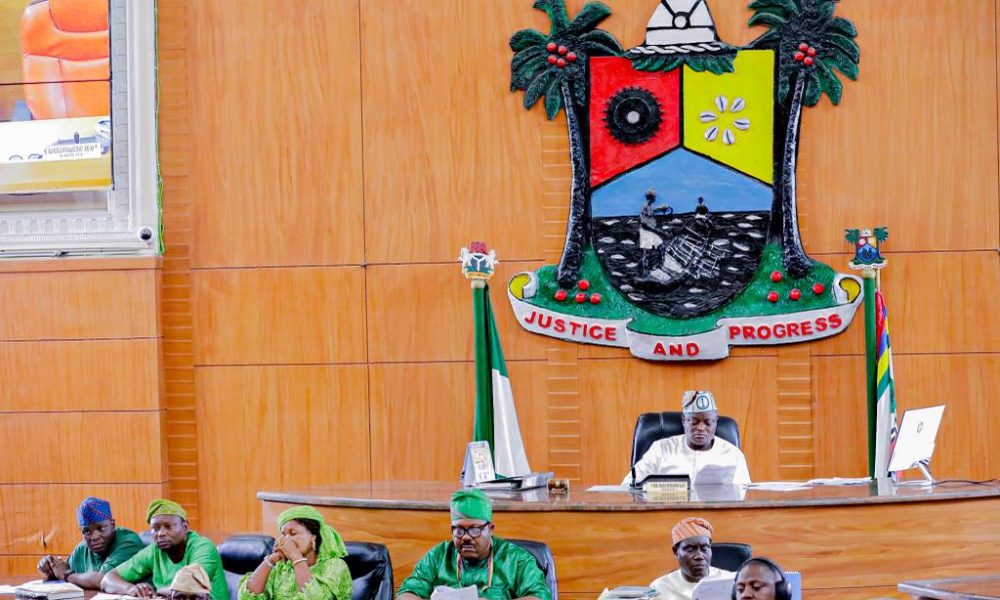
    The Lagos State House of Assembly on Friday passed a total of N2,267,976,120,869 as the 2024 budget size of the State at a plenary session presided over by the Speaker, Rt. Hon. Mudashiru Obasa.

    The budget representing 58 percent Capital Expenditure and 42 percent Recurrent Expenditure was approved following a unanimous voice vote by all the lawmakers present at the sitting.

    “A bill for a law to authorise the issuance and appropriation of N952,430,566,998 from the Consolidated Revenue Fund for Recurrent Expenditure and N1,315,545,553,871 from Development Fund for Capital Expenditure thereby totaling a budget size of N2,267,976,120,869 for the year ending 31st December, 2024 be passed into law,” the Speaker had raised on the floor as the budget report was read a third time.

    Dr. Obasa, thereafter, commended the lawmakers for their dedication and cooperation at ensuring a quick passage of the Appropriation Bill while directing the Clerk of the House, Barr. Olalekan Onafeko, to forward a copy of the approved budget to Governor Babajide Sanwo-Olu for assent.

    Prior to its passage, Hon. Sa’ad Olumoh, chairman of the joint-committee on Budget and Finance, had presented a report containing some recommendations to the House.

    Among the recommendations is that the Public Works Corporation, the Water Corporation and the state-owned tertiary institutions be placed on first-line charge to enable them perform optimally.

    Governor Sanwo-Olu had on Wednesday, December 13, 2023, presented the 2024 budget proposal of N2.246 trillion to the House of Assembly saying that the state anticipated internally generated revenue of N1.251 trillion and federal government allocations of N596.629 billion.

    Recall that Obasa, during the presentation of the budget by the governor, urged the government should ensure a functional budget.

    “It is highly important for us to apply the right indices towards ensuring a performing and functioning budget that would lift our people out of poverty and reposition the state towards infrastructural growth and renewal.

    “Palliatives should move from just giving people garri, rice, beans or even money. We should have a direction that is focused, impactful and deeply backed up by effective policy implementations.

    “For instance, in the name of palliative care, let there be provision of drugs at all public hospitals in the state at subsidised rates. At the same time, focus should be on a downward review of treatment costs in these hospitals,” the Speaker said during the budget presentation.

  • Reps pass N28.777trn 2024 appropriation bill as judiciary gets highest statutory transfer

    Reps pass N28.777trn 2024 appropriation bill as judiciary gets highest statutory transfer

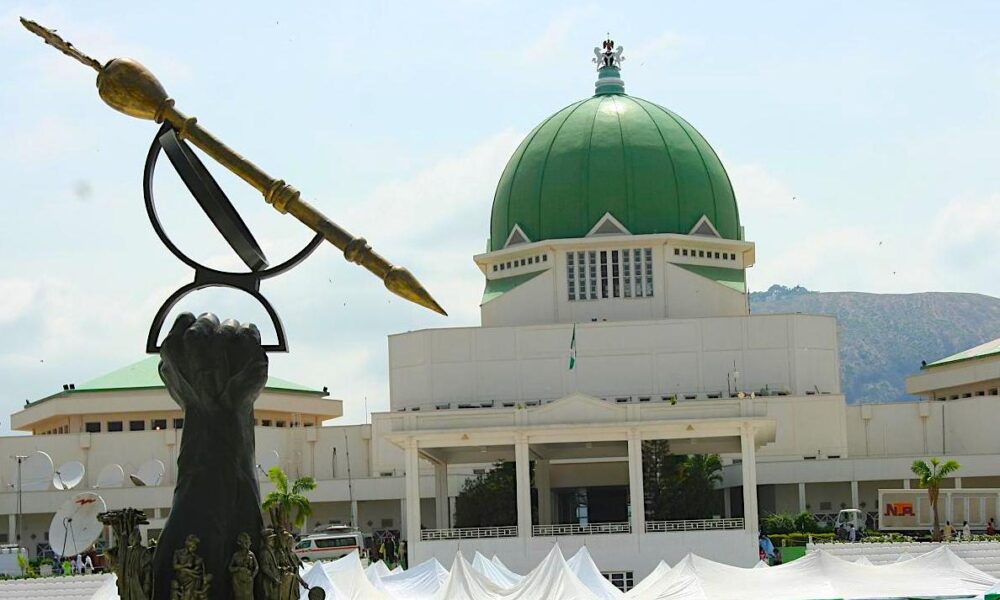
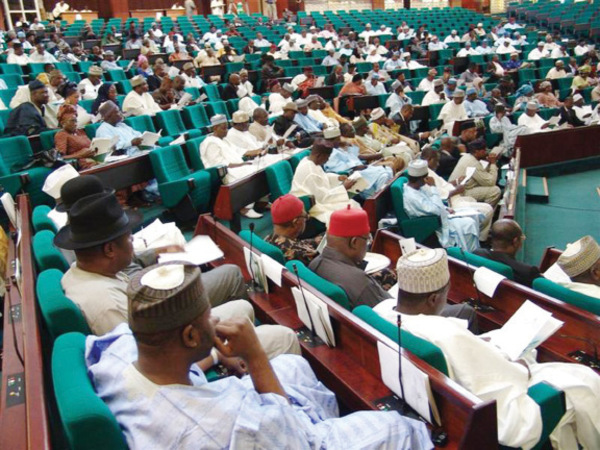
    The House of Representatives on Saturday passed the sum of N28.777 trillion in expenditure for the 2024 fiscal year, following a report by Rep. Abubakar Bitch, Chairman, House Committee on Appropriation.

    Speaker Tajudeen Abbas who read the breakdown of the report during plenary gave the National Judicial Council (NJC) the highest allocation of N341.626 billion under statutory transfer.

    President Bola Tinubu had on Nov 29. presented N27.5 trillion before the joint session of the National Assembly.

    The approved sum is N1.2 trillion higher than the N27.5 trillion presented by the President during the joint session of the National Assembly.

    The breakdown of the N28.777 trillion approved budget showed that the sum of N1.743 trillion is for statutory transfers and N8.271 trillion is for debt servicing.

    The sum of N8.769 trillion is for recurrent (non-debt) expenditure, while N9.995 trillion is for capital expenditure for the year ending December 31, 2024.

    The N9.179 trillion fiscal deficit for the year under review is to be financed through asset sales and privatization (N298,486,421,740); multilateral and bilateral project- N7,828,529,477,860.

    The total debt service of N8.271 trillion was approved for the year 2024, while the sum of N5.300 trillion is to be incurred through domestic debts, including ways and means, and N2.748 trillion through foreign debts.

    Also, the sinking fund for the retirement of maturing promissory notes stands at N223.662 billion.

    The statutory transfer was followed by the Niger Delta Development Commission (NDDC), with N338.925 billion after the NJC.

    The Universal Basic Education Commission (UBEC) got the sum of N263.044 billion; the North East Development Commission (NEDC) got N131.836 billion; and the Basic Healthcare Provision Fund (BHPF) got N131.522 billion.

    The National Agency for Science and Engineering Infrastructure got the sum of N131.522 billion; the Public Complaint Commission got N14.460 billion; and the National Human Rights Commission got N5 billion, respectively.

    The breakdown of the National Assembly budget showed that the sum of N78.624 billion is for the House of Representatives, while N49.145 billion is for the Senate.

    Also, the sum of N36.727 billion is for the NASS Office; N30.807 billion for General Services; N20.388 billion for Legislative Aides; N15.189 billion for Service Wide Vote; and N15 billion for the National Assembly Hospital Project.

    The sum of N12.326 is for the National Assembly Service Commission (NASC); N12.123 billion for the National Assembly Library Complex (take-off grant); and N10 billion for the ongoing construction of NASC headquarters.

    Also, the sum of N9.008 billion was approved for the National Institute for Legislative and Democratic Studies (NILDS) and N4.500 billion for the completion of the ongoing NILDS building.

    The sum of N4 billion was also approved for the National Assembly Recreation Centre, while N4 billion was approved for the design, construction, furnishing, and equipping of the NASS Budget and Research Office.

    The sum of N3 billion was also approved for the procurement of books for the NASS Library, while N3 billion was approved for the Senate Car Park and N3 billion for the House of Representatives Car Park.

    The sum of N3 billion was approved for the upgrade of the NASS key infrastructure, and N3 billion was approved for the design, construction, furnishing, and equipping of the NASS ultramodern printing press, among others.

    NAN reports that from the total sum of N50.451 trillion approved for recurrent (non-debt) expenditure, the Ministry of Defense got the highest allocation of N1.308 trillion.

    This was followed by the Ministry of Police Affairs with N869.121 billion, the Ministry of Education with N857.134 billion, and the Ministry of Health and Social Welfare with N667.577 billion.

    Also, the Ministry of Interior got N362.552 billion, the Ministry of Youth got N201.467 billion, and the National Security Adviser (NSA) got N199.763 billion.

    The Ministry of Foreign Affairs got N140.456 billion, while the Ministry of Agriculture and Food Security got N110.248 billion.

    Also, the Secretary to the Government of the Federation (SGF) got N100.248 billion, and the Presidency got the sum of N97.913 billion.

  • Kwara Assembly passes 2023 budget of N188.8bn

    Kwara Assembly passes 2023 budget of N188.8bn

    The Kwara House of Assembly on Tuesday approved N188.8 billion as the 2023 appropriation law for the state.

    This is sequel to approval and passage of the Report of the House Committee on Finance and Appropriation presented by the Chairman, Ambali Ibrahim (APC/Owode-Onire).

    The capital expenditure is N113.1 billion from the N112.5 billion earlier presented by the executive, which shows an increase of N909 million.

    The recurrent expenditure now stands at N77.6 billion as against N76.4 billion earlier proposed, representing an increase of N1.6 billion.

    The Speaker, Mr Yakubu Salihu, said that the capital expenditure is 50.2 per cent of the total budget estimate while recurrent expenditure stands at 48.3 per cent.

    Salihu said the 2023 appropriation is in line with global best practices of budgeting, pointing out that the 9th Legislature has successfully carried out one of its mandates.

    In line with Order 11, Rule 73 of the House, the Clerk, Hajiya Haleemah Kperogi, read the bill for the third time for final passage and was directed thereafter by the speaker to prepare a clean copy for the governor’s assent.

  • Buhari signs Nigeria’s 2023 budget into law

    Buhari signs Nigeria’s 2023 budget into law


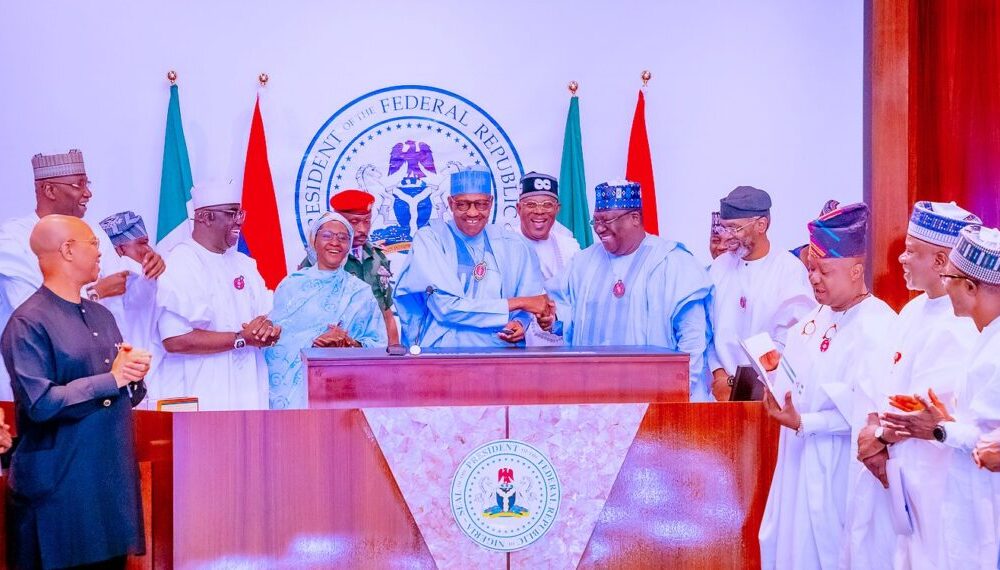
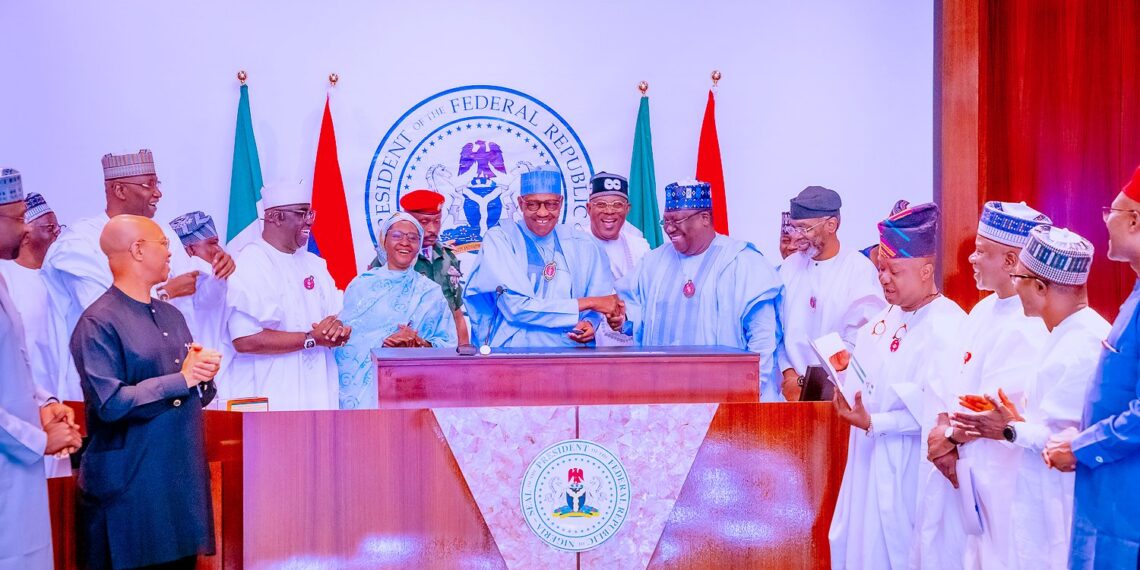
    President Muhammadu Buhari has signed Nigeria’s 2023 budget into law, his office has announced.

    The National Assembly had earlier passed the budget totalling N21.83 trillion.

    “Speaking at the signing of the eighth and final annual budget of this Administration, the President said the aggregate expenditures of N21.83 trillion, is an increase of N1.32 trillion over the initial Executive Proposal for a total expenditure of N20.51 trillion,” Femi Adesina, the president’s spokesperson wrote in a Tuesday statement.

  • Lalong signs ₦149.9bn 2023 budget

    Lalong signs ₦149.9bn 2023 budget


    Gov. Simon Lalong of Plateau on Thursday signed the 2023 Appropriation bill of ₦149.9 billion into law.

    The governor while signing the bill at Government House Jos, said it was part of his administration’s commitment to the good of Plateau people.

    “ This is our adminstration’s last budget and we promise that we will to do our best for the people. We remain committed to its implementation,” he said.

    He thanked the Plateau House of Assembly (PLHA) for their inputs in the budget and prayed for resources for its implementation.

    He also thanked the judiciary for their support in his administration’s discharge of duties, while urging them to extend such goodwill to the incoming administration.

    Speaking earlier, Mr Dan-Philips Hirkop, Commissioner for Budget and Economic Planning, said that the appropriation bill presented to PLHA in November was ₦139billion, but was increased to handle some critical issues.

    “The budget proposal was ₦139 billion but the house after its deliberations, was able to come out with some critical issues with logistics for an effective transition.

    “Other issues also include the current exercise of replacement and recruitment in tertiary institutions, the health sector and others to make provisions, bringing it to ₦149 billion instead of ₦139 billion,” he said .

    The News Agency of Nigeria (NAN) reports that the bill was christened “ Budget of Infrastructural Consolidation and Transition.”

    NAN also reports that N84.1billion was earmarked for recurrent expenditure, while N65.7 billion would be for capital spending.

  • Ganduje signs N268bn budget into law

    Ganduje signs N268bn budget into law


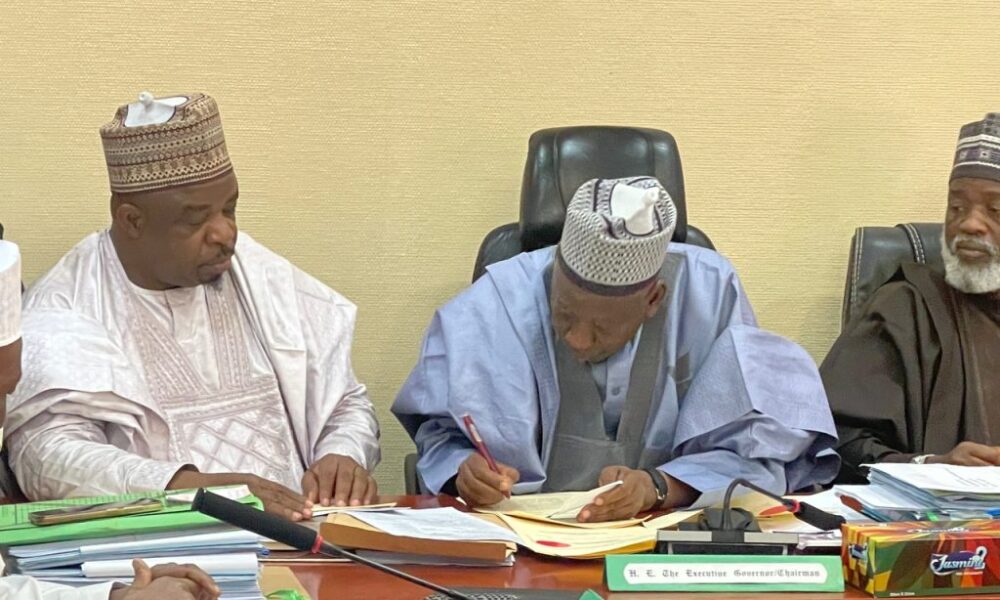
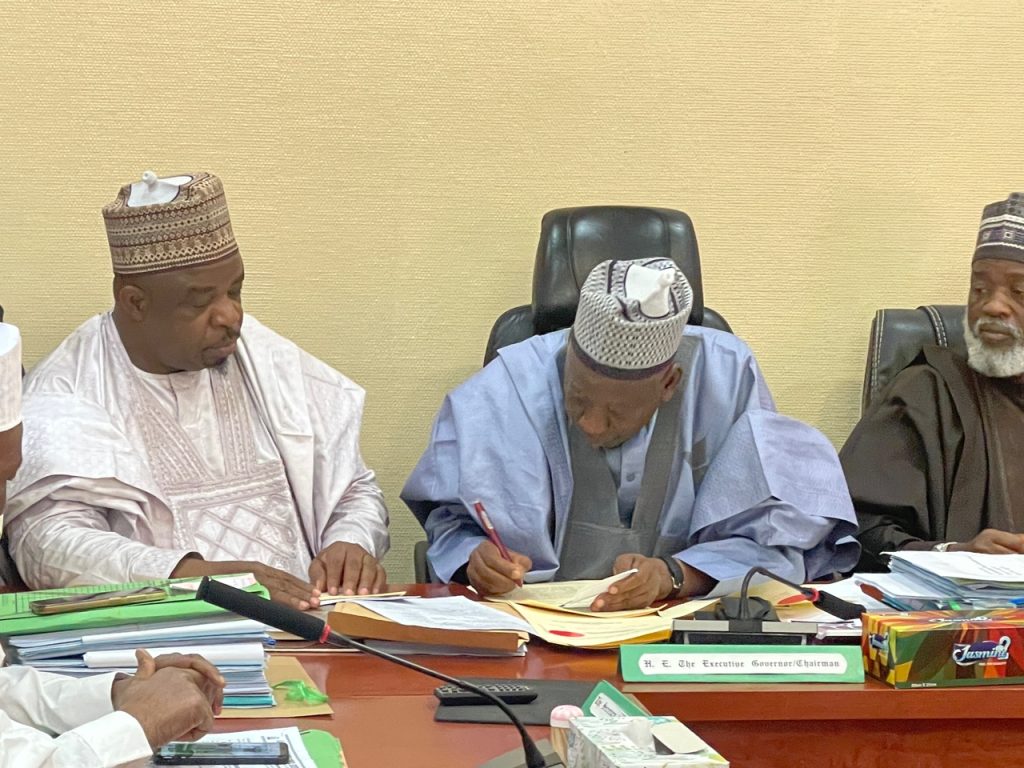
    Gov. Abdullahi Ganduje of Kano State on Thursday signed N268 billion 2023 appropriation bill into law.

    The governor in November presented N245 billion to the State House of Assembly for approval.

    Speaking shortly after signing the document, Ganduje said the legislators reviewed the budget upward to N268 billion to cater for social and economic development of the state.

    He said the budget was designed to fast fast track completion of ongoing projects and initiate new ones.

    While reitrating commitment to implement the budget in accordance with the law, Ganduje expressed readiness to ensure continuous cordial relationship with the legislature.

    The Speaker, Alhaji Hamisu Chidari said the House had reviewed the budget upward by about N23 billion.

    “We had interactions with Ministries, Departments and Agencies (MDAs), and also had public hearing where we collected so many inputs which attracted more money to the tune of N23 billion,” he said.

  • El-Rufai signs N376.4bn 2023 budget into law

    El-Rufai signs N376.4bn 2023 budget into law


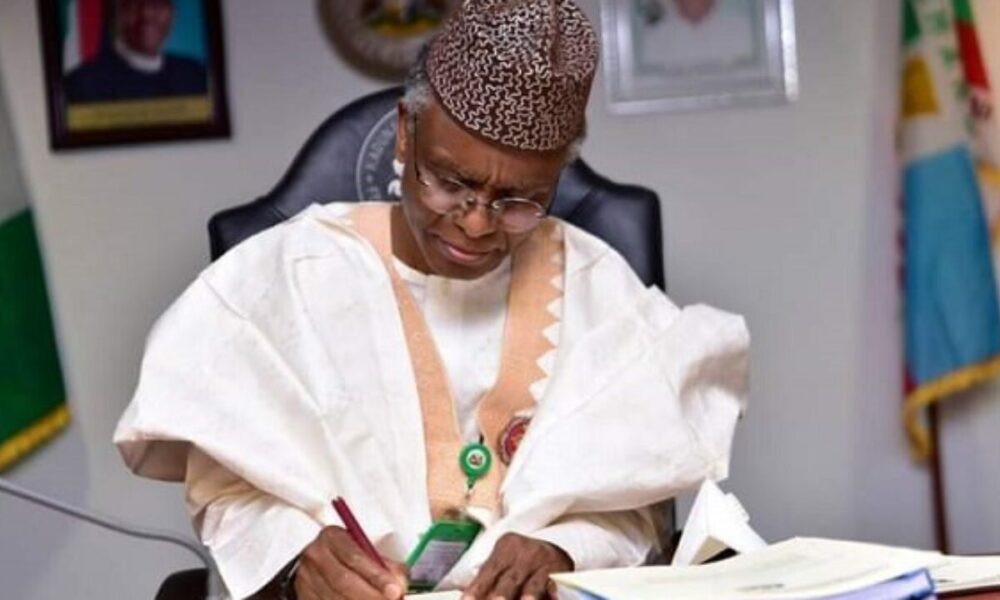
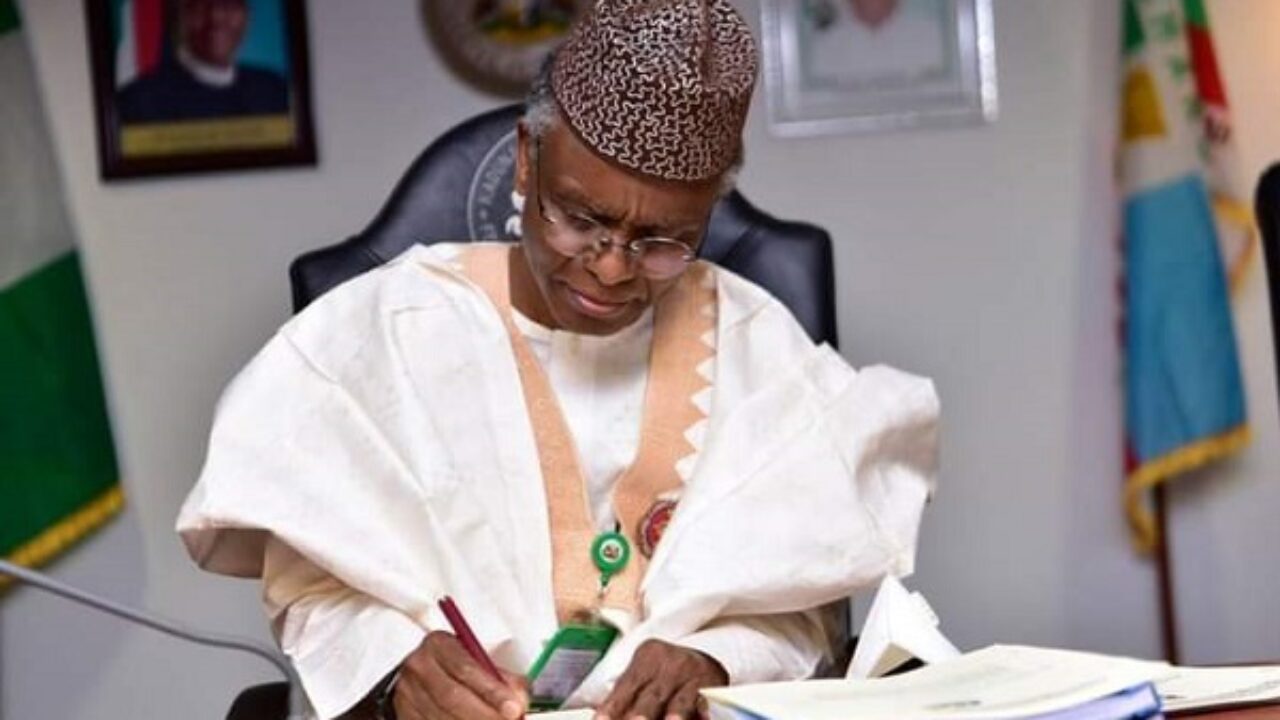
    Kaduna State Governor Nasir El Rufai has signed the 2023 appropriation bill of over N376.4 billion into law.

    Commissioner of Budget and Planning, Hajiya Umma Aboki, disclosed this to newsmen in Kaduna on Thursday.

    She said that the budget prioritized the health and education sectors with an allocation of 43.70 per cent, explaining that 15.70 per cent was for Health and 28 per cent for Education.

    “This is consistent with the State Government’s commitment to allocate a minimum of 15 per cent and 25 per cent of its total annual budget respectively to Health and Education,’’ she said.

    The commissioner added that the allocation of about three per cent of the budget to social welfare and pro-poor interventions has been spread across various implementing Ministries, Departments and Agencies.

    Aboki said that N240.9billion of the budget, representing 64.01 per cent of the budget, was for Capital Expenditure while N135.5 billion, representing 35.99 per cent, was for Recurrent Expenditure.

    ‘’The 2023 Budget, which is referred to as the “Budget of Continuous Growth and Development”, epitomizes continuity of development while strategizing on minimizing economic shocks occasioned by the unintended effects of policy reforms.

    ‘’Budget is focused on cushioning the negative effects by prioritizing human capital and social development, and the completion of ongoing projects with a view to consolidating the achievements of the past seven years that will enable the smooth transition of government,’’ she said.

    Aboki said that the state expects N89.2billion as Internally Generated Revenue (IGR) and N59.9billion as statutory allocation, including Exchange Gains, Excess Bank Charges, Equalization Funds and Ecological Funds of N3.4billion.

    The commissioner also said that the state government is expecting N30.7billion from Value Added Tax (VAT); N62.7billion, N61.6billion, N20.9billion as Internal Grants, External Loans and External Grants respectively.

  • 2023 Budget: Senators, Reps to get ₦‎30.2bn severance allowance

    2023 Budget: Senators, Reps to get ₦‎30.2bn severance allowance


    National Assembly with 469 members and their legislative aides  with receive  severance allowances of N30.17 billion next year.

    The sum is a part of the N238.78 billion National Assembly appropriated for itself as contained in the N21.8 trillion 2023 national budget. The assembly okayed the Appropriation Bill on Wednesday.

    The Senate will receive N33.27 billion out of the N238.78 billion for members’ salaries and other perks while the House of Representatives will get N52 billion for its members..

    A further breakdown of the N238.78 billion shows that the National Assembly Office was allocated N30.49 billion; National Assembly Service Commission (NASC), N10.56 billion; and legislative aides. N16.52 billion.

    In addition, the Public Accounts Committees (PACs) of the Senate and House of Representatives were allocated N119 million and N143 million respectively.

    Other allocations are general services, N11.30 billion; National Institute for Legislative and Democratic Studies (NILDS). N7.41 billion; Service Wide Vote, N671 million; and Office of retired Clerks and Permanent Secretaries, N1.06 billion.

    Furthermore, the Appropriation Committee Departments of the Senate and House are expected to expend N125 million and N165 million respectively next year.

    Other expenditure items are the National Assembly Library Building (ongoing project), N4.25 billion; Hosting of Conference of Speakers of African Parliaments (COSAP), N127.5 million; NASS Liabilities, N8.5 billion; NASS E-Library, N255 million and NASS Dashboard, N118.15 million.

    Constitution Review has a budget of N850 million; the Completion of the National Assembly Library Complex, N7.5 billion; the completion of NILDS headquarters, is N2.5billion; the Construction of the Assembly’s building is N10 billion, and Public Complaints Commission, is N10.69 billion.

  • 2023 Budget: Don calls for more budgetary allocation for education in future proposal

    2023 Budget: Don calls for more budgetary allocation for education in future proposal


    An Economist, Prof. Evans Osabuohien, has appealed to the Federal Government to make more provision for education sector in future budget to avert unnecessary crises in the sector.

    Osabuohien, also Head of Economics Department, Covenant University, Ota, Ogun, made the appeal while speaking with the News Agency of Nigeria (NAN) on Thursday.

    He spoke while reacting to the passage of N20.5 trillion by the Senate on Wednesday in Abuja.

    The don, however, commended the Federal Government for increasing the percentage of budgetary allocation for education in 2023.

    “In terms of percentage, the budgetary allocation for education in 2023 Budget is a little better and there has been an improvement compared to 2022 budget but it is still relatively low,” he said.

    Osabuohien noted that President Muhammadu Buhari proposed more allocation for education in 2023 but it was still below the United Nations Educational, Scientific and Cultural Organization (UNESCO) recommendation.

    He said that Buhari proposed N1.79 trillion for education sector, representing about 8.8 per cent of the total 20.5 trillion proposal.

    NAN reports that this allocation was above the N1.18 trillion or 7.2 per cent of the total budget presented in 2022.

    The don emphasised the need for more budgetary allocation in future budget because the sector had witnessed a prolonged crisis through the Academic Staff Union of Universities (ASUU) in 2022.

    He noted that more allocation to the sector would restore the lost glory and make more positive development in terms of infrastructure across the tertiary institutions.