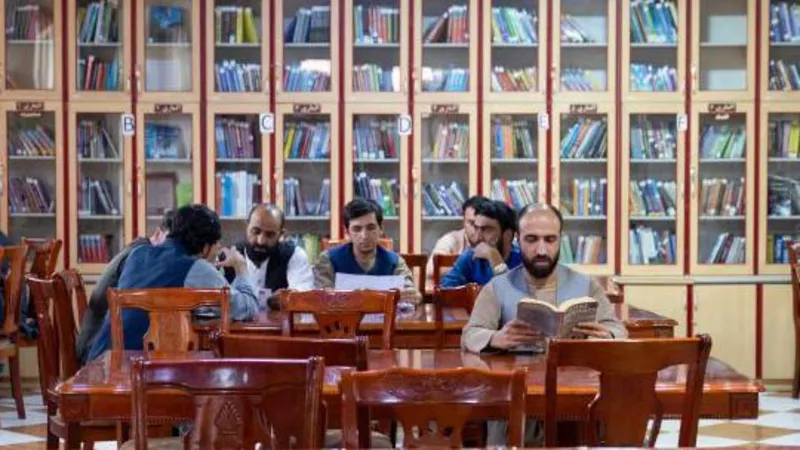
The Taliban government in Afghanistan has removed books authored by women from university curricula and banned the teaching of human rights, sexual harassment, and other subjects it deems “in conflict with Sharia and the system’s policy.”
Among the 680 books flagged for removal, 140 were written by women, including titles such as Safety in the Chemical Laboratory. Universities have also been prohibited from teaching 18 subjects, six of which specifically focus on women, including Gender and Development, The Role of Women in Communication, and Women’s Sociology.
The ban forms part of a broader series of restrictions imposed since the Taliban returned to power in 2021. Recent measures include the prohibition of fibre-optic internet in at least 10 provinces, which officials said was intended to prevent immorality. Women and girls have been particularly affected, with education beyond the sixth grade largely inaccessible and midwifery courses quietly closed in late 2024.
A member of the book review committee confirmed the removal of all books authored by women. Zakia Adeli, former deputy minister of justice and an author affected by the ban, described the move as predictable. “Given the Taliban’s misogynistic mindset and policies, it is only natural that women’s views, ideas, and writings are suppressed,” she said.
The guidelines, issued in late August, were reportedly approved by a panel of “religious scholars and experts,” according to Ziaur Rahman Aryubi, deputy academic director of the Ministry of Higher Education. The ban also targets books by Iranian authors or publishers, with 310 of the removed titles originating from Iran, reflecting the Taliban’s stated aim to prevent “infiltration of Iranian content.”
The decision has raised concerns among academics. A professor at Kabul University, speaking anonymously, warned that the removal of Iranian texts could create “a substantial void in higher education,” as these works serve as a key link between Afghan universities and the global academic community.
Under the new restrictions, lecturers are reportedly forced to prepare their own textbook chapters, carefully navigating the Taliban’s rules. Experts question whether such materials can meet international academic standards.
The ban on women’s contributions to higher education and the broader suppression of certain subjects highlight ongoing challenges in Afghanistan under the Taliban, particularly for female students and academics.