


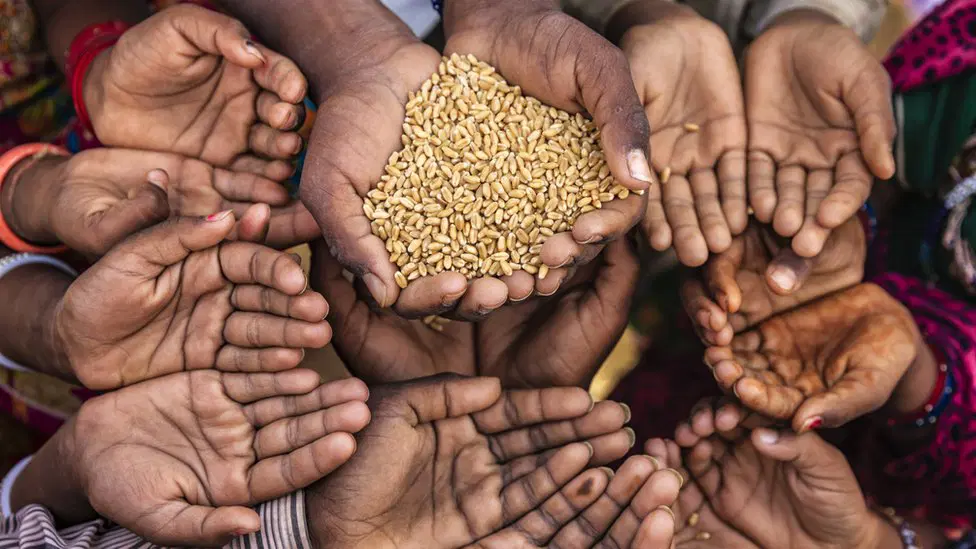
A new edition of the Global Report on Food Crises has revealed that nearly two-thirds of people facing severe food insecurity worldwide last year were concentrated in just 10 countries, including Nigeria, Sudan, and the Democratic Republic of the Congo.
The report, produced with data from the United Nations, the European Union and humanitarian partners, identified conflict as the leading driver of acute food insecurity globally and warned that conditions could worsen in 2026.
It noted that acute hunger remains heavily concentrated in 10 countries: Afghanistan, Bangladesh, the Democratic Republic of the Congo, Myanmar, Nigeria, Pakistan, South Sudan, Sudan, the Syrian Arab Republic and Yemen.
While conditions improved slightly in Bangladesh and Syria, these gains were largely offset by worsening situations in Afghanistan, the DRC, Myanmar and Zimbabwe.
For the first time in the report’s 10-year history, famine was confirmed in two separate contexts within the same year—Gaza Strip and parts of Sudan—highlighting the severity of the global crisis.
According to the report, about 266 million people across 47 countries and territories experienced high levels of acute food insecurity in 2025, nearly double the number recorded in 2016.
The report also warned that declining international aid could worsen humanitarian conditions, especially as ongoing tensions in the Middle East risk increasing displacement in a region already hosting millions of refugees.
It further noted that disruptions affecting the Strait of Hormuz had driven up fertiliser prices globally, raising concerns about agricultural output during the current planting season.
President of the International Fund for Agricultural Development (IFAD), Alvaro Lario, warned that rising energy and fertiliser costs could significantly affect food production this year.
He urged stronger support for small-scale farmers through investments in climate-resilient crops, improved soil management and increased local fertiliser production, while also calling for greater involvement of domestic private sector investors to strengthen long-term food system sustainability.


