


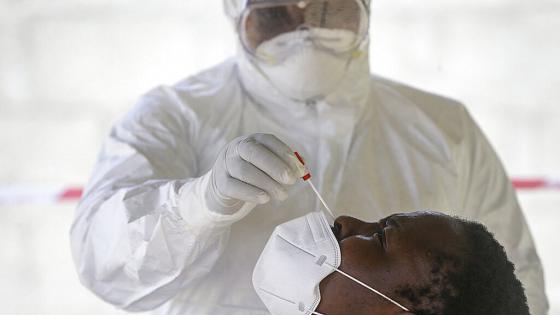
New technology that can rapidly detect whether a positive COVID-19 test sample contains a known variant was being trialled by the British Government.
Genotype assay testing could halve the time it takes to identify coronavirus mutations, which indicate if a variant was present, the Department of Health and Social Care (DHSC) said.
It currently takes around four to five days to detect known variants from positive samples through a process called genomic sequencing.
Health Secretary, Matt Hancock, described the technology as “ground-breaking’’ and said it was the ambition to eventually test every COVID-19 positive sample for new mutations.
It was hoped that the system would allow contacts of positive cases to be traced sooner and potentially stop the spread of more infectious strains.
Controlling the transmission of COVID-19 variants of concern is an essential part of the Government’s road map to easing lockdown restrictions in England.
The new system, which was being trialled in NHS Test and Trace laboratories, could eventually be used in addition to standard COVID-19 testing to identify cases quickly.
Mr Hancock said, “we must not stand still if we are to beat COVID-19 and safely ease restrictions in the coming months.
“That is why our goal is to eventually test every COVID positive sample for mutations, that indicate known variants, using this ground-breaking new technology.
“This type of testing will help us rapidly identify variant cases and trace contacts quicker than ever before, helping stop outbreaks in their tracks and ensuring we can continue to follow the road map we have set out to get back to normal life.’’
European countries were already seeing pockets of the South African variant, with studies suggesting vaccines work less well against this strain of the virus.
Health Minister, Lord Bethell, said “the progress made so far developing these new genotype assays was very encouraging and I am confident we will see positive outcomes from piloting this technology.
“Using this test to identify a known variant of concern cases has the potential to accelerate our knowledge and understanding of variants of concern and halt their spread across the country’’.
Genotype assays would complement existing surveillance work that used genomic sequencing to look for variants in COVID -19 positive samples, DHSC said.
The technology can also be adapted to test for new variants and mutations as they were identified.


