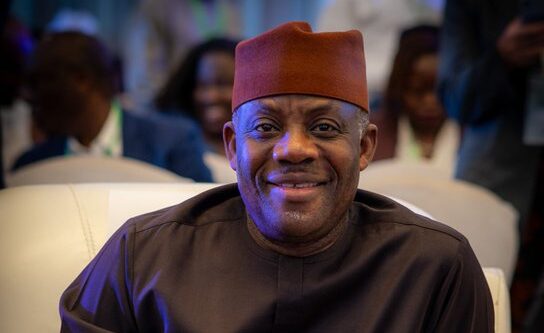
The Federal Government has released ₦50 billion from the ₦200 billion Needs Assessment Fund (NAF) agreed with the Academic Staff Union of Universities (ASUU), marking the first tranche of funding under the recently renegotiated agreement.
Minister of Education, Tunji Alausa, said an additional ₦50 billion would be released shortly, raising total disbursement to ₦100 billion. He added that the Ministry of Education would meet with heads of universities, polytechnics and colleges of education to determine priority areas for deploying the funds.
The NAF is part of the 2009 agreement between ASUU and the Federal Government, which remained unresolved for over a decade. The pact, originally scheduled for renegotiation in 2013, was concluded on December 23, 2025, and formally unveiled on January 14, with implementation commencing immediately.
“This is not about showmanship or grandstanding. The implementation circular was issued before the end of December,” Alausa said, noting that federal universities have not experienced industrial action in the last two academic sessions.
The minister also disclosed that a dedicated labour and union activities unit has been established within the ministry to ensure effective implementation of agreements reached with staff unions.
On outstanding salaries from the 2022 ASUU strike, Alausa said President Bola Tinubu approved payment of half of the eight-month arrears, a commitment he said has already been fulfilled.
Meanwhile, former Deputy Vice-Chancellor (Academic) of the University of Ibadan, Prof. Ezekiel Ayoola, urged the government to extend recently approved academic allowances to emeritus professors. Speaking in Ibadan, he described the exclusion of retired senior academics as a gap that could undermine research continuity and mentorship.
Ayoola said emeritus professors—many of whom served 15 to 20 years at professorial level and remain active in research and supervision—often receive no salaries or structured financial support. “They continue to contribute to scholarship and mentorship, yet are appointed without pay. Extending the allowances would help sustain academic excellence,” he said.