A senior Hamas official has indicated to the BBC that the group is likely to reject U.S. President Donald Trump’s Gaza peace plan, describing it as favoring Israel and neglecting Palestinian interests.
Key conditions of the plan, including disarmament and the handover of all hostages, remain major obstacles. Hamas views these demands as undermining its leverage and has expressed strong opposition to the deployment of an International Stabilisation Force (ISF) in Gaza, which it regards as a form of occupation.
Israeli Prime Minister Benjamin Netanyahu formally accepted the plan during White House talks on Monday, but Hamas has yet to issue an official response. Qatar’s foreign ministry confirmed that the group is reviewing the proposal “responsibly,” with discussions involving leadership both inside and outside Gaza.
Hamas’s military commander in Gaza, Ez al-Din al-Haddad, is reportedly committed to continuing the fight rather than agreeing to the plan. Palestinian Islamic Jihad (PIJ), which participated in the 7 October attacks and previously held Israeli hostages, also rejected the plan on Tuesday.
A central sticking point for Hamas is the requirement to release all hostages at once, which would eliminate its primary bargaining position. Trust remains low, as the group fears Israel could resume military operations after receiving hostages, especially following a recent Israeli attempt to target Hamas leadership in Doha.
The Trump administration’s proposed plan also includes a buffer zone along Gaza’s southern border with Egypt, the administration says, but the role of Israel in managing this area remains unclear and could provoke further objections.
Since agreeing to the plan, Netanyahu has publicly signaled that Israel may retain forces in parts of Gaza and “forcibly resist” any Palestinian state, contradicting elements of Trump’s framework, which calls for full Israeli withdrawal and a “credible pathway to Palestinian self-determination and statehood.”
Among Gaza residents, there is broad support for the plan if it ends hostilities. Khadar Abu Kweik told the BBC, “The American plan has bad clauses, but I support it because it will stop the war and get rid of Hamas.” Palestinian journalist Fathi Sabah warned that rejection by Hamas could allow Israel to continue military operations with U.S. and Western backing, worsening humanitarian conditions.
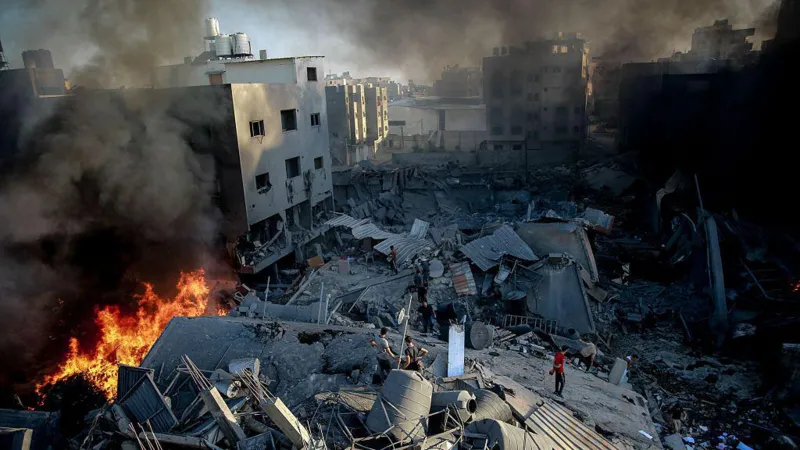
The conflict began after the 7 October 2023 Hamas-led attacks on southern Israel, which killed around 1,200 people and resulted in 251 hostages. According to Hamas-run health authorities, at least 66,097 Palestinians have died in Israeli military operations since then. Humanitarian reports have confirmed famine in Gaza City, and a UN inquiry earlier this month accused Israel of committing genocide, a claim Israel strongly rejects.