


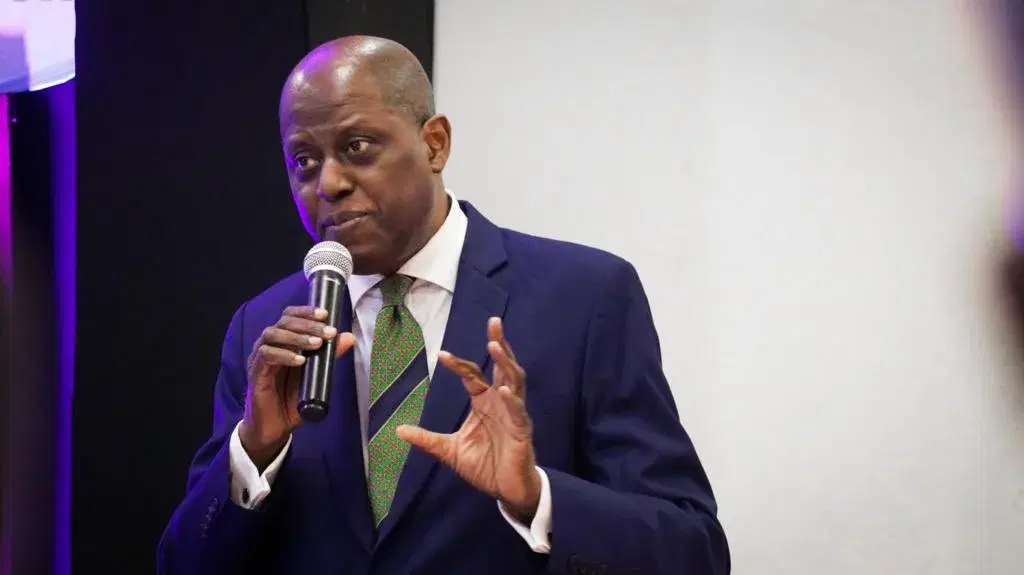
Abuja – Nigeria’s Ways & Means financing has declined sharply to N2.84 trillion, down from the N26.95 trillion inherited by the current administration, the Governor of the Central Bank of Nigeria (CBN), Mr. Olayemi Cardoso, announced on Thursday.
Speaking at the Monetary Policy Forum in Abuja, themed “Strengthening Nigeria’s Macroeconomic Stability Through Effective Monetary Policy: The Role of Critical Stakeholders,” Cardoso highlighted that the CBN team inherited significant fiscal and monetary challenges but pursued decisive reforms.
“With a clear understanding of these challenges, we implemented bold, far-reaching reforms to restore credibility, normalise policy conduct, rebuild confidence, and stabilise the macroeconomic environment,” Cardoso said. He noted that Ways & Means financing was reduced from N26.95 trillion to N3.51 trillion in December 2024, and further to N2.84 trillion by January 2026, marking one of the sharpest fiscal consolidations in recent history.
The CBN governor attributed the success to strengthened monetary–fiscal discipline, which reinforced the Bank’s independence, signalled commitment to transparency, and ended the era of fiscal dominance. On foreign exchange (FX), he said reforms had stabilised the market and increased inflows, with diaspora remittances tripling from US$200 million to US$600 million monthly, and a target of US$1 billion per month by end-2026.
Cardoso further reported that Nigeria’s external reserves strengthened significantly, with gross reserves rising from US$38.34 billion in February 2025 to US$50.12 billion in February 2026, the highest level in 13 years. Net external reserves surged from US$3.99 billion at end-2023 to US$34.80 billion at end-2025, representing a 772.2 percent increase. He added that the country recorded a Balance of Payments surplus of US$4.59 billion in Q3 2025, reversing an earlier deficit.
He also highlighted progress in banking sector reforms, noting that 32 banks have met revised capital requirements, strengthening the sector’s resilience and capacity to mobilise long-term capital to support Nigeria’s transition toward a US$1 trillion economy.
Despite these gains, Cardoso said the focus is now on consolidation, including anchoring inflation toward single digits, sustaining exchange rate stability, strengthening reserve buffers, deepening interbank market development, and enhancing monetary policy transmission.
Finance Minister and Coordinating Minister of the Economy, Mr. Wale Edun, emphasised the importance of interest rates in controlling inflation, while noting that high rates increase the cost of financing for government, households, and businesses. He called for continued collaboration across monetary, fiscal, and broader economic authorities to achieve sustained macroeconomic stability.


