


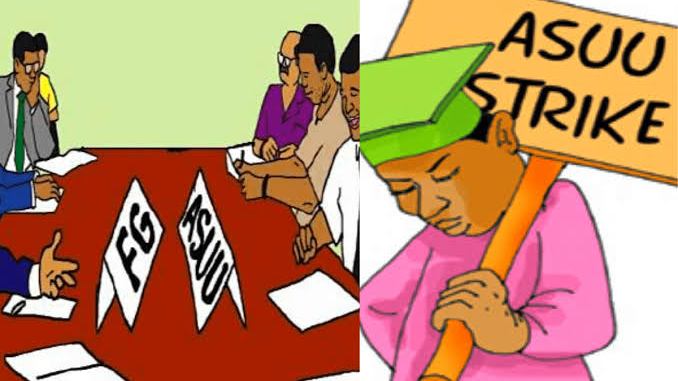
The Academic Staff Union of Universities (ASUU) has issued a warning strike, citing recurring delays in salary payments to its members, a development that has unsettled many Nigerian families and reignited concerns over academic disruptions in public universities.
ASUU National President, Professor Chris Piwuna, blamed the delay on administrative lapses following the federal government’s migration of university payrolls from the Integrated Personnel Payroll and Information System (IPPIS) to the Government Integrated Financial Management Information System (GIFMIS). He described the salary delays as a consequence of negligence by the Office of the Accountant General of the Federation, not technical issues with the GIFMIS platform.
“Our members are experiencing significant hardship,” Piwuna told the media. “Salaries are delayed by over a week. At our NEC meeting, we agreed that if salaries are not paid within three days into a new month, members should withdraw their services. The problem is not the system—it’s the handlers. This delay appears deliberate.”
Despite evidence that academic staff at the University of Abuja and the University of Jos had vacated lecture halls in line with ASUU’s directive, the Minister of State for Education, Dr. Maruf Olatunji Alausa, dismissed the warning strike. He urged the public to ignore reports of ongoing industrial action.
Critics argue that the government’s response fails to address the underlying grievances. Analysts warn that continued disruption of the academic calendar could further erode confidence in Nigeria’s tertiary education system, which has suffered from frequent industrial actions over the past decades.
In recent years, efforts had been made to rebuild trust between ASUU and the federal government. President Bola Ahmed Tinubu’s administration has paid N40 billion out of the N50 billion owed in Earned Academic Allowances and removed universities from IPPIS in favor of GIFMIS. However, ASUU insists these efforts are being undermined by administrative inefficiencies.
Education stakeholders say further strikes will have dire implications for students, many of whom already experience prolonged academic timelines. Inconsistent calendars have driven some families to seek education opportunities abroad, often in countries with lower academic standards than Nigeria.
The perception of Nigerian graduates as underprepared persists partly due to frequent disruptions in the academic calendar. While the quality of education in Nigerian universities remains commendable, recurring strikes risk damaging the reputation of institutions and the credibility of their graduates.
ASUU has called on the Federal Ministry of Education and relevant government agencies to address the salary delay issues immediately. The union also urged the government to pay the remaining N10 billion in Earned Academic Allowances to avoid future tensions.
Additionally, education committees in the National Assembly have been advised to develop sustainable funding mechanisms for public universities. Experts say reforms should shift the focus of lecturers beyond salary disputes and toward research, innovation, and academic excellence.


