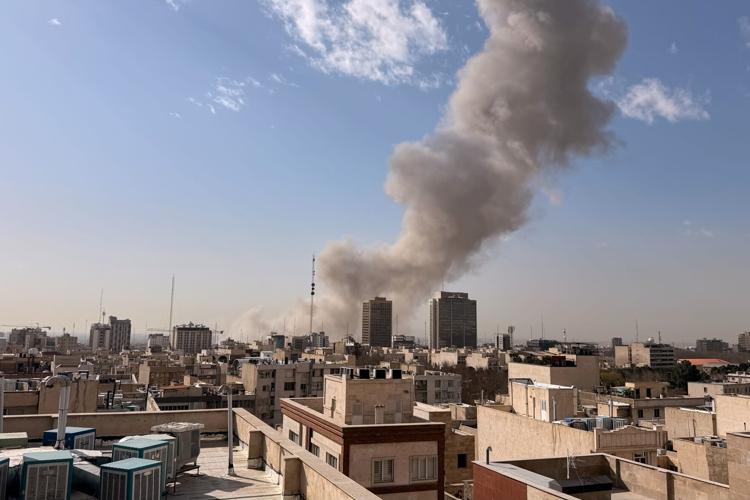
Iran launched a fresh salvo of missiles across the Middle East on Wednesday, targeting Israel and bases hosting US forces in Kuwait, Jordan, and Bahrain, after US President Donald Trump indicated readiness to engage Tehran in talks, stabilizing global markets.
Oil prices fell sharply, and Asian stock markets rose on hopes of de-escalation after nearly four weeks of conflict. Trump, speaking from the Oval Office, said Washington was “in negotiations right now” with Tehran and described recent Iranian actions as “a very big present worth a tremendous amount of money,” without providing further details.
Reports from the New York Times suggested the US sent a 15-point peace plan to Iran via Pakistan, which offered to mediate. Israel’s awareness or support for the plan remains unclear. Trump reiterated that Iran has “agreed they will never have a nuclear weapon,” referencing the 2015 nuclear deal that he withdrew from during his first term.
Despite diplomatic signals, The Wall Street Journal reported that Washington plans to deploy an additional 3,000 troops to the region.
Meanwhile, Iran’s Revolutionary Guards continued retaliatory strikes, hitting Israeli targets and US bases across the Gulf. Kuwait reported a drone attack that sparked a fire at its international airport, while Bahrain activated air raid sirens. Jordan experienced shrapnel near Amman without casualties, and Saudi Arabia intercepted at least four drones in its eastern region.
Israel responded with airstrikes on “infrastructure of the Iranian terror regime” and has intensified operations against Hezbollah in southern Lebanon, targeting areas up to the Litani River. Lebanese state media reported six fatalities from Israeli strikes in Sidon and a nearby Palestinian refugee camp.
The conflict has drawn Iraq deeper into hostilities, prompting Baghdad to summon both the US charge d’affaires and the Iranian ambassador after strikes blamed on both nations. Iraq also authorized former paramilitary groups to respond to attacks.
Attention remains focused on the Strait of Hormuz, a vital oil route carrying one-fifth of the world’s crude. Tehran assured safe passage for “non-hostile vessels” while warning that ships belonging to “the aggressor parties — namely the United States and the Israeli regime” would be barred.
Signs of potential progress toward ending hostilities contributed to a more than six percent drop in global crude prices, easing pressures from earlier spikes caused by the conflict. French President Emmanuel Macron urged Tehran to engage in negotiations “in good faith” during a call with his Iranian counterpart, Masoud Pezeshkian.