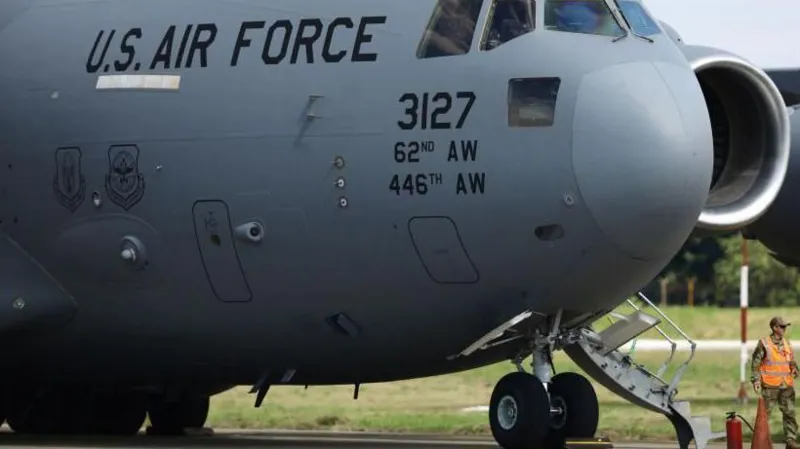
The United States has deported 10 individuals to Eswatini, despite ongoing legal challenges from rights groups in the southern African country. This marks the second batch of deportees sent under the Trump administration’s stringent immigration policies.
Eswatini’s prison department said the deportees have been “securely accommodated” and posed no threat to the public. The names of those deported have not been released.
Human rights lawyer Mzwandile Masuku expressed dismay at the move, noting that a court case against the arrival of five deportees in July is still pending. “I was shocked that the government accepted more deportees before the court ruling,” he said.
The first five deportees, from Jamaica, Cuba, Laos, Vietnam, and Yemen, were labeled “depraved monsters” by the US. One has since been repatriated to Jamaica, while two others are expected to return to their countries soon.
In a statement, the Eswatini government said it had agreed with the US to accept 11 deportees, though only 10 arrived. Acting spokesperson Thabile Mdluli said they are being held in a “secured area separate from the public” while arrangements are made for their repatriation.
The latest deportations coincide with the scheduled resumption of a court case in Mbabane challenging the government’s agreement with the US. Masuku represents civil society groups arguing that the government should have awaited the court’s decision.
Human Rights Watch reported that the agreement allows Eswatini to accept up to 160 deportees in exchange for $5.1 million to strengthen border and migration management. Critics, including the Southern African Litigation Centre, say the deal bypasses parliamentary consent and undermines democratic accountability.
“The deal is secretive and reflects executive overreach,” said SALC’s Melusi Simelane, noting it contradicts the 20-year-old constitution designed to strengthen parliamentary oversight.
The Eswatini government maintains it acted within its powers, with Prime Minister Russell Dlamini stating the arrangement was handled at “top clearance level.” Concerns have also been raised by neighboring South Africa over potential border crossings.
Previously known as Swaziland, Eswatini is a small, landlocked nation bordered by South Africa and Mozambique, ruled by King Mswati III since 1986.