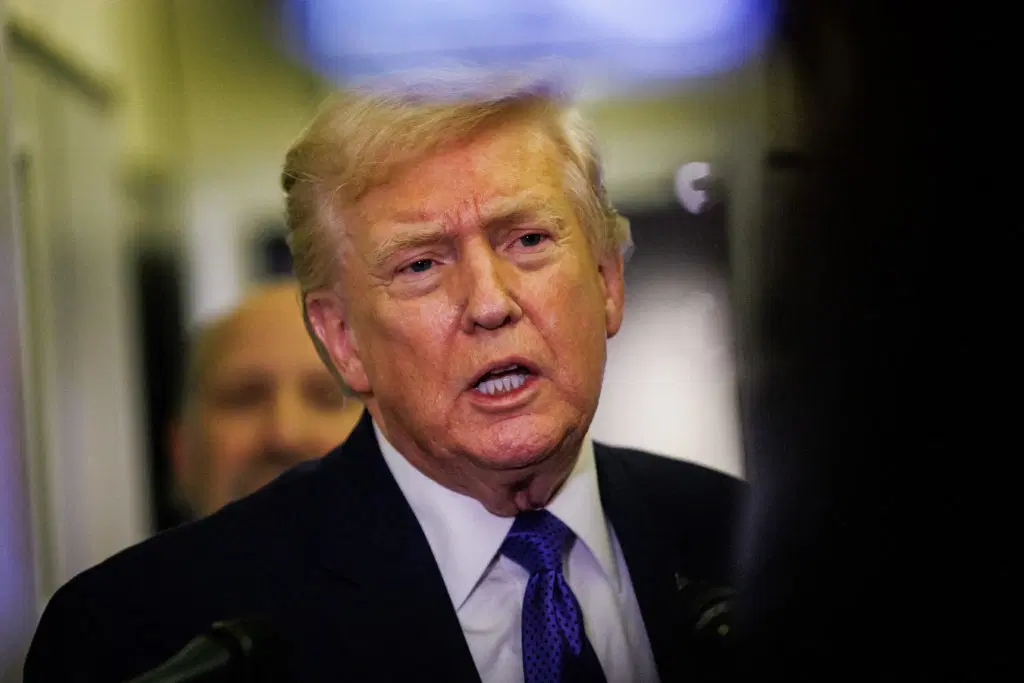
European leaders have pushed back against a request by Donald Trump for military support to secure the Strait of Hormuz, as foreign ministers from the European Union met in Brussels to address rising oil prices linked to the ongoing U.S.-Israel conflict with Iran.
Trump had urged allies including the UK, France, Japan, South Korea, and other NATO members to deploy naval forces to protect the vital oil shipping route, warning of consequences for the alliance if they failed to act. U.S. officials have been lobbying for support and hope to form a coalition in the coming days, though details remain unclear.
However, European governments expressed strong reservations about joining any military operation while active hostilities continue. At the Brussels meeting, leaders demanded clarity from Washington on the objectives and expected duration of the conflict before making any commitments.
Germany took a firm stance, with Foreign Minister Johann Wadephul stating that Berlin has no intention of participating in military operations. He emphasized the need for transparency from both the U.S. and Israel regarding their goals and exit strategy.
German officials reinforced this position, stressing that the conflict is not a NATO mission. Defence Minister Boris Pistorius questioned the effectiveness of European naval involvement, noting the existing strength of the U.S. Navy in the region.
Other European countries echoed similar caution. Greece and Italy ruled out participation in naval missions, while Estonia and Poland called for clearer strategic direction from Washington. Polish Foreign Minister Radek Sikorski suggested any formal request should go through NATO channels.
Denmark struck a more balanced tone, with Foreign Minister Lars Lokke Rasmussen urging Europe to remain open to ensuring freedom of navigation, though he emphasized the need for de-escalation.
The United Kingdom signaled willingness to collaborate on a diplomatic and security plan but ruled out being drawn into a broader conflict. Prime Minister Keir Starmer said efforts would focus on restoring safe passage through the strait.
EU foreign policy chief Kaja Kallas noted that discussions were ongoing about how the bloc could help reopen the waterway, which is critical for global oil supply.
The disruption has already pushed oil prices above $100 per barrel, raising global economic concerns. According to the International Energy Agency, the situation represents the largest supply disruption in oil market history.
IEA Executive Director Fatih Birol said the agency had released a record 400 million barrels from reserves to stabilize markets and stands ready to deploy more if necessary. However, he warned that reserves are only a temporary solution while access through the Strait of Hormuz remains uncertain.
The standoff highlights growing divisions between the U.S. and its European allies over military involvement in the Middle East, even as global energy security hangs in the balance.